We have settled into a bit of a routine in Lezhë. We are volunteering this week and next at Qendra Jozue, or Joshua Center. We got into contact with the director, Norma, a bit randomly while searching for volunteering opportunities that we could do as a family. We have received a warm and kind welcome, even though we feel rather useless.
Norma is a Brazilian woman who came here to do aid work during the area’s time of ethnic conflict in the early 1990s. Instead of going home, she stayed to help. She founded Qendra Jozue with little help, and the center’s mission is to serve the extremely marginalized and poor Roma children and their families.

In a country that can be called Second World at best with a relatively low standard of living for all but a few, the Roma people are the absolute bottom of society. They are discriminated against and viewed as dirty and undesirable. We have learned so much about their difficulties in our short time volunteering, and it’s heart-breaking to hear about how they live.

Girls get married (usually arranged, and sometimes even “stolen” and raped into marriage) as young as twelve and begin having babies immediately. A woman may have had more than four children by the time she turns twenty, and the hard work of childbearing shows as these mothers appear much older than their age. I had an opportunity to meet a group of mothers today, and all of them had at least four children, some as many as nine. It’s nice to be with a group of people who doesn’t look twice at our family size, but not under their desperate circumstances. When childbearing weighs too heavy these women will turn to frequent and repeated abortions, a service provided free of charge by the government (a communist-era norm that continues). The mothers beg or clean around town to earn a meager income, rarely enough to put much food on the table. Their husbands drink coffee, smoke, and struggle with alcohol problems. Domestic violence is common. The Albanian government has provided very basic housing for the Roma people, but their large family size and close generations mean that many people share extremely cramped living quarters, like a dozen people in a small shipping container, for example.
Qendra Jozue offers a preschool program five days a week. The kids learn pre-literacy skills and are given a very basic morning meal. They brush teeth too, a practice it seems they do not learn at home. Every mouth shows signs of decay, even among the very young. In the afternoon, the center provides an after-school program three days a week for older kids. They receive a hot meal and help with homework. The generation of kids we have met is the first of the local Romas to attend school, and their mothers are all illiterate. The center also teaches Bible stories to these kids who are predominantly Muslim. Roma mothers meet weekly at the center as well for coffee, chatting, and a Bible story.
The director of the center fundraises in the United States every two years, and that’s the sole source of their funding. The government provides no help, but makes sure to collect taxes. The center provides what I assume is a very low wage for the director and three other women. They run a very tight ship, and it looks like they stretch each dollar they receive about as far as humanly possible. The center holds a long lease in a decent building, but nothing is the entire place could be called new or nice. The toys, puzzles, school supplies, etc. are all extremely basic and very heavily used.
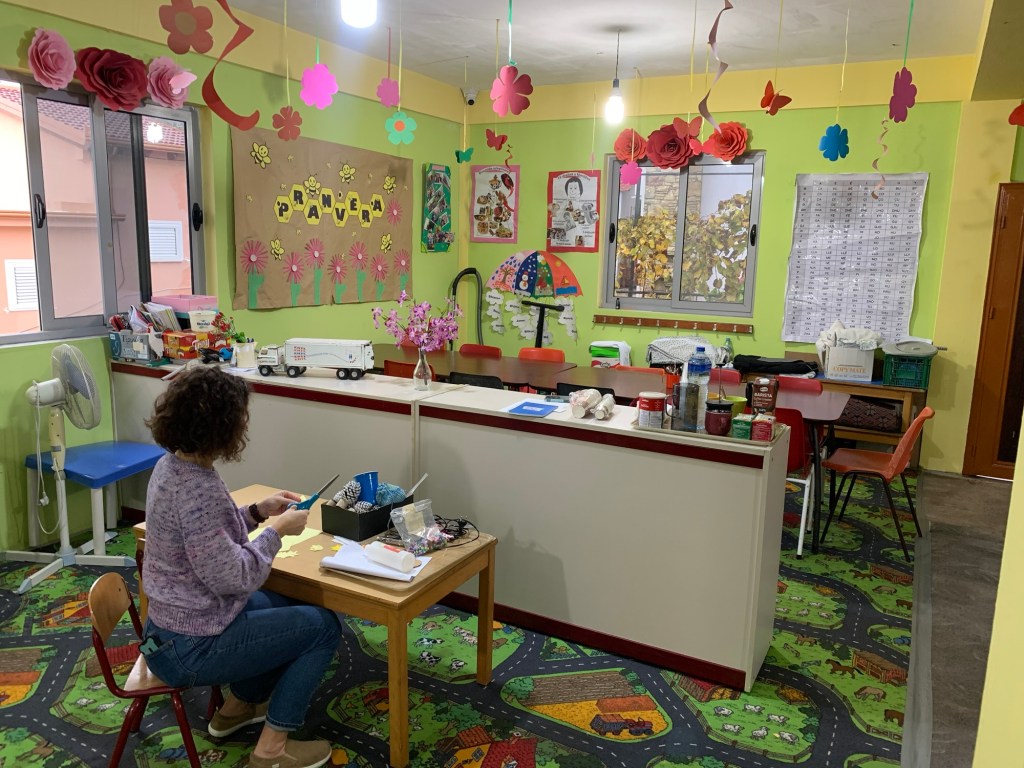
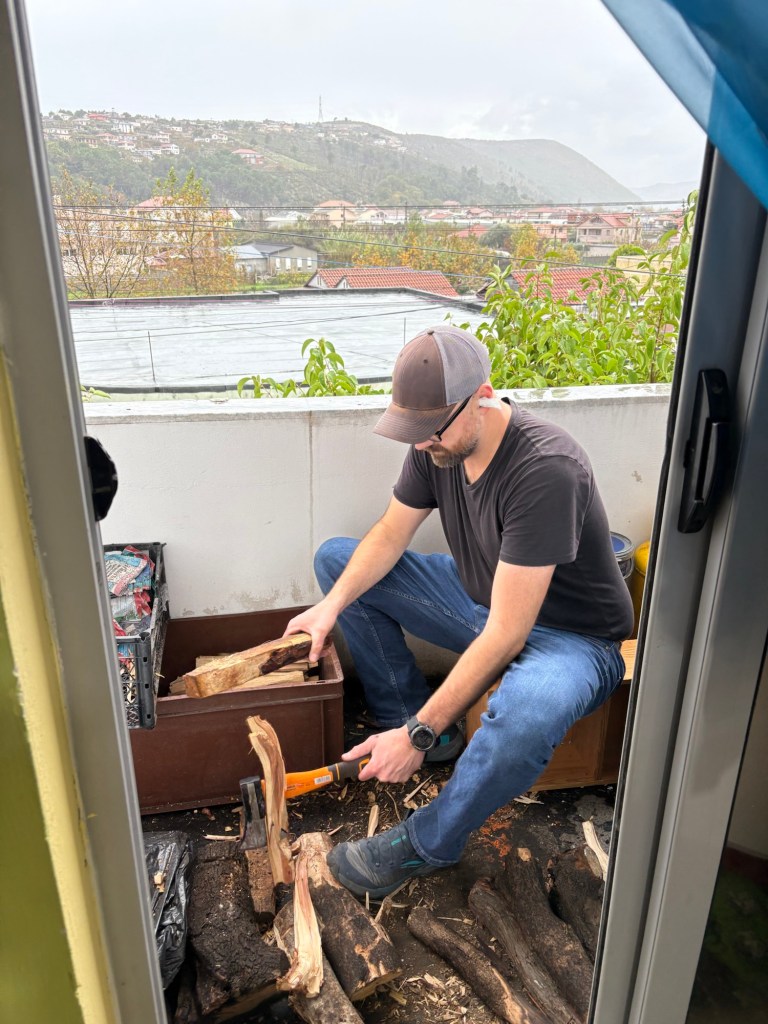
How have we fit into all this? We have primarily spent time with the kids, playing with them, hugging them, helping with homework, and just generally doing our best to show them love. Our kids have been able to tag along in the classrooms. Jude has been difficult to corral, and with news of some chickenpox cases at the school, we are switching off and keeping him home now. I have chopped vegetables and done dishes and got to help with the weekly mothers’ meeting and a little Christmas craft. Nic has split wood for their wood stove and is working on some shelving for storage. We have tried to listen and learn, but only the director speaks English. We expected the older kids to have more substantial English skills, but only a few can communicate with us.
It’s humbling to eat with the group and to know that what our kids consider morning snack time is perhaps the only nutrition those kids will get for the day. Some hot milk and a small portion of rice with buttermilk will have to fill their little bellies for an entire day. We find ourselves watching our kids carefully, hoping that they will graciously eat every single bite put in front of them. The afternoon hot meal is something simple like potato soup with salad or pasta with tiny pieces of hot dog. The food has been tasty, but it doesn’t provide many calories. And in general, even what’s available in grocery stores is mostly carbs with very minimal protein and fat.
Laila and Quinn can understand the poverty at least a little bit, but I don’t think Morgan gets it at all. And it’s hard to understand the extent of the poverty when the kids we are interacting with seem more or less okay. We’ve seen a few toddlers and babies who are just way too chill to be receiving the nourishment they need, but the older kids have enough energy to play and get in trouble. Their clothes are shabby and out of style, but they are clean and cared for.
Meanwhile, the whole area oozes neglect. It’s hard to look past the piles of trash on the beach and everywhere in the street. The stray dogs and cats we see everywhere flinch if you get too close and look disgustingly diseased. Some buildings appear sturdy and clean, but many houses appear way too dilapidated to be livable. The area has received some strong storms and heavy rain since we’ve arrived, and the poor infrastructure has limped to keep up with drainage.

Albania possesses much natural beauty according to the guidebooks, but we have yet to see much of it. We know we are learning some important things here, but we’d like to see some beauty too!

 Are you having fun with me today?