Continuing north, we left Sintra to drive to Coimbra, Portugal’s fourth largest city.
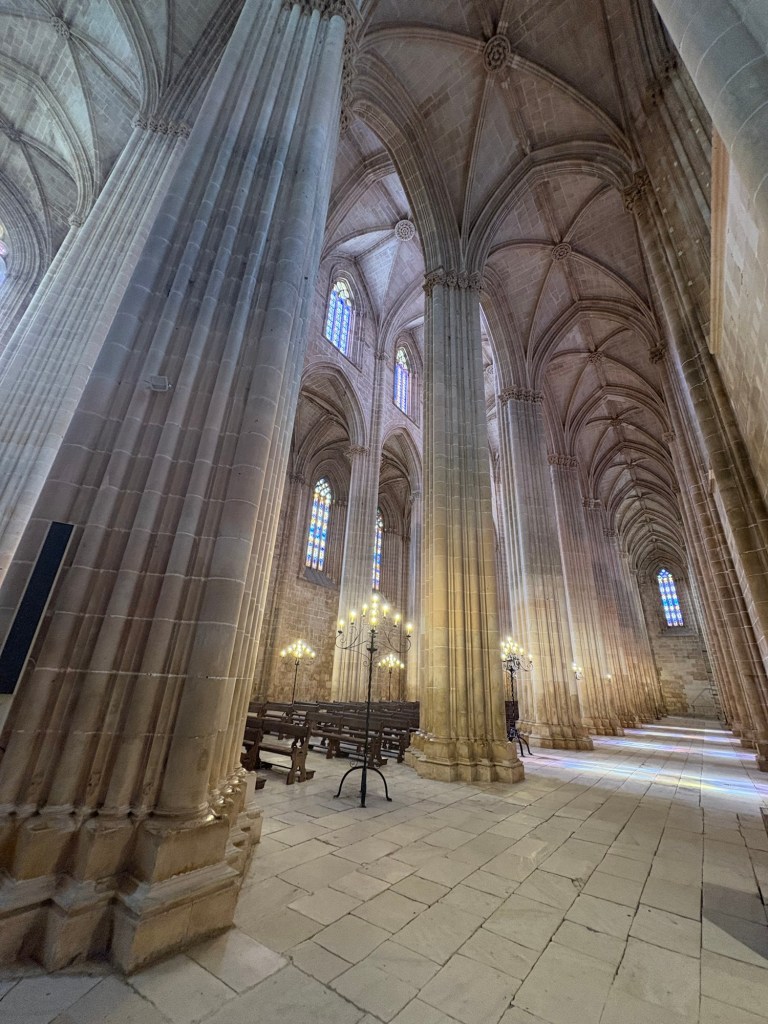
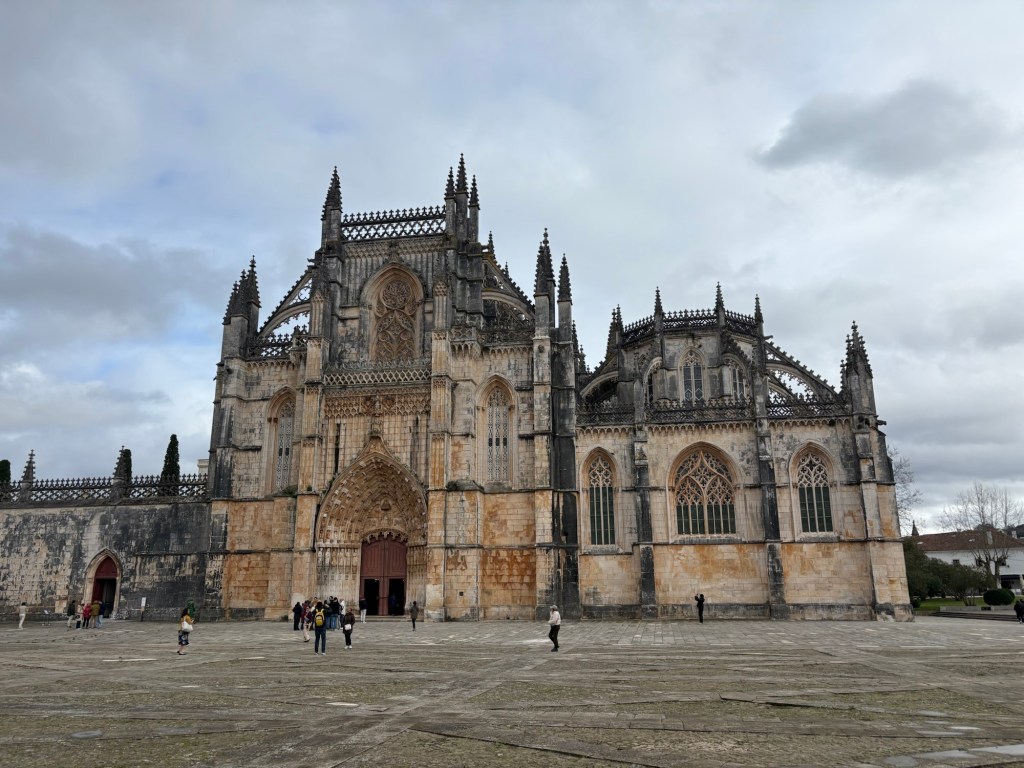
Nic had heard a podcast episode about a local hero who helped Portugal win the critical Battle of Aljubarrota against Spain in 1385. This battle safeguarded Portuguese independence and established a new dynasty. To commemorate the victory, John I of Portugal built a magnificent monastery and founded the town of Batalha. We stopped for lunch there and admired the soaring walls of the huge chapel. In an otherwise small and normal town, this huge ornate building really sticks out.
Mosteiro da BatalhaThe barest church interior we’ve seen, but still dramatic!
Coimbra has treated us well this week. We’re staying right next to an old convent and monastery with views across the river to historic downtown.
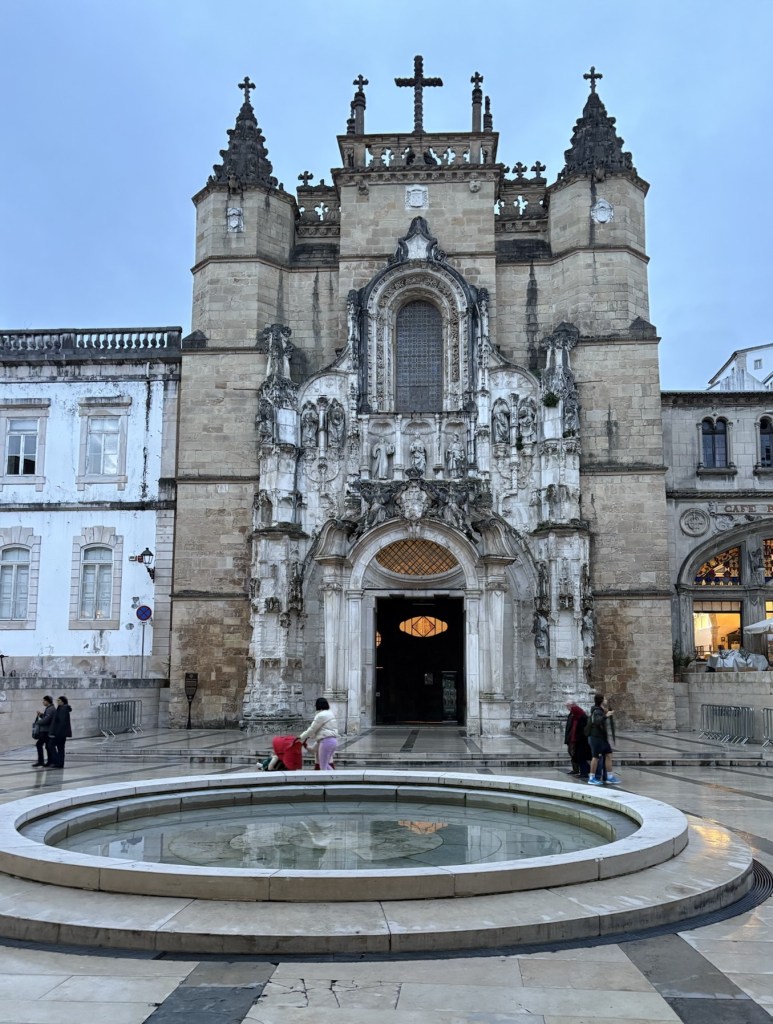
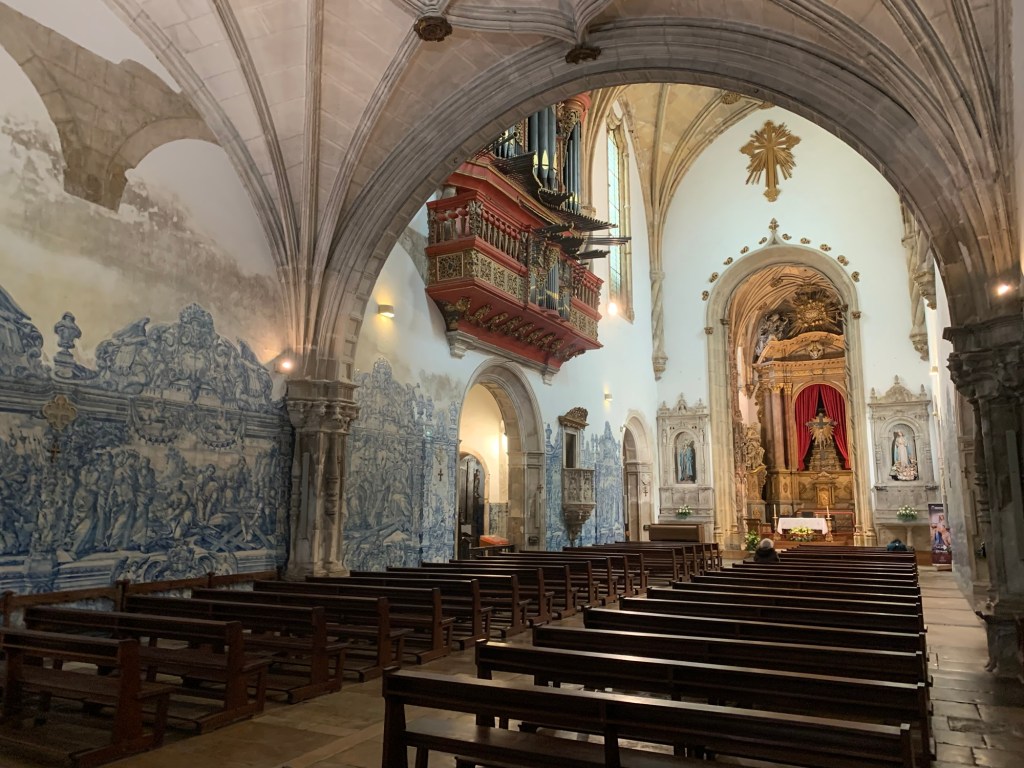
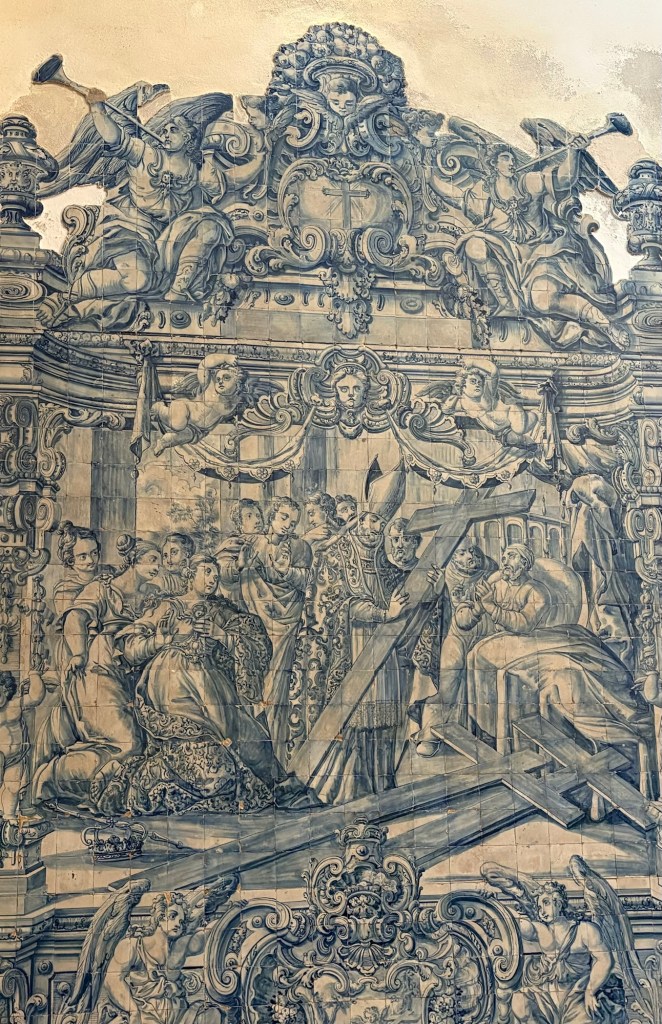
We walked into town a few days ago and visited the Igreja de Santa Cruz. We’ve seen churches decorated with oil paintings, tapestries, and stained glass, but this church has an azulejo-lined interior dating from the 1100s. I had seen the church first when taking a quick walk the night we arrived. I was walking through a charming pedestrianized shopping street, chatting with my mom on the phone and not paying much attention to my surroundings, and popping out at a pretty little plaza with this intricate church facade surprised me!
Igreja de Santa CruzTiled pictures everywhere
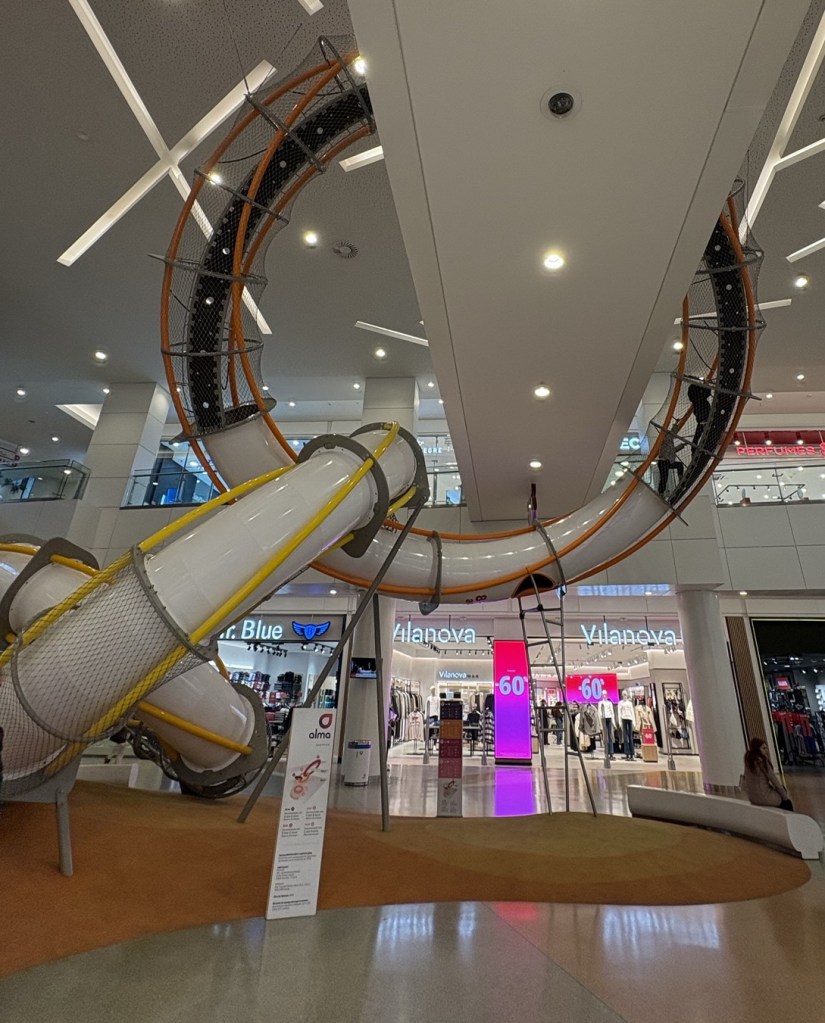
It has rained on and off here, so we’ve spent some time indoors doing school or shopping by car. We found one of the coolest playgrounds of the whole trip inside a mall. I haven’t been in an indoor mall since who knows when, but a few of us needed to replace some worn-out clothing items. We found much-needed socks and a shirt for Morgan, and the kids got to climb high above the mall floor!
PE for the day
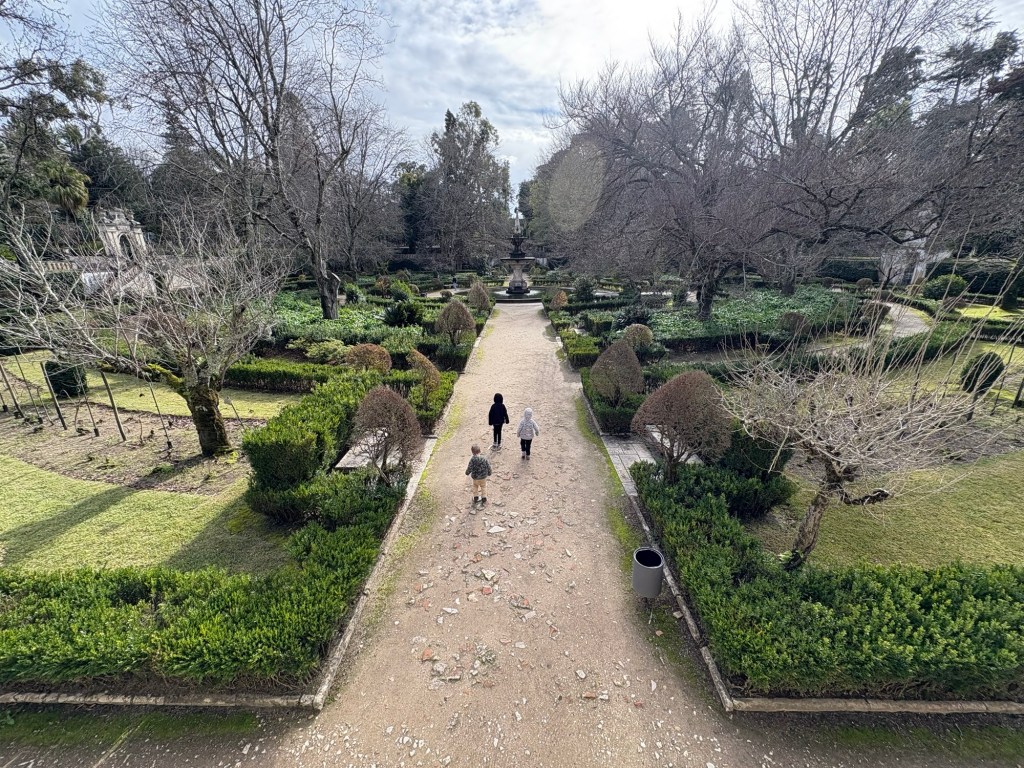
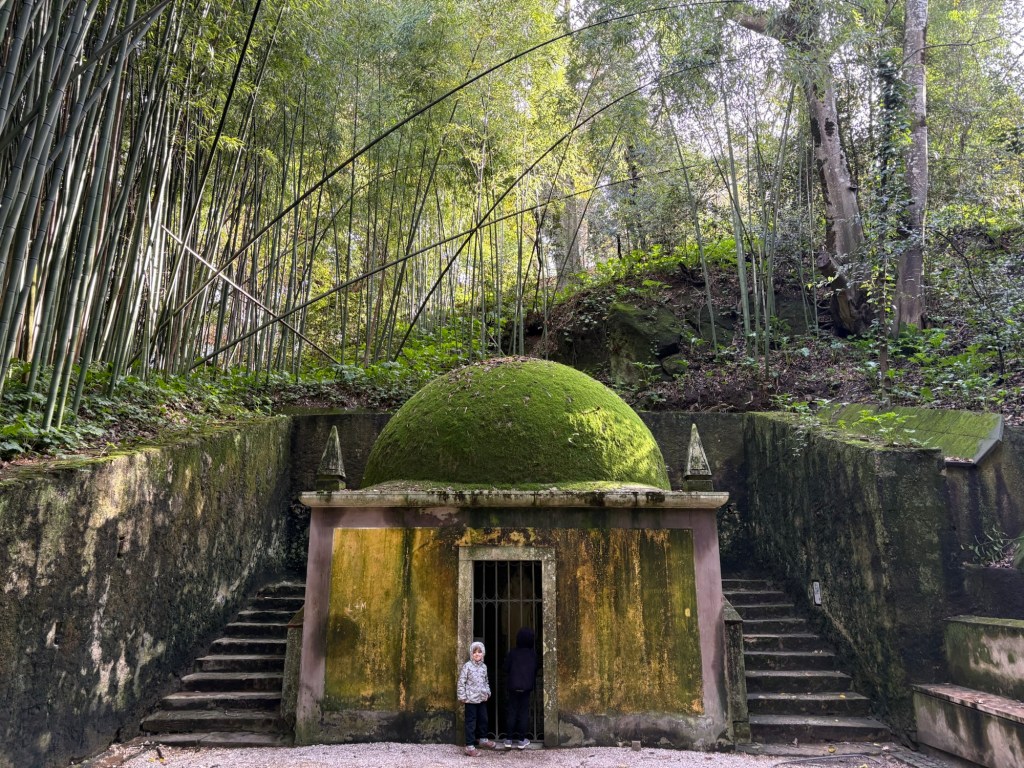
As usual, the whole family also enjoyed a stroll in Coimbra’s botanical garden. All we really need is a free restroom, fish ponds, and a bamboo thicket. Sunshine helps too.
Our last hurrah in Sintra was the perfect cherry on top of our magical visit: a trip to the Quinta da Regaleira, one big piece of art in the form of an estate.
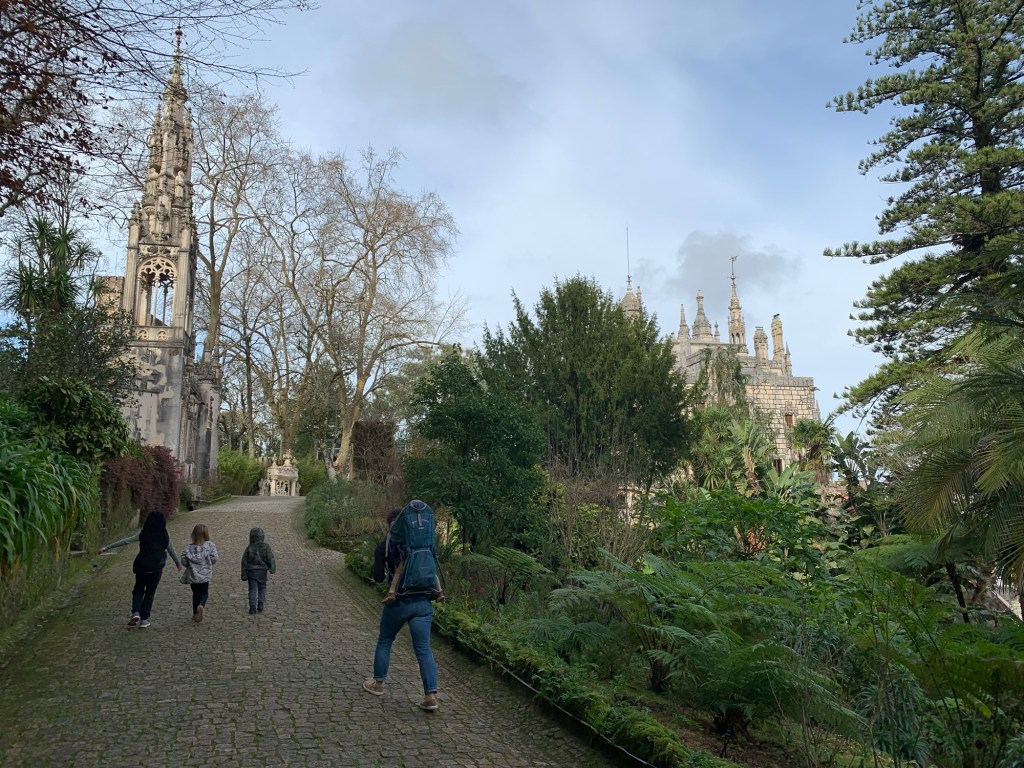
The palace
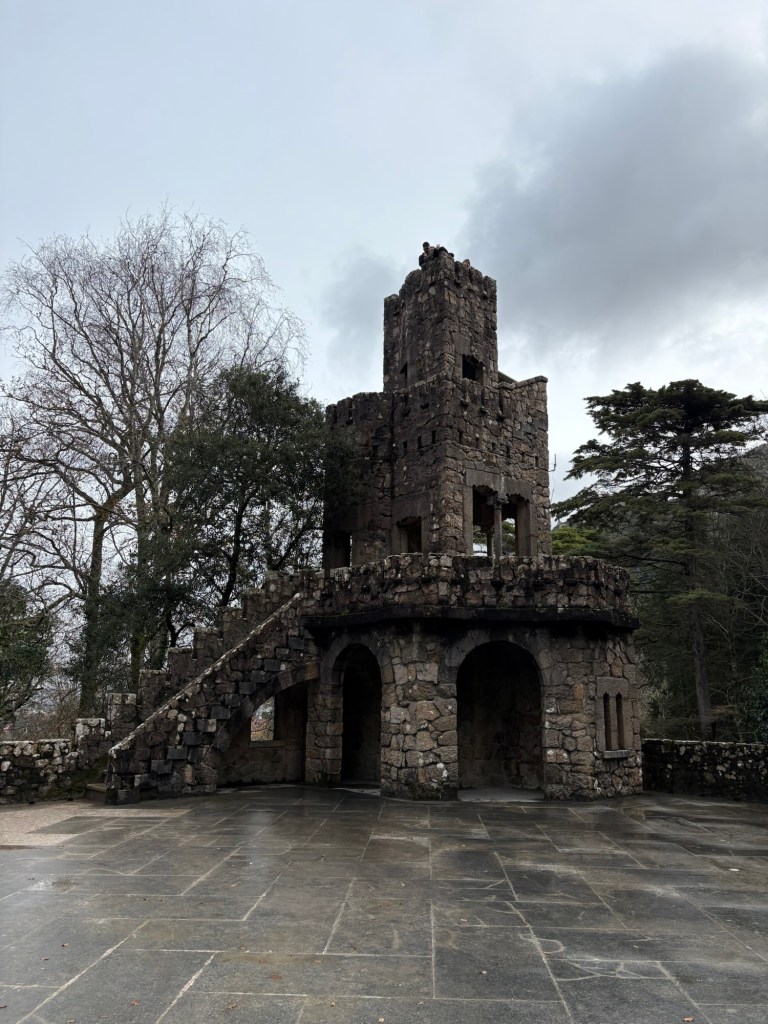
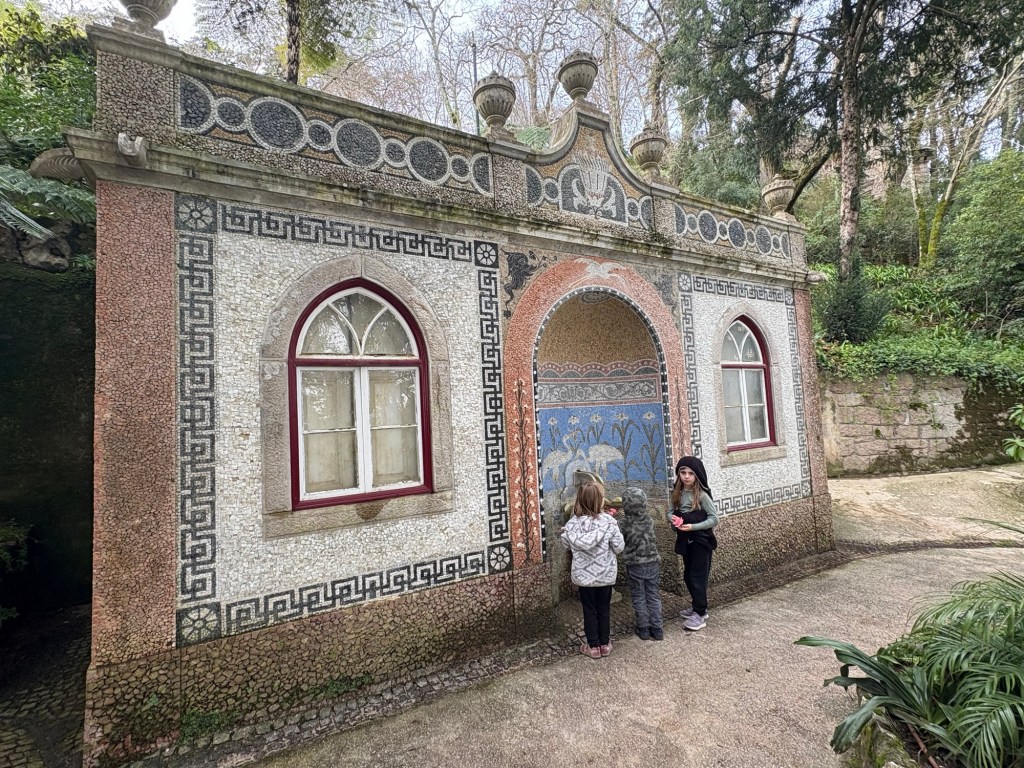
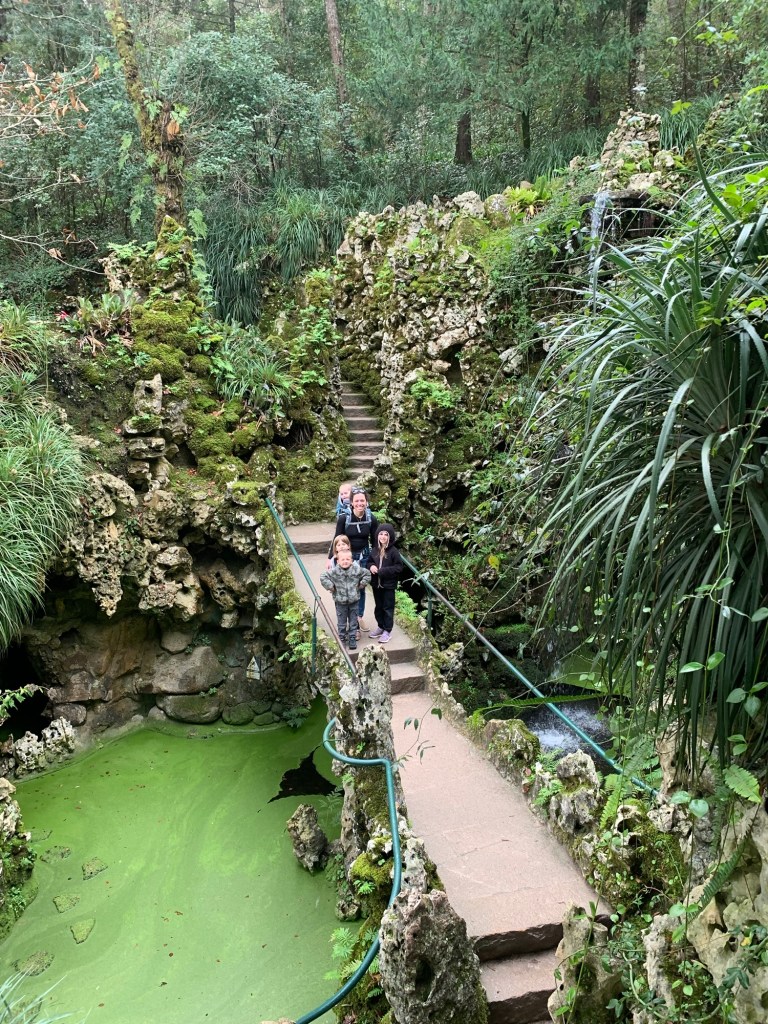
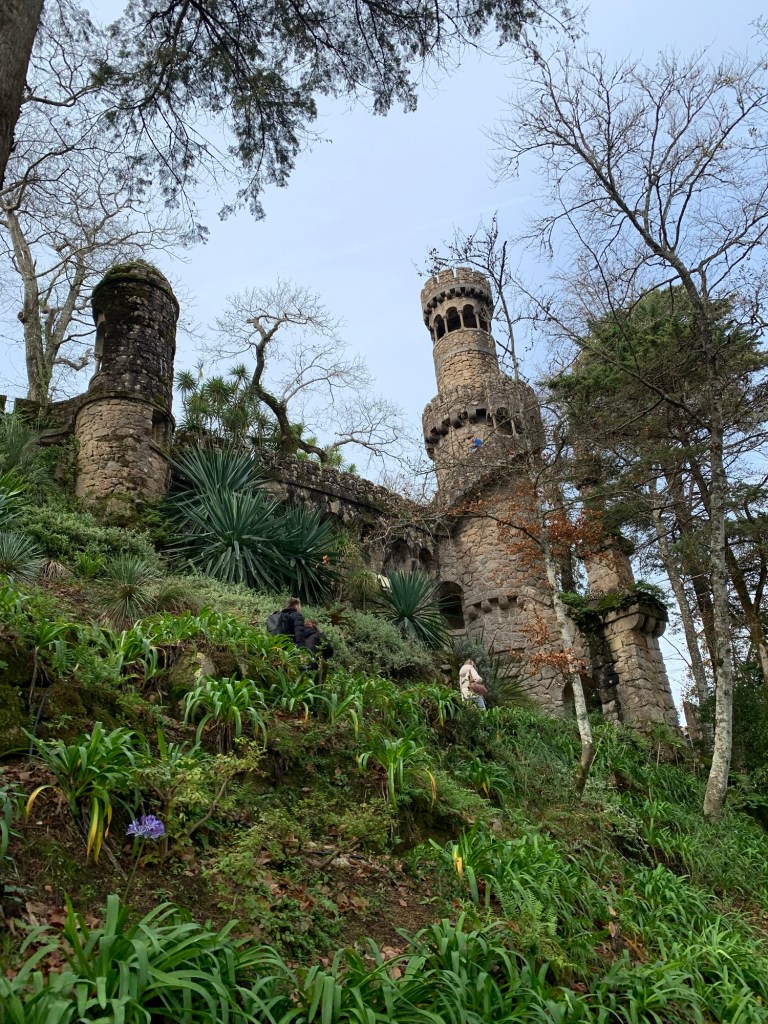
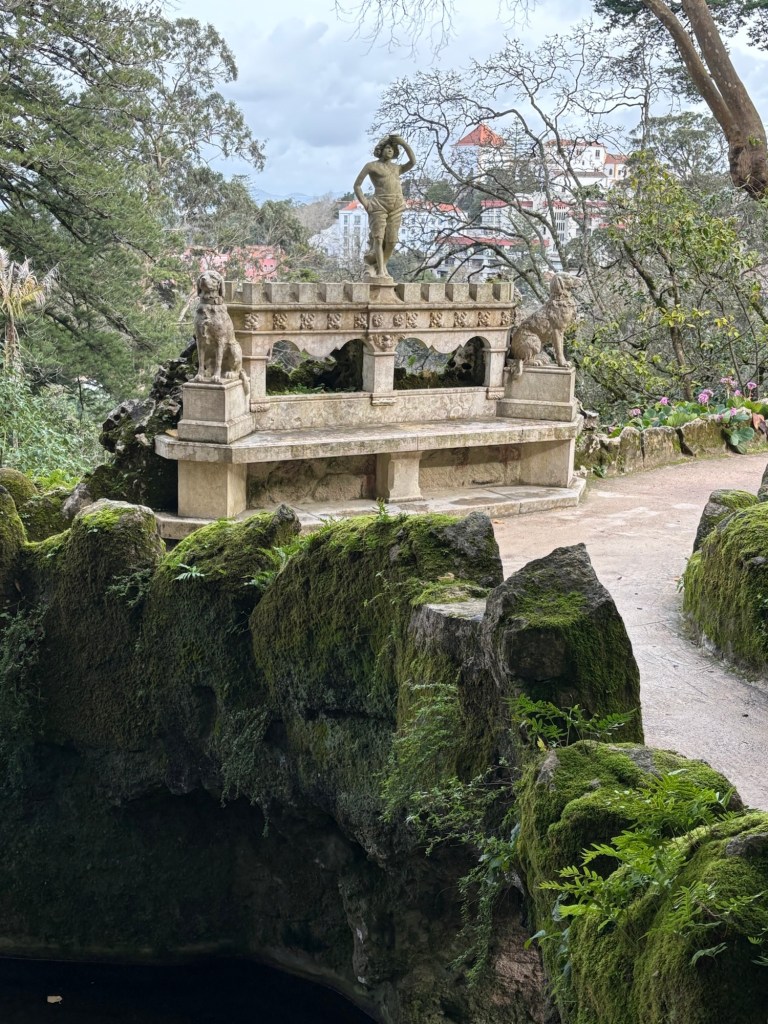
Situated on the side of a hill, the estate’s grounds feature a set of winding paths and staircases through the landscape. The plant life somehow appears simultaneously wild and perfectly manicured. Around each corner you discover a new and amazing tower or fountain, grotto or waterfall, chapel or palace. Every view seems more beautiful than the last. It’s enchanting and beguiling, the kind of place you could play hide and seek and literally never be found.
One of many cave pathways
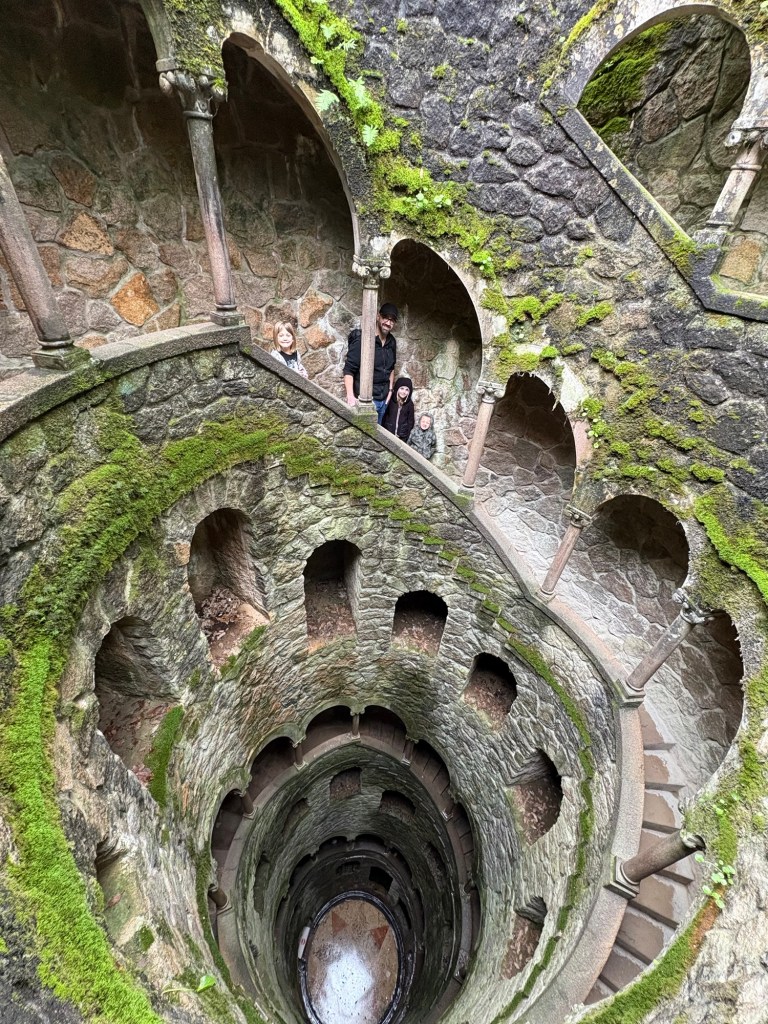
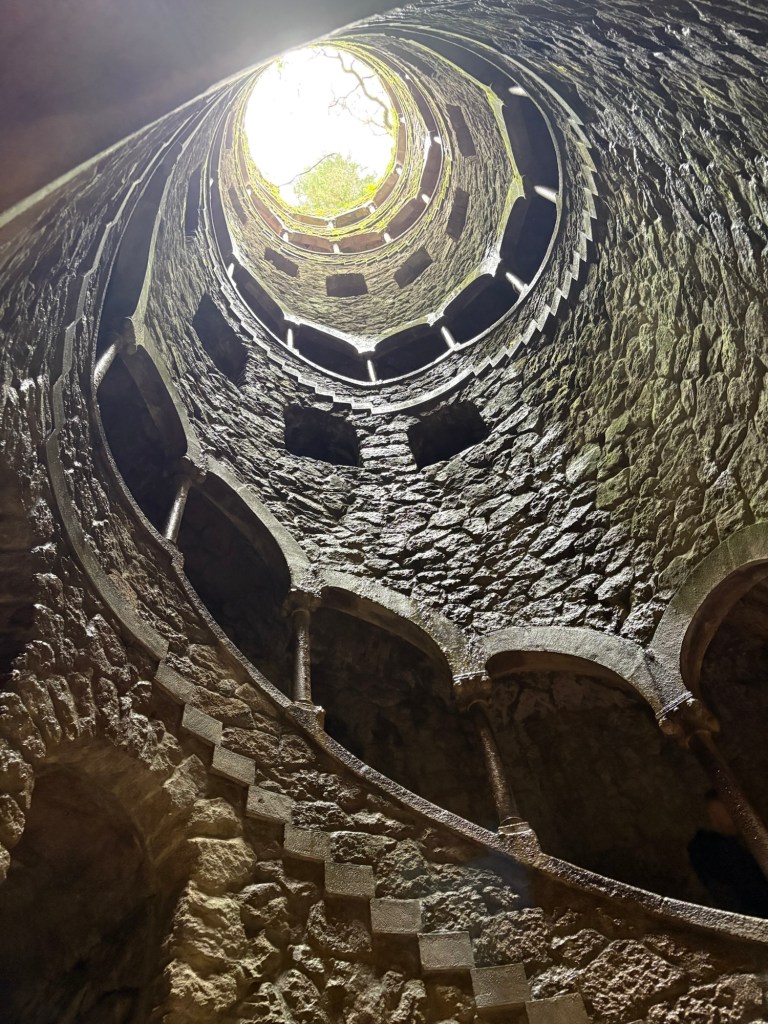
Although we didn’t see many other kids and had to keep reminding ours to stay close to us and keep the noise down, it was the ideal tourist attraction for our crew. The kids explored secret passages through dark caves and grottoes, climbed narrow steps to the tops of towers, and descended the spiral staircase to the bottom of the 88-foot deep Initiation Well. I can only imagine the fun they’d have on this property with unbridled freedom.
Looking down into the Initiation WellAnd looking back up!See who is up high?A magical little bridgeSo many towers!Always climbing up!
By the time we entered the palace building and had a chance to read some information, everyone was tired and ready for lunch. (Do you see the common theme in our travels? We see so much and never have time to read more than the bare minimum – oh well!) We would love to find a good coffee table book about this estate, as it certainly deserves a book of its own. I’m not sure what we are looking for exists, but it certainly should!
Our Sintra expeditions brought us into contact with only a fraction of the sights. Our guidebook recommends a day or two in Sintra, but we could easily spend a few weeks exploring it all in greater detail. We would love to come back here again and can heartily recommend a visit.
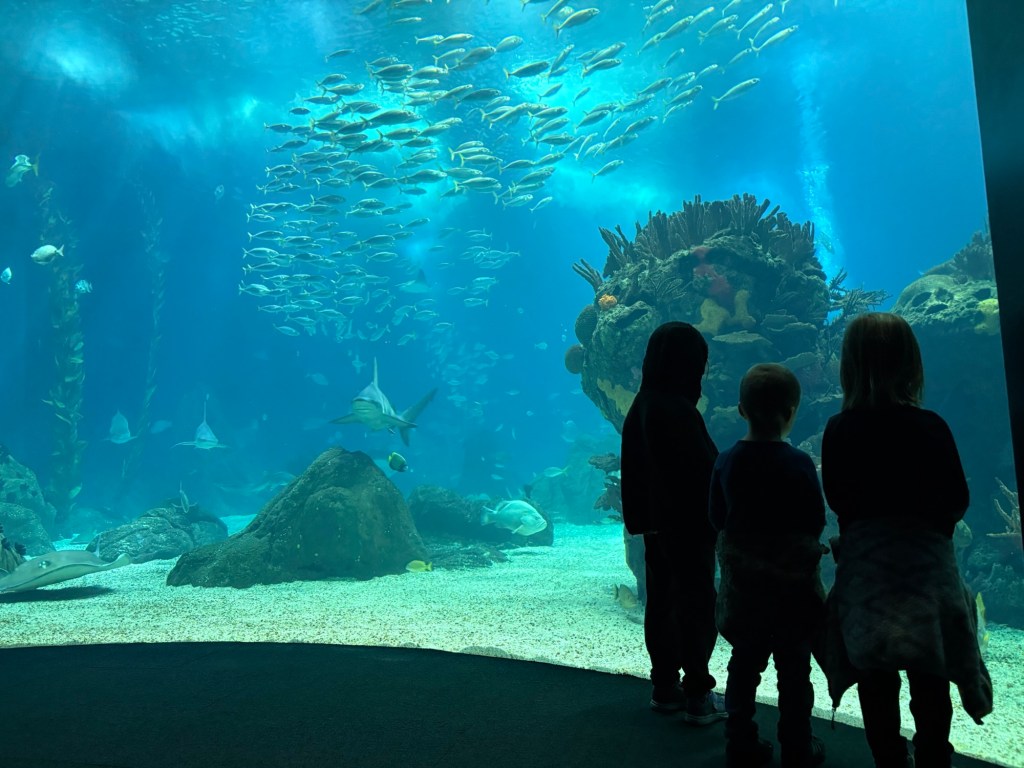
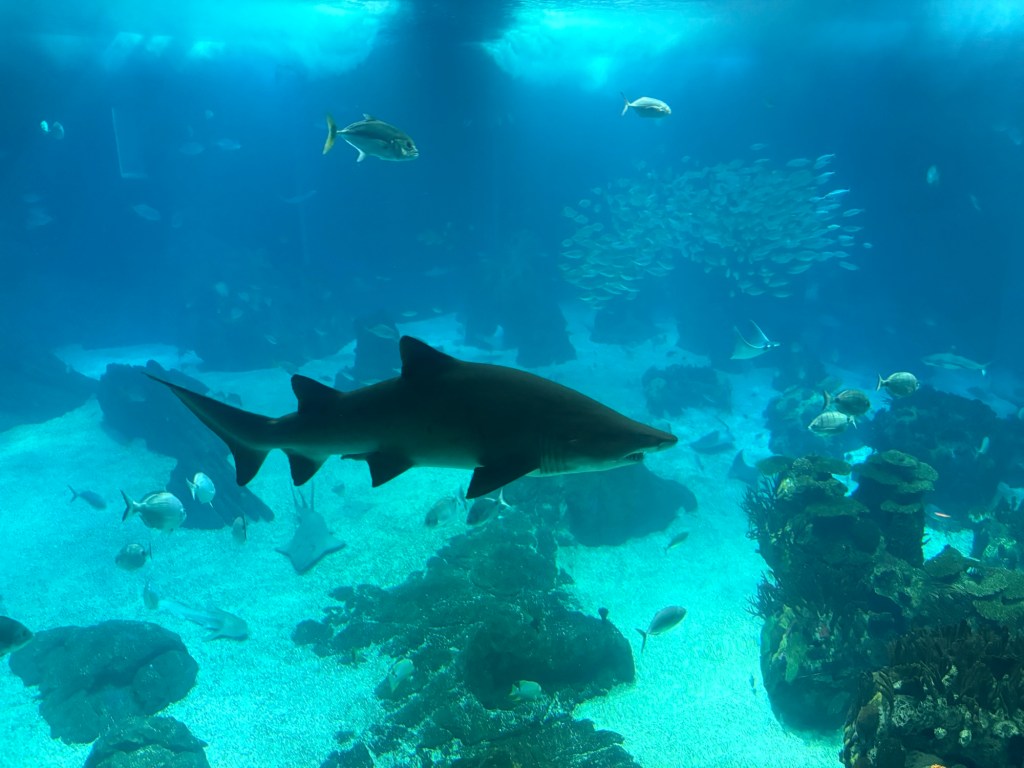
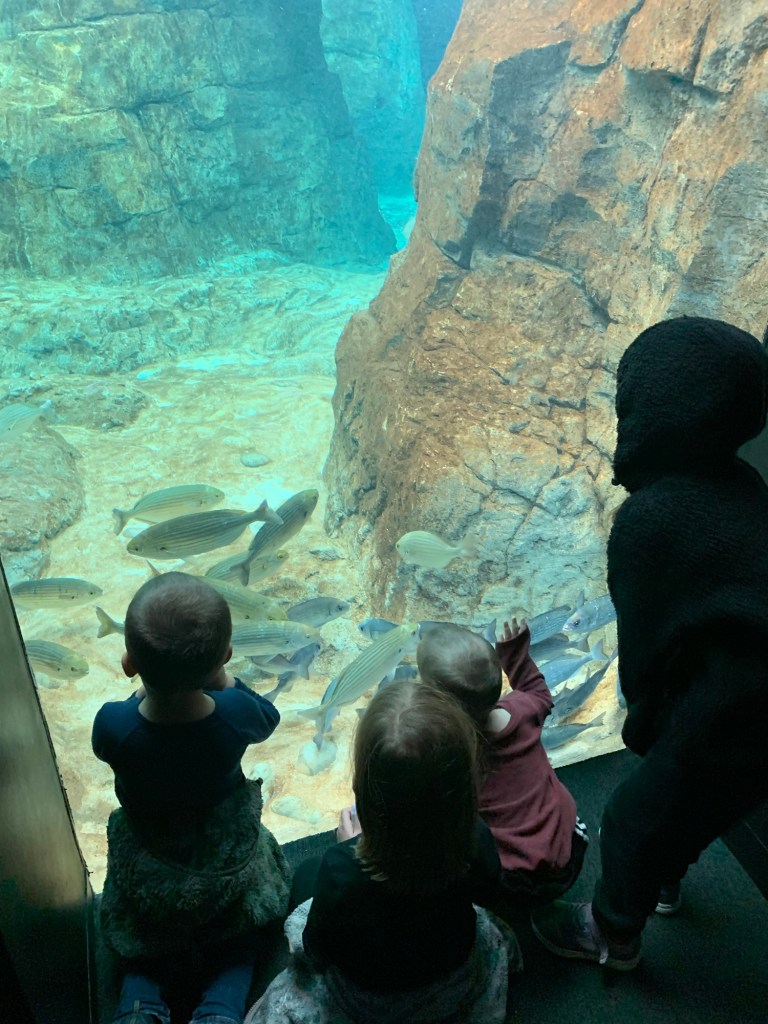
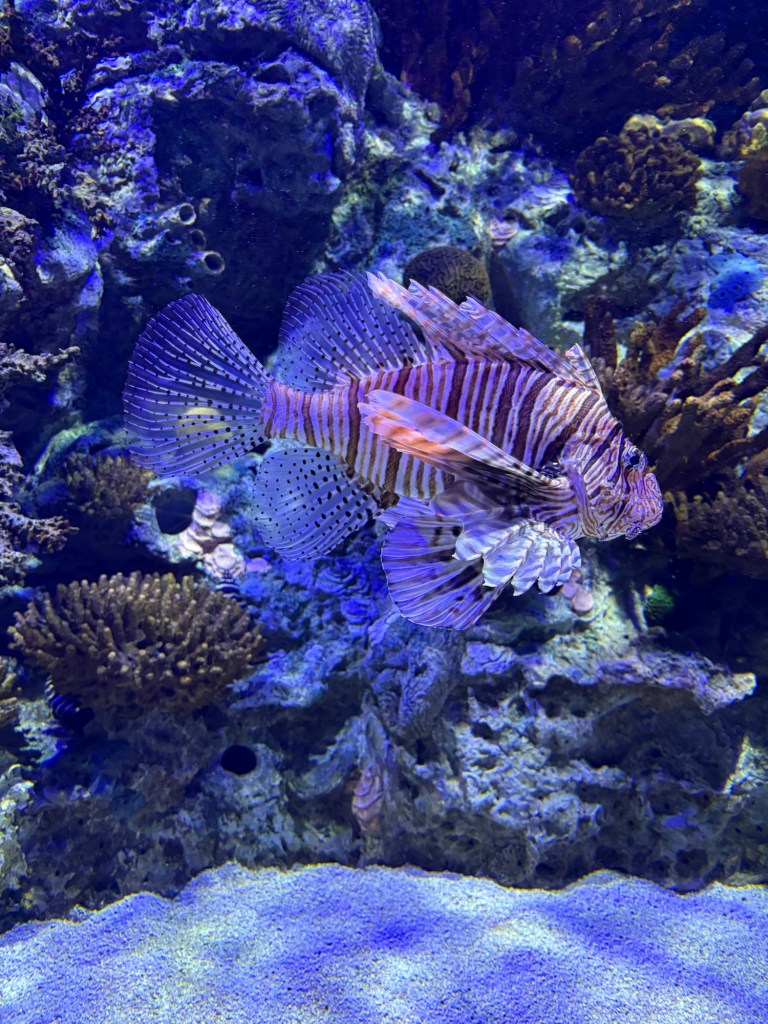
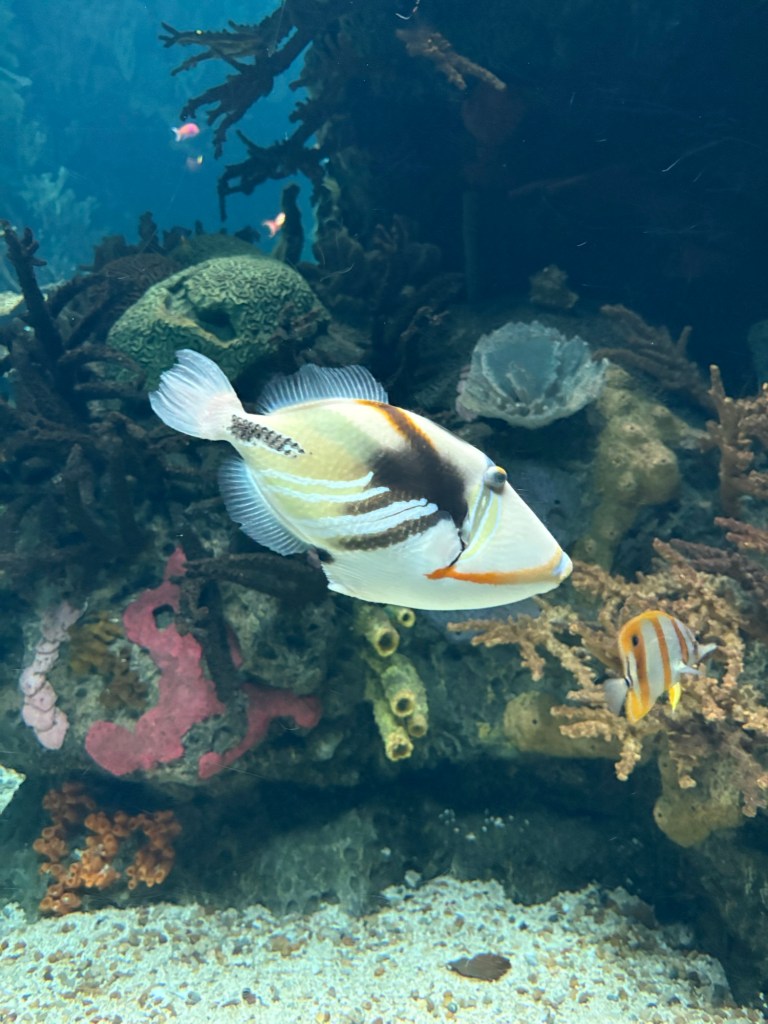
This rural-ish family doesn’t get many opportunities to go to museums, so we spent a big chunk of our Lisboa day indoors looking at aquatic creatures at the Oceanário de Lisboa. The eye-catching centerpiece of this awesome aquarium is the enormous two-story tank full of sharks, rays, and fish. The layout of the aquarium gives you many views into this tank as you move through exhibits from different oceans. The small amount of written information meant we could feast our eyes on the animals without feeling guilty for not reading everything or forcing our kids to listen to endless explanations they didn’t ask to hear. Family favs were the sea otters, Sunfish, bright tropical fish, sea horses, and penguins.
Homeschool science class in progressLots of sharks coexisting peacefullySo many pretty fish!One of my favorites
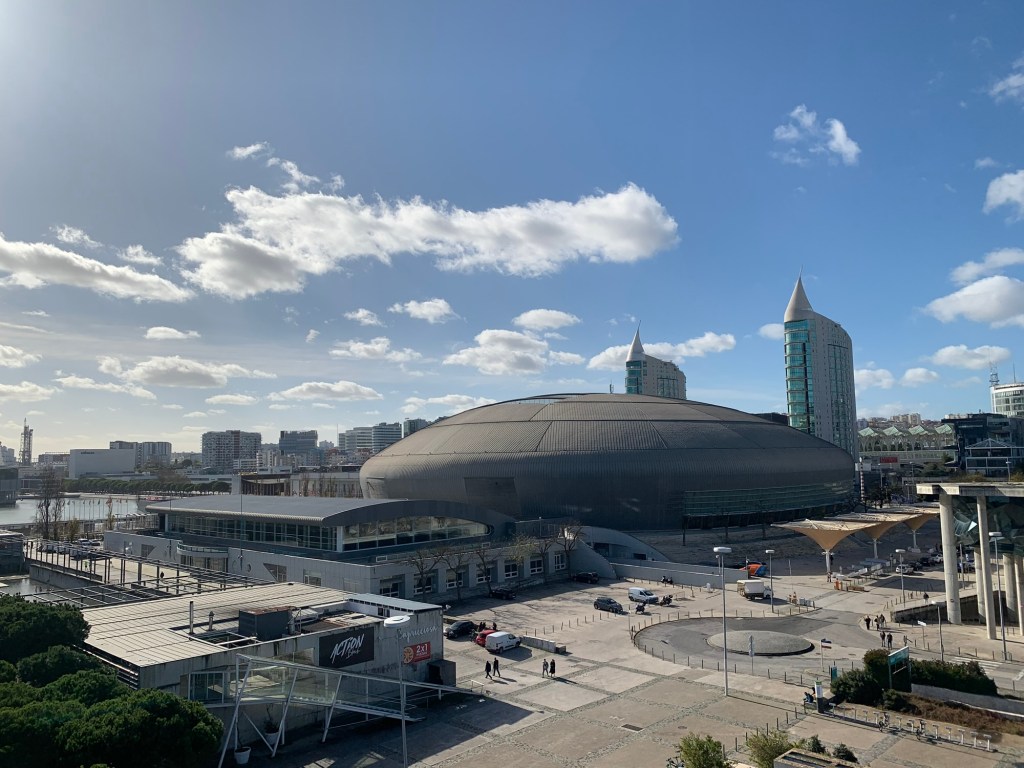
After the aquarium, we hopped on the nearby cable car for an aerial tour of the futuristic setting of the Expo ‘98.
I didn’t document it with pictures, but the girls and I got to visit a unique yarn store, Retrosaria Rosa Pomar. In a country full of sheep, this company is the only one to take Portuguese raw wool and transform it completely into yarn for consumer purchase. Their yarns are perhaps the ideal example of Portuguese yarn: toothy, rustic, and tough. I appreciated the chance to touch all the yarn (and to buy some too!) and to read labels and see yarn from less common breeds of sheep. The girls loved looking around and touching all the sample knits too. All three boys fell apart, so we made our way back to the train and to home base in Sintra.
We missed the most popular sights of Lisboa. There is a chance we’ll swing through again on our way back to the south coast, or we might just have to see it all next time.
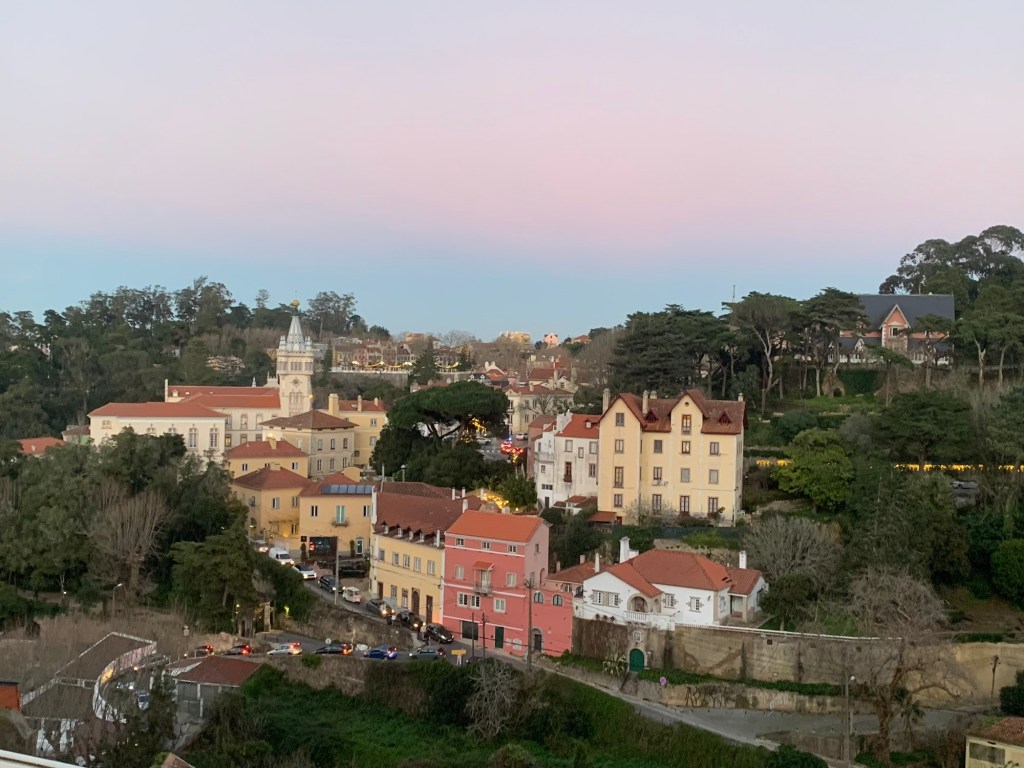
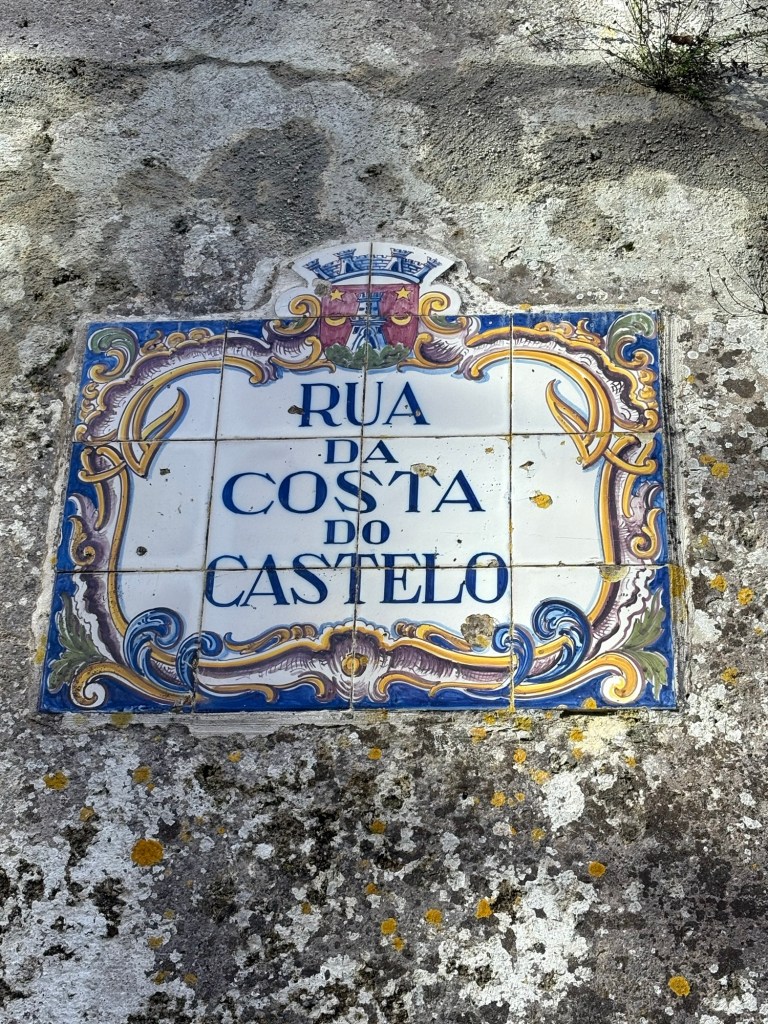
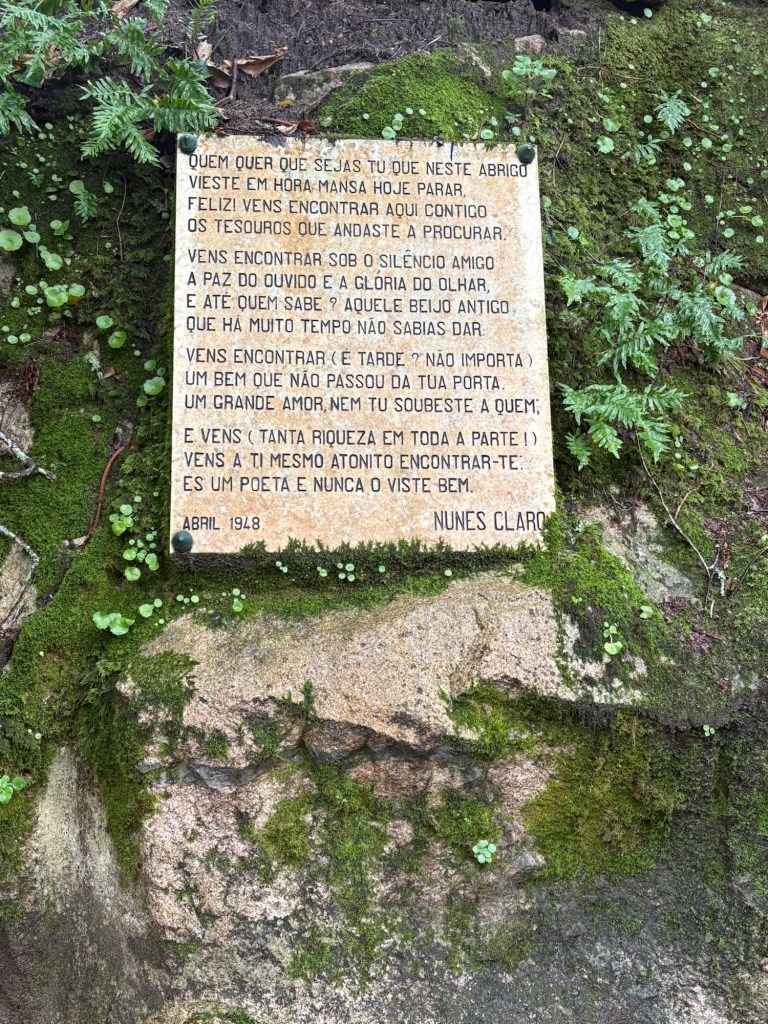
We interrupt our regular programming to describe a magical, surreal land – a mysterious place covered in misty clouds that come and go without reason, defying the weather forecast on a daily basis and layering surfaces with moisture and moss and mildew. Here, the hilly environs shelter numerous majestic estates and castles, hidden by dense, jungle-like foliage of incredible variety. Palaces and ancient castle walls soar high above narrow cobbled streets. Intricate and colorful tiles adorn building facades and tiny benches, and you’ll find the street names stuck to the sides of walls in beautiful little groupings of hand-lettered tiles. Secret stairways transport you steeply from moss-covered path to narrow street, or garden, or viewpoint, or to another set of stairs. The woods issue forth mysterious sounds and smells – spicy eucalyptus, fierce wind, random opera singing, bells, the many languages of international visitors. This is Sintra, and I really do think it’s magical!
Originally a retreat for the wealthy from Lisboa’s heat and hustle, Sintra is now a 40-minute train ride from the middle of Lisboa. The pile of windy, hilly streets made us nervous driving in, but we managed to park by our place and haven’t had to use the car much.
A chilly dusk walk through townPalácio Nacional de SintraBeautiful azulejo street sign
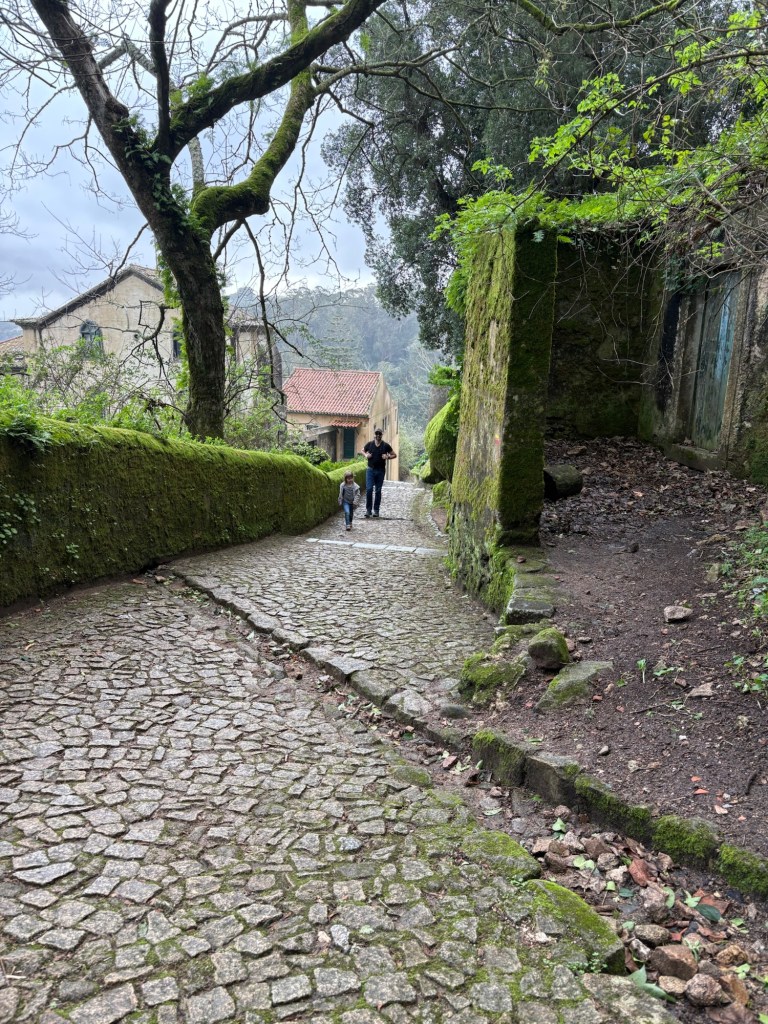
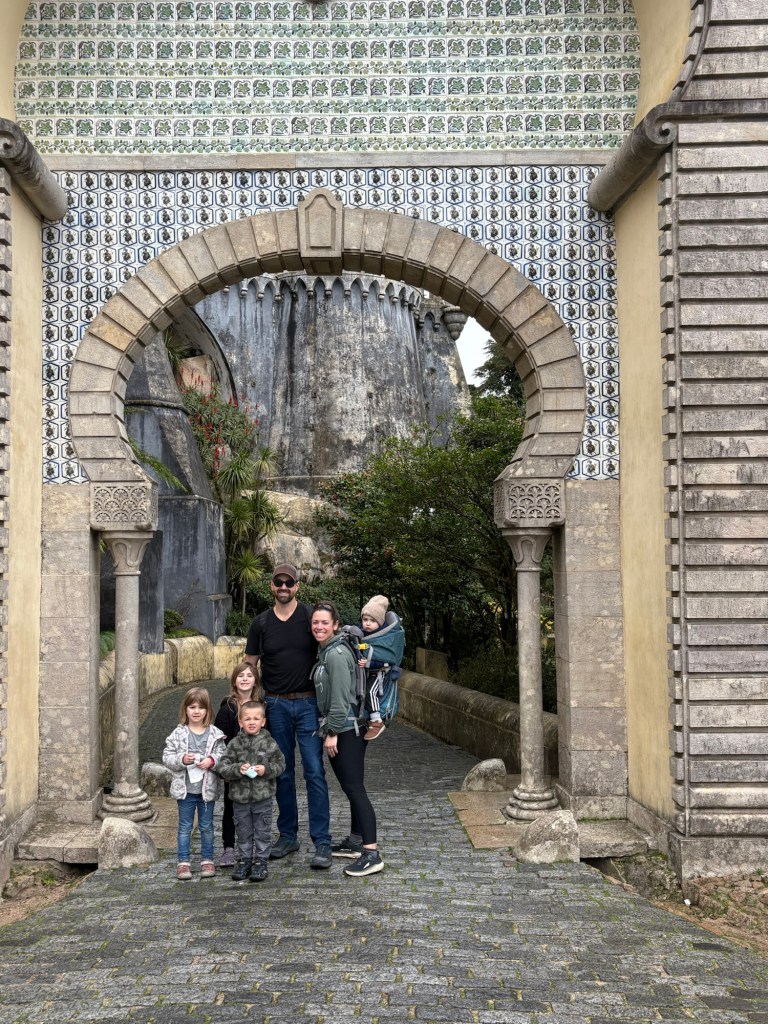
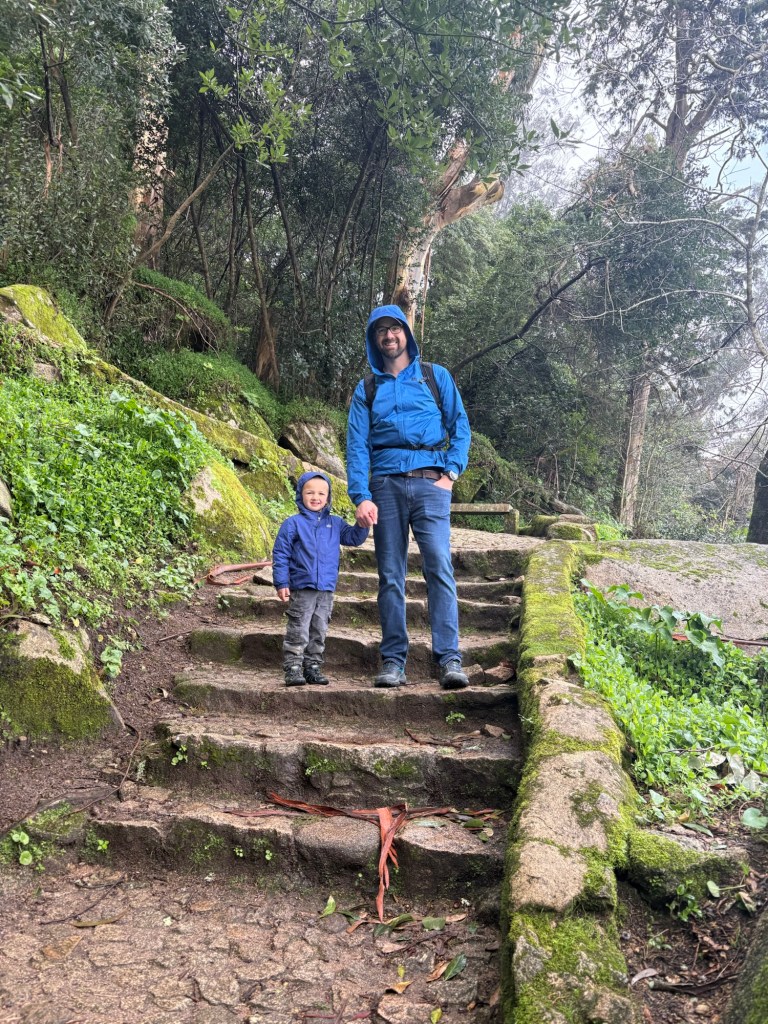
We’ve had to dodge unpredictable rain, but when the skies cleared enough for a hike, we headed uphill to see the Palácio Nacional da Pena, a palace affectionately dubbed the “Ketchup and Mustard Castle” a few months back when our kids first saw a guidebook picture. We gained over a thousand feet as we hiked through parks, woods, narrow streets, and up stairways.
Part of the trail upwards!Ketchup and Mustard Castle
Rain rolled in and kept us from hanging out for long, but before heading down, our kids had a celebrity moment with some Koreans who started talking to us about our kids, saying they never get to see babies at home. They asked to take our picture and to then take a picture with us. Then we stood in the rain and airdropped pictures back and forth. From Danish scowls to Korean adoration, it’s always interesting to travel with four kids!
The paparazzi selfie
Hiking downhill became its own adventure when we sought shelter from the rain in an amazing little cave. And, never one to turn down a chance to interact with poultry, Laila caught a bewildered rooster in a park. I’m guessing the poor guy had never had a young American chicken lady grab him by the tail feathers, since he appeared quite confused by the incident. Thinking about the different types of terrain, history, human and animal interaction, and architecture we saw on this one hike makes a typical walk at home sound, well, very boring.
Lunch in a caveChicken lady
Laila’s rooster is a resident of the Parque da Liberdade that we cut through frequently in Sintra. We have seen some beautiful parks in Portugal, many of which are very old and thoughtfully designed. With the mild climate, we saw a few plants blooming even in the middle of winter, and we wonder what it would all look like at other times of the year. What a treat to see flowers in January!
Our last Airbnb, though short, reminded us of a few things we miss: conversation and freedom. We planned our stay by Zambujeira do Mar for two nights as a brief transition between hanging with my parents in Lagos and our next longer chunk of time in Sintra. We expected little more than a suitable place to stay, but we drove away refreshed in unexpected ways.
For the kids, it’s hard to travel without a few acres in tow. We turn our wild children outside regularly at home, and our quiet street means we can leave them to their own devices. They are loud and messy and get into all sorts of trouble. It’s frustrating at times and results in obscene amounts of laundry, but it also uses up a good bit of their endless energy and creativity.
While traveling, the kids have mostly been confined to apartment life. We are constantly asking them to stop stomping and yelling, trying our best (with middling results on a good day) to be conscientious neighbors. We occasionally have a terrace or small yard that helps a bit, but it doesn’t compare to our yard and field at home. We visit playgrounds when we can and log quite a few walking miles while sightseeing, but it’s not the same as freedom and space for the kids. I’ve been taking our space at home for granted, I think, and I feel for all the kids in the world (and their poor parents) who can’t run and play freely on a regular basis.
Now, I have to pause to say I do see a downside of raising our kids this way. I look at other European kids, though they be few in number, and see mostly compliant, quiet miniature adults. They appear to be considerate and so much more aware of the people around them compared to our little animals. Most of the time I hardly even notice them, whereas my children’s every act demands attention. There has to be some cultural osmosis going on here, because we have instructed and corrected our kids constantly on such topics for their entire lives without getting the same result. We raise them to not feel like they are the center of the universe, but these European children appear to understand that lesson innately. Even the babies scream less than ours!
Back to Portugal – our last lodging came with a few acres of space, lots of kid toys, and enough distance from a quiet road. And a big bonus: a few friendly kids who were happy to play outside. The kids romped and roamed, and everything felt right with the world. In the brief time we were there they were outside until bedtime and rushed through breakfast to get outdoors – beautiful!
Meanwhile, our kind expat Belgian hosts made time to chat with us. We stood in the warm sunshine for quite some time, talking about kids and Portugal and expat life and Airbnb hosting, the entire conversation made possible by the amazing language skills of so many Europeans.
We left the conversation feeling so refreshed, and we realized that it had been a long time since we had had an in-person conversation with anyone other than each other or my visiting family. We had meaningful talks with one of our Albanian volunteering contacts, but that was almost two months ago! And with young kids consuming our lives, we already run at a deficit where adult conversation is concerned.
So Montana friends, forgive us if we talk your heads off when we return. It’s going to be hard to show some restraint! And if you cross paths with someone who needs a chance to chat, give that person the gift of your time and attention!
We arrived in Portugal one week ago, still with my parents in tow. Jude screamed his way through the descent, but the flight felt much easier for me with extra adult hands to deal with him. We have at least five more flights on our adventure, and I will be relieved when Jude’s time on airplanes is completed.
Praia da Caldeira
The eight of us spent a peaceful week in Lagos. We searched for shells, explored cliffside paths, browsed shops, and came down with colds.
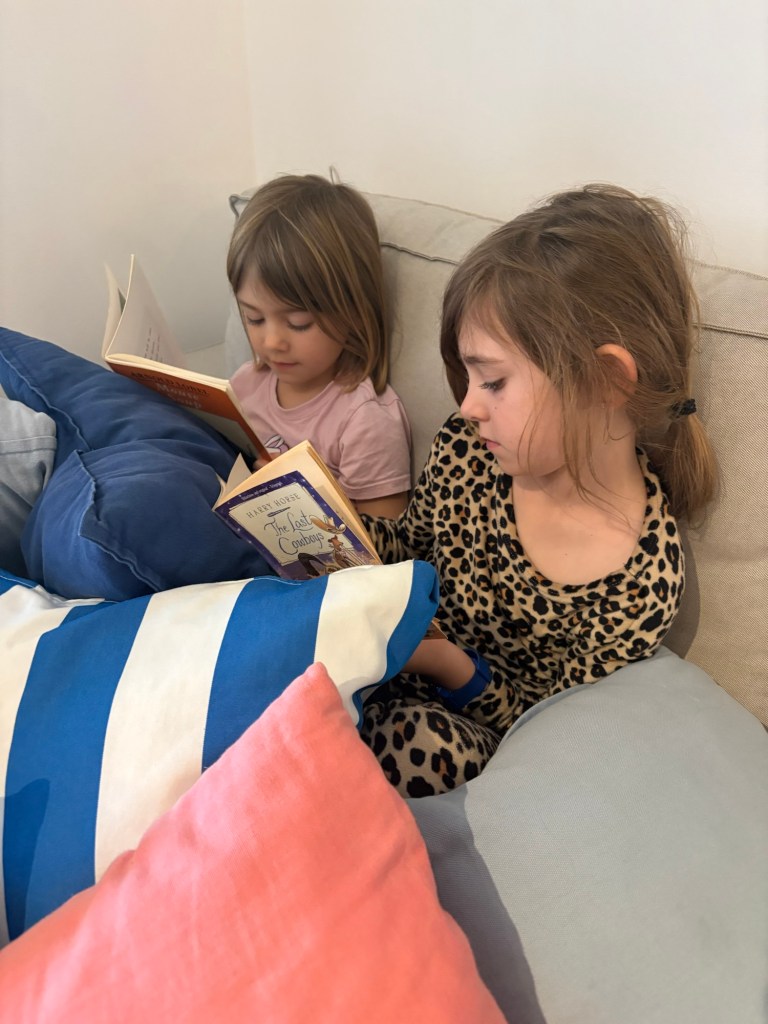
Along with the normal tourist shops and interesting-to-us grocery stores, we were very excited to find a used bookstore selling only English books! We have really missed having regular access to good old paper books. We have all been reading books on screens during our trip, and a few of us really miss paper. Our kids love to sit down with a stack of library books at home, and sitting down with the iPad is just not the same. Once we have regular access to English books in the UK in February, we will carry what we can. And someday, we will again have our piles of paper to hold!
Real books!
We celebrated Laila’s eighth birthday a few days after Christmas. Nic and I got to take her out to shop for her own presents (with free babysitting services), and she chose a piece of chocolate cake from a local bakery for her treat. Eight sounds so old to us, and a recent growth spurt has also made her seem like such a big kid.
She’s 8!
The Portuguese coastline is an endless string of beautiful (and mostly empty at this time of year) beaches. Miles of boardwalk and trails connect cove after cove of sandy beach beneath crumbling cliffs. We saw a number of people backpacking up or down the coastline – what a beautiful trip that would be! Some rainy weather kept us inside for some of our time in Lagos, but for the most part, we have felt amazingly comfortable considering it’s the dead of winter! The huge expat population here obviously enjoys the mild climate as well. Our shorts and short sleeves have emerged from their vacuum-sealed cocoons – yay! The sandy beaches come with the unfortunate mess of sand, yet another less-than-welcome travel hazard given the lack of dryers and my lack of foresight in booking a few lodgings without a washer. We will have to try out a Portuguese laundromat soon, but when they come connected to a grocery store and run while you shop, I don’t think it will feel so inconvenient.
Hoping to see some powerful waves one day, we drove out to Cabo de São Vicente, an end-of-the-earth place where the Romans believed the sun sank into the ocean each night. We saw only gentle swells on a calm day. Locals drop fishing lines from the top of these sheer cliffs – crazy!
Cabo de São Vicente on a calm dayLagosPonta da PiedadeHigh above the ocean at Ponta da Piedade
Daily life goes on with mundane tasks like haircuts. Jude got his first buzz cut. I’m not a huge fan of the look on him, but it’s funny to keep asking him where his hair went and to watch his reaction.
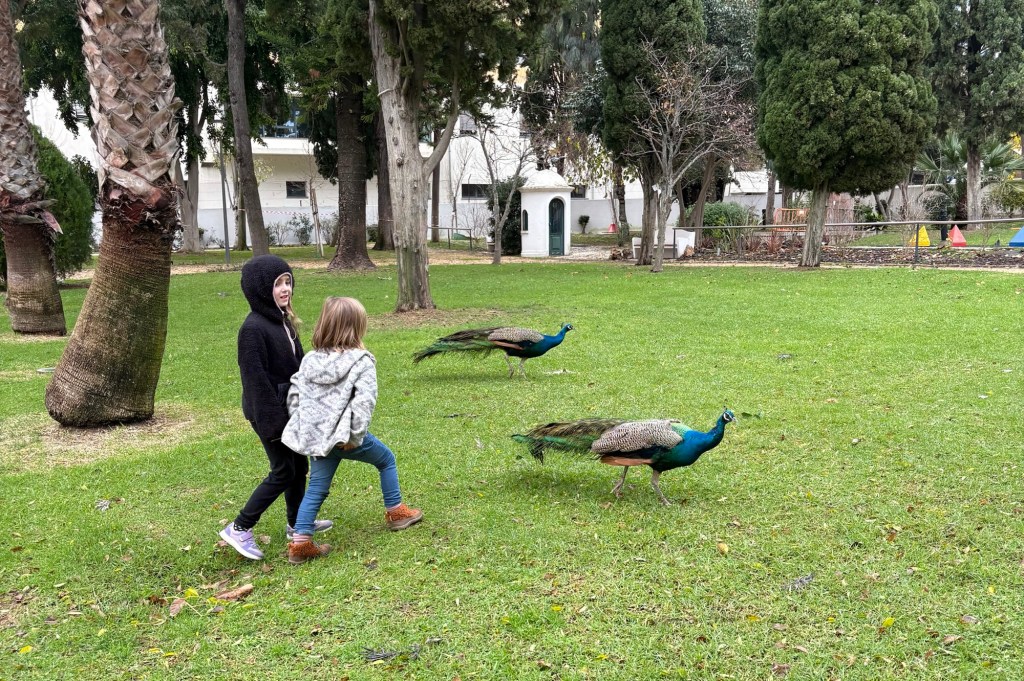
Before taking my parents to the airport, we explored Faro for a few hours. We finally tried some delicious fresh orange juice you can squeeze for yourself in the machines we’ve seen in every grocery store. Pick a container, push the button, and you get some amazingly fresh and local OJ. My mouth is puckering now just thinking of that tangy juice! The kids also got a kick out of the healthy peacock flock residing in a local park.
We will be in Portugal until mid-February, so it’s time to step up our Portuguese! I feel I can understand a decent bit of verbal and written Portuguese with my Spanish background, but my impulses on pronunciation are wrong. At least the language is much more familiar than Dutch or Albanian. I am enjoying listening to some instructional Portuguese when I have a chance. Many people speak enough English for our Portuguese to be useless, but we still strive to be polite and know some basics.
The only thing better than a day in Bruges is an afternoon in Bruges without kids, generously sponsored by Mango and Papaya (my parents). It chafes me to say that it was a once-in-a-lifetime date, but it probably was.
We are perpetually terrible at arranging babysitters and escaping our children. Even when family is in town, we often fail to arrange the outings we’d like to take sans kiddos. It’s easier for us to have a little bit of time together after we put the kids down for bed. We really enjoy that down time at the end of the day, and on this extended trip where there is little respite from childcare, it’s been even more of a necessity to have a moment to breathe and relax each night. It has been annoying to not be able to actually do anything or go anywhere just the two of us, but we are accustomed to that completely. And I think the impossibility of arranging a babysitter while traveling makes it even more desirable now that it’s truly out of reach.
With my parents here, though, we’ve been able to walk, Christmas shop, and spend an afternoon in Bruges with no kids. Hallelujah! We’ve also run errands with only Jude and could finally feel and look very European with our one child and close proximity to middle age. Ha!
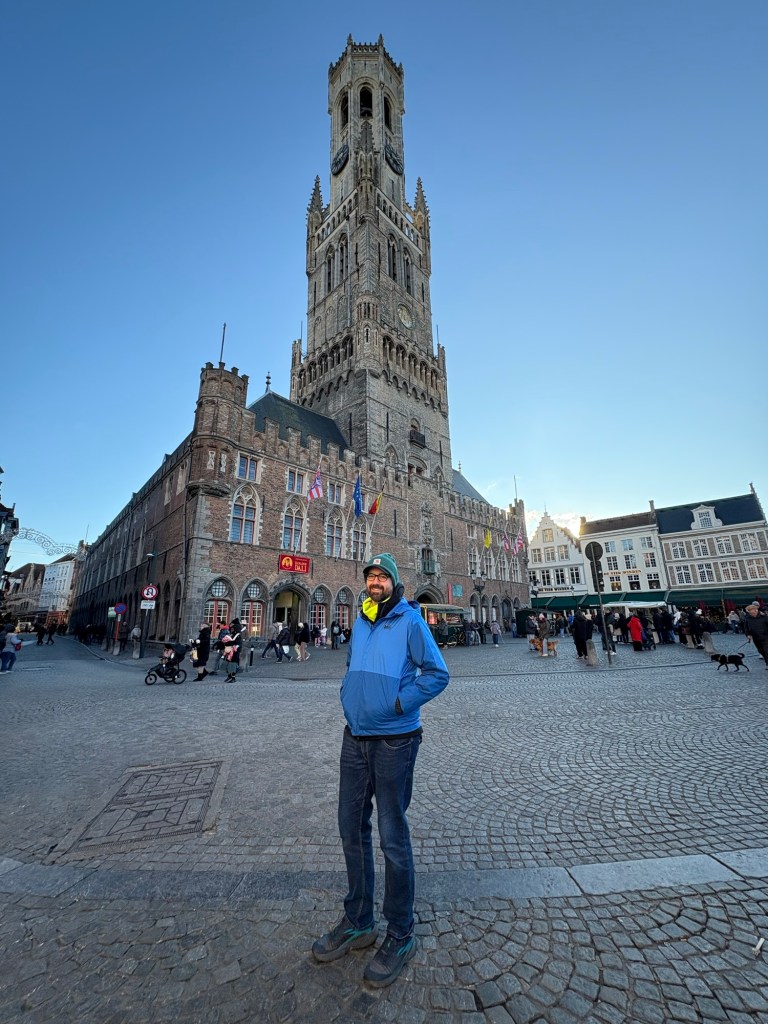
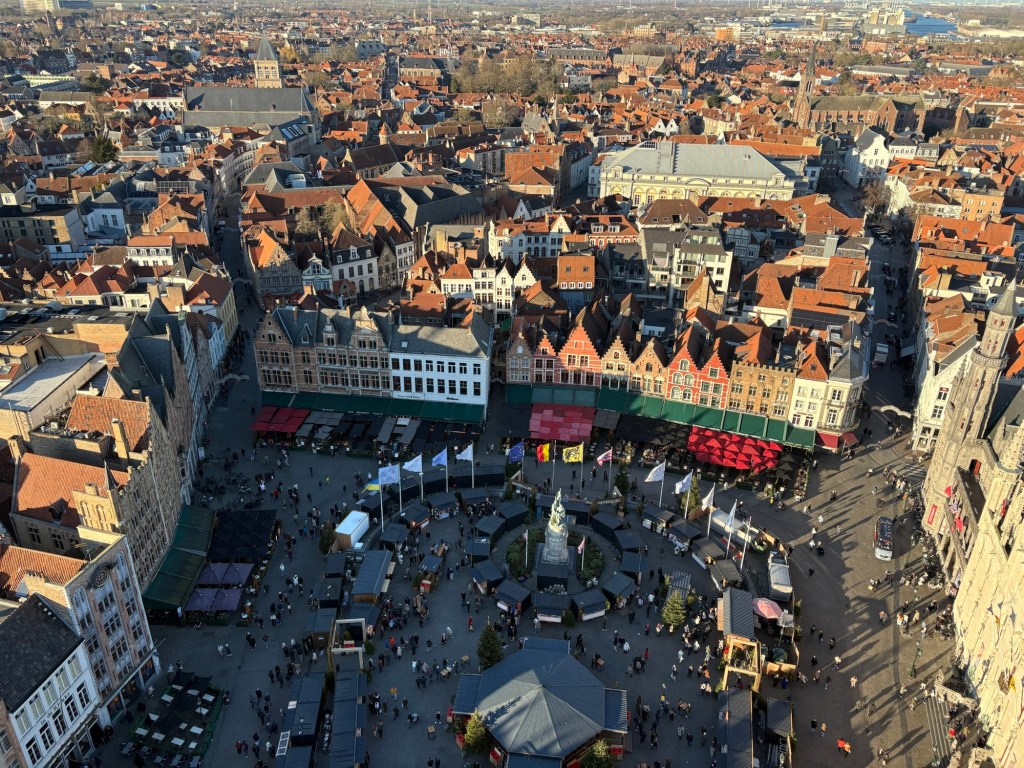
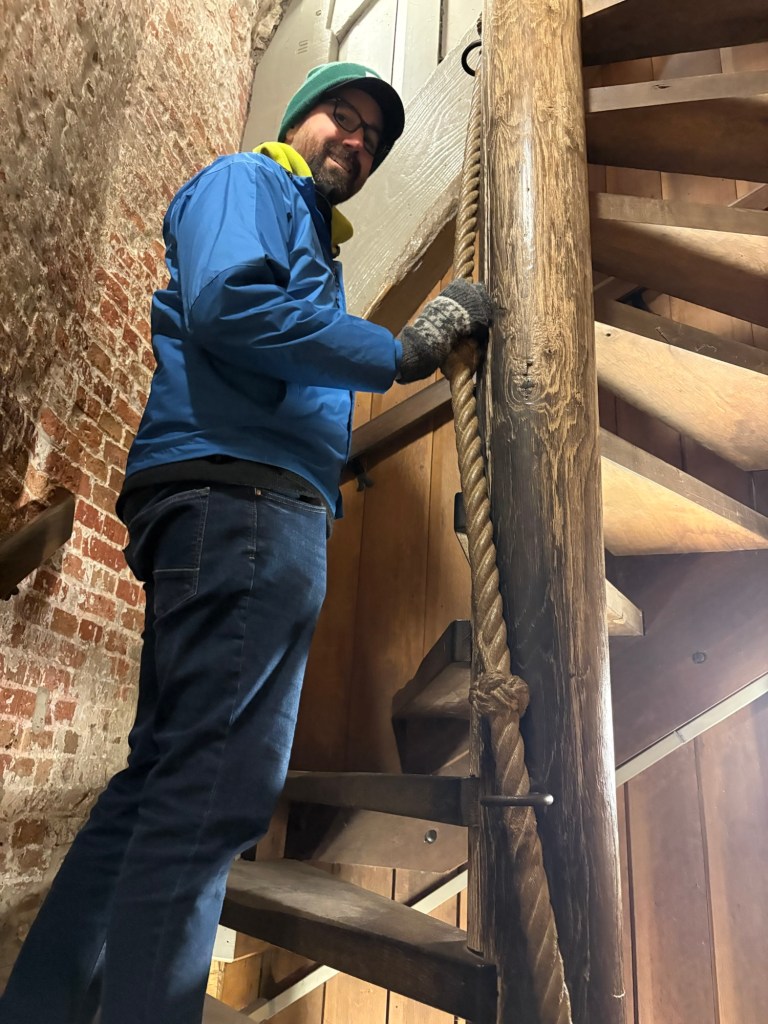
We used our precious alone time in Bruges to climb the Belfort (belfry), a thirteenth century tower that leans a meter to one side. When the train approaches Bruges, you can’t help but notice the assortment of ancient towers rising above the otherwise low skyline. The Belfort stands out with its bulky, imposing shape. Chiming the time every quarter hour, the tower presides over Bruges and demands to be noticed. We climbed the 366 narrow steps on a very windy and cold day. We enjoyed reading about the world’s largest brass drum that contains the music that plays on the bells. The whole mechanism is like an enormous music box. We stuck around long enough to watch the mechanism play a melody and to hear the bells chime from the top of the tower while we looked out at the view of the Belgian countryside and down at the charming tangle of a well-preserved medieval town. Beautiful!
The BelfortLooking down at the Christmas market from the BelfortSteep and narrow steps
We also ventured to the Basiliek van het Heilig Bloed (Basilica of the Holy Blood), a small Roman Catholic church famous for being the repository of a phial that holds a piece of cloth said to have Jesus Christ’s blood on it. Look up the story for an interesting tumble down the rabbit hole of reliquary and such things.
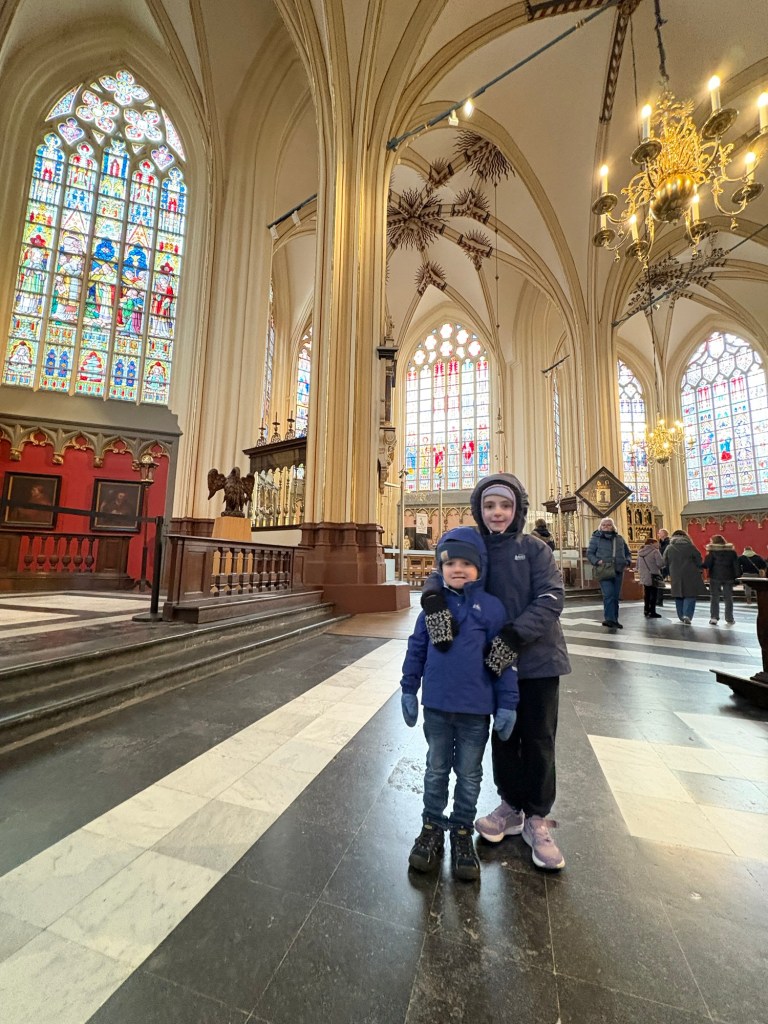
Basilica of the Holy BloodI always love the stained glass panels!
We couldn’t take any pictures of the blood-soaked cloth, but we did indeed take a look at it. Most viewers crossed themselves in front of it, and some seemed quite affected emotionally by the experience.
I have always loved visiting old churches and cathedrals, but this trip I’ve been more drawn than ever before to the art found in these churches. It has been interesting to find familiar and more obscure Bible stories in the paintings and to look at details of how the artists portrayed emotion in the faces of figures from stories I know so well, like Jesus’s crucifixion. I’ve also enjoyed seeing themes in religious art that I’m unfamiliar with and later looking up some information to understand something new about Catholic or Eastern Orthodox tradition. Many of these cathedrals house some amazing art, and they’ve been almost entirely free to enter.
Part of a progression of paintings showing the crucifixion
We returned from our date night energized and refreshed. Thank you, Mango and Papaya!!
As you are waking up for Christmas morning, the sun has already peaked here in the wintry Belgian sky.
We arrived in Belgium a week ago and became a crew of eight when we met up with my parents at the airport. Coastal Blankenberge is home base for a few more days, in close proximity to magical Bruges. When Nic and I sat down to make some trip plans a few months before departure we didn’t have many places we really had to visit; Nic’s one request was Christmas in Bruges. So here we are, a quick train ride from Bruges.
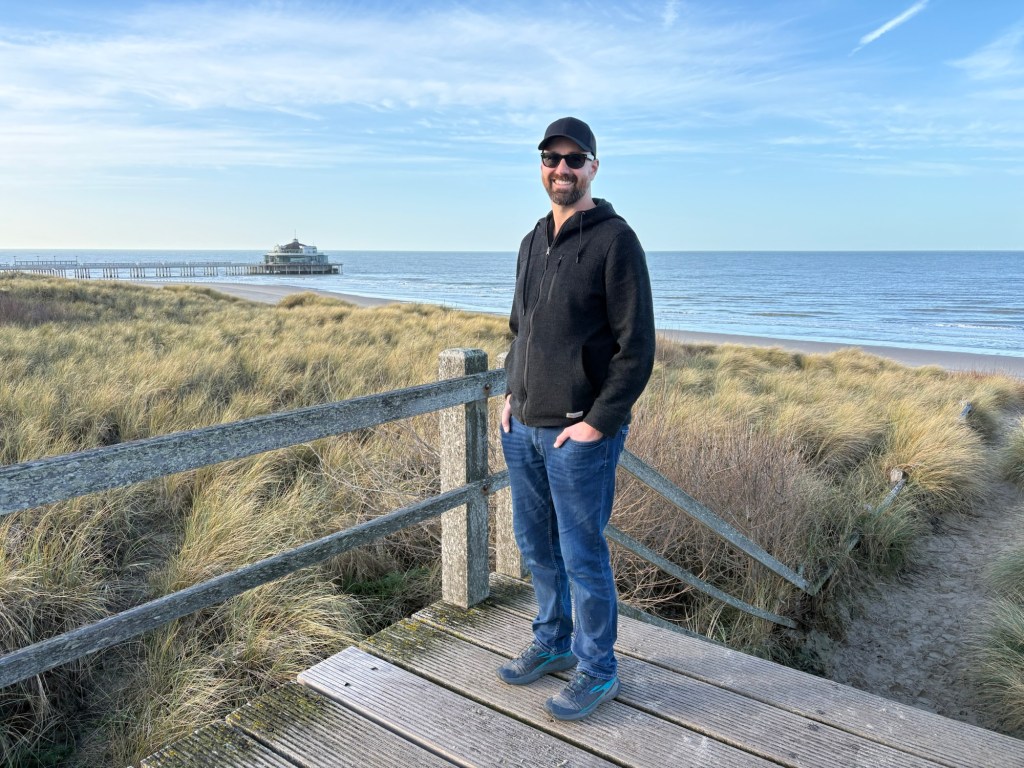
Blankenberge and the surrounding coastal towns have plenty to offer, and they don’t require fighting your way through the large international tourist crowds of Bruges. Before the weather turned chilly we enjoyed walks on the beach, piers, dunes, and around the shopping areas. We took a tram to nearby Oostende one evening to soak up their festive Christmas atmosphere and find dinner at the Christmas market.
Side note: we pictured Christmas markets being more about shopping booths and trinkets. In this part of Belgium at least, there are more food and drink vendors than anything else. It seems the goal is to gather with friends for a drink and a bite more than to shop. Why don’t we do this is the USA? This would be so much fun in a small-town atmosphere surrounded by friends and family.
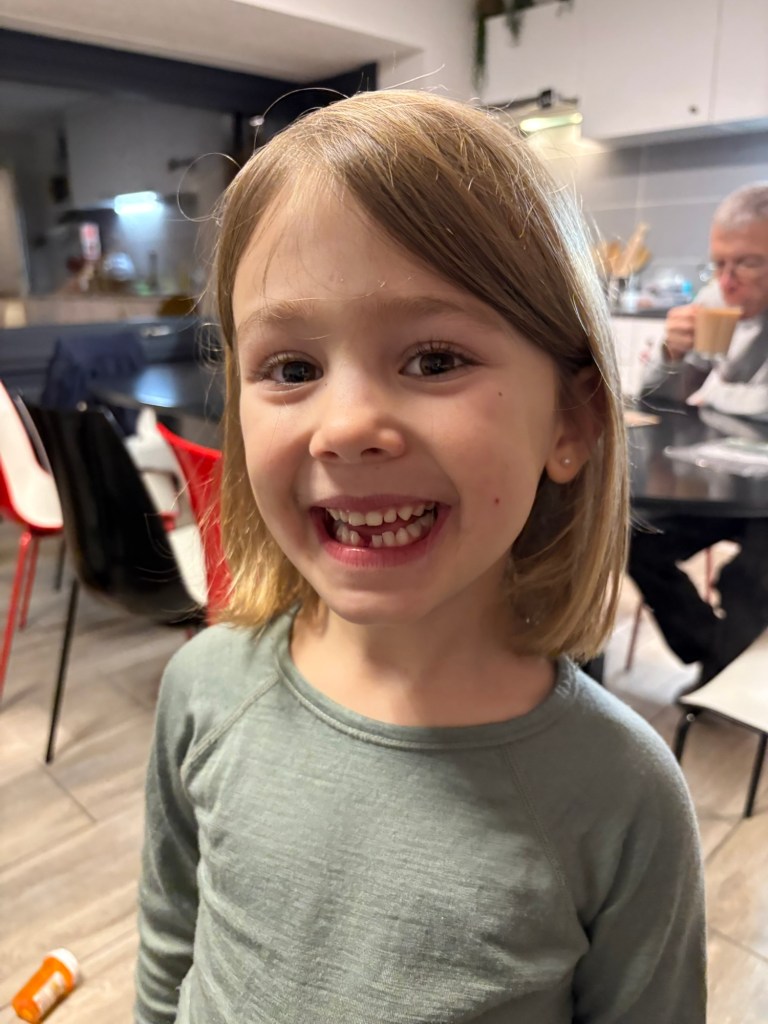
Quinn lost her first two teeth!Watching a barge dredge the channelBrats, burgers, and fries at the Christmas market in Oostende Sint-Petrus-en-Pauluskerk in Oostende
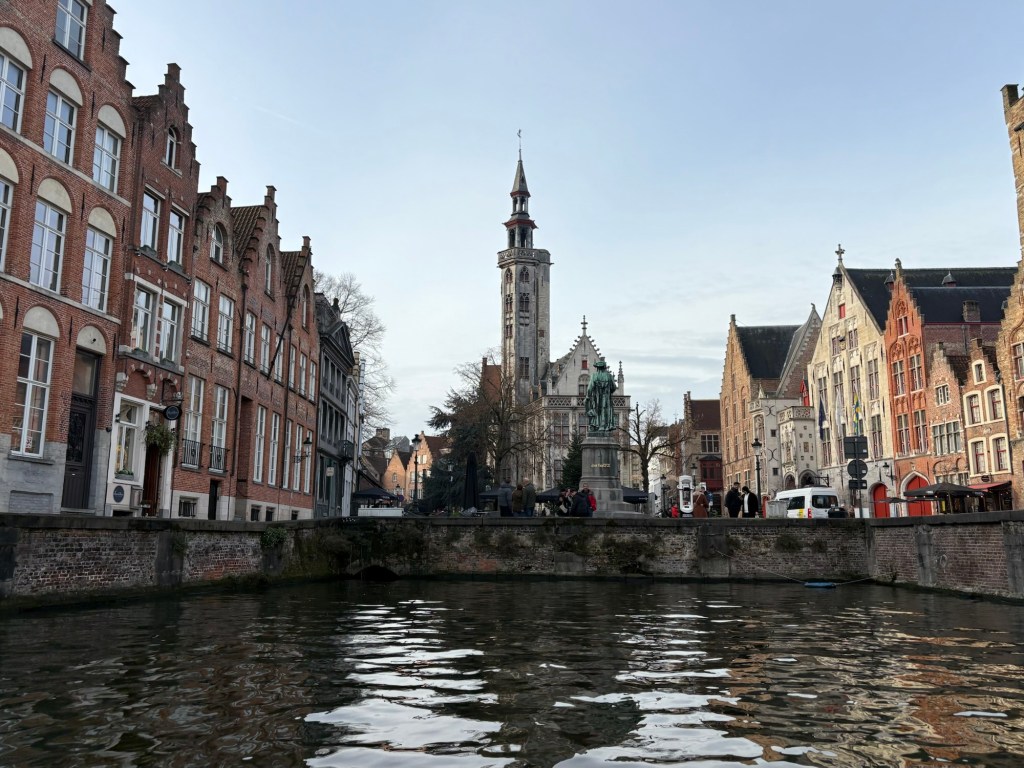
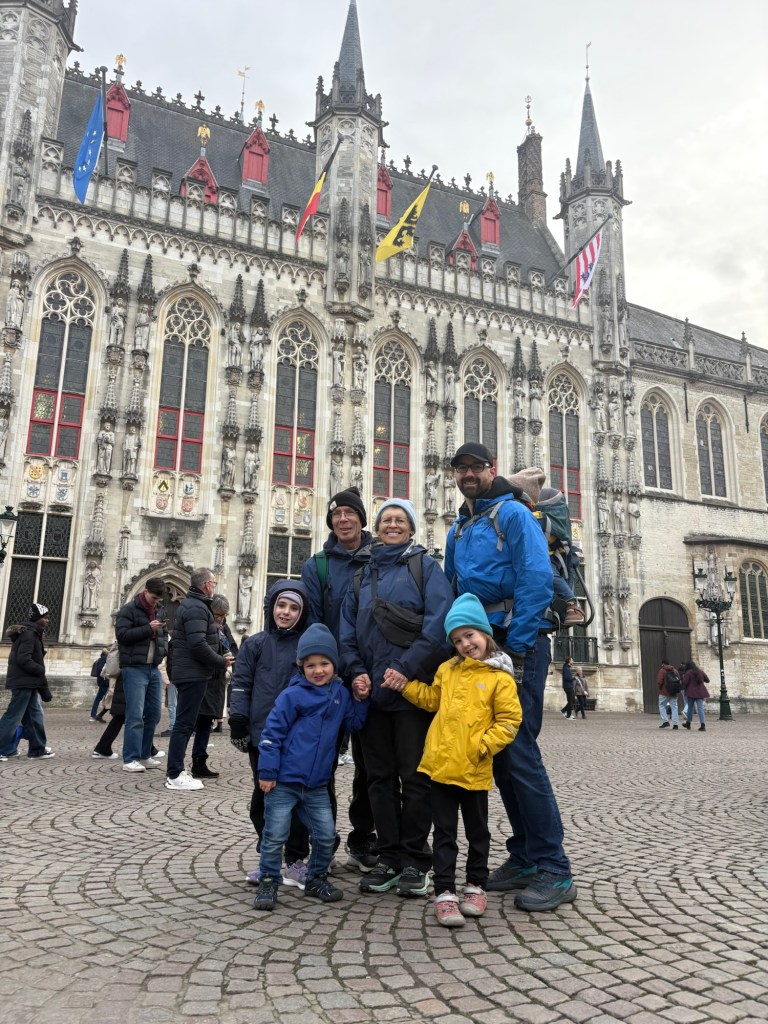
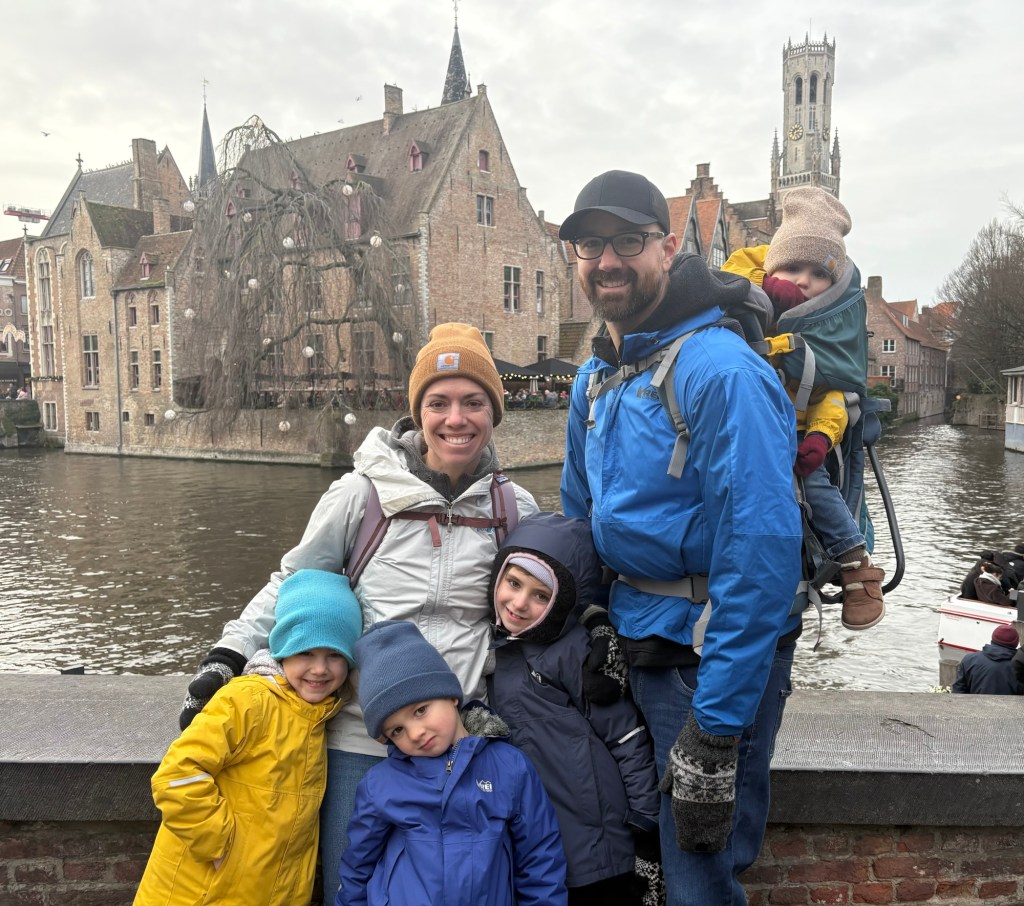
And then of course there is beautiful, medieval Bruges. All eight of us spent a day exploring churches, shops, canals, and Christmas markets. In this well-preserved town it feels like you’re walking through a historical version of Disney, each stone and building facade carefully placed to be charming and pleasant on the eyes.
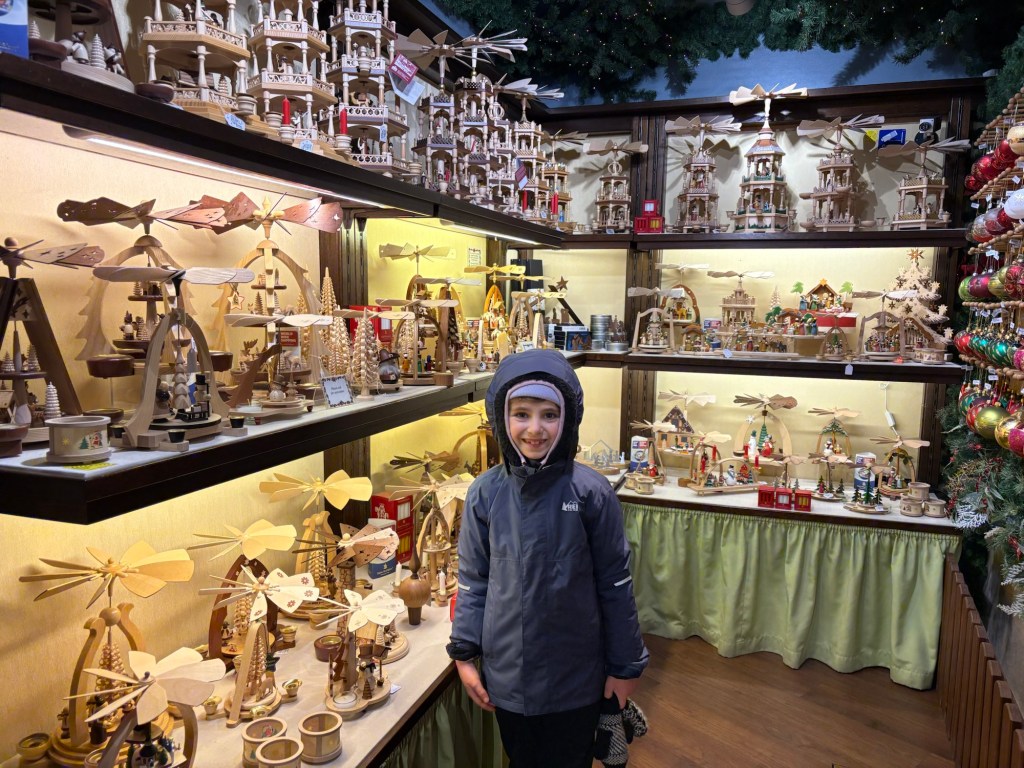
A beautiful Christmas storeSint-SalvatorskathedraalBeautiful views from the canal tour
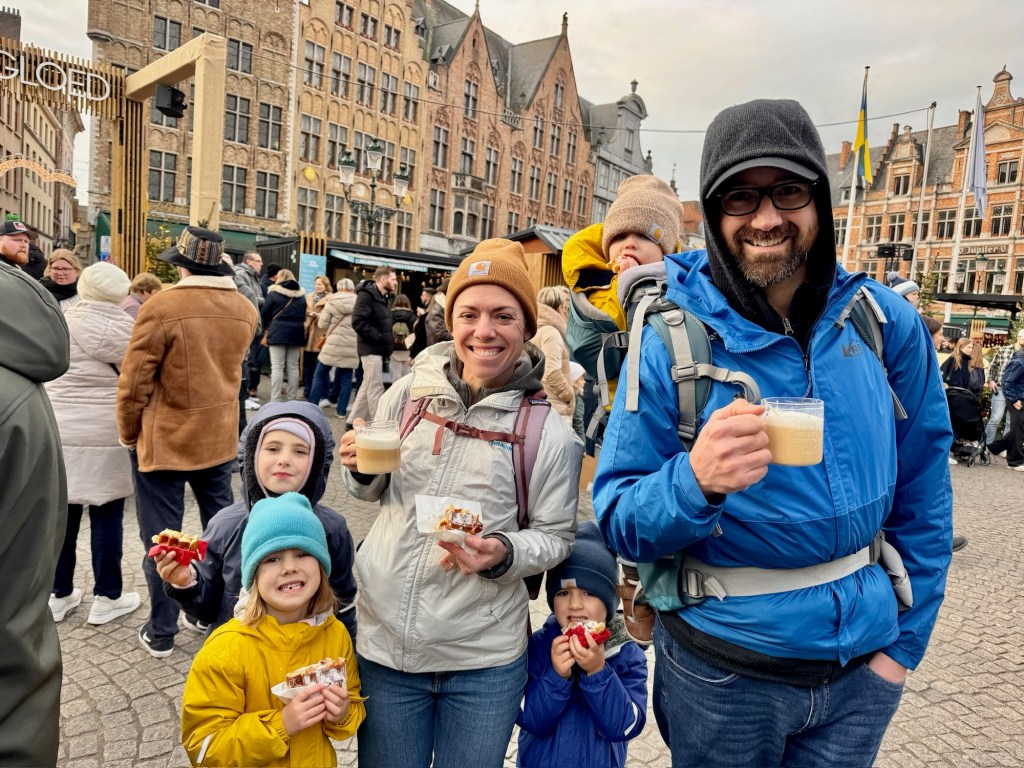
And of course we have sampled Belgian culinary delights. I’m not much of a waffle person, but the warm, sweet, and dense Belgian waffles are equally delicious in a train station or out in the chilly open air of a Christmas market. We have tried hot chocolate, cheap chocolate, and expensive chocolate, and it has all been a definite cut above standard US chocolate. Our Christmas breakfast included croissants from a nearby bakery. Groceries are more affordable and abundant here than anywhere else we’ve shopped during our travels, especially with a nearby Aldi store. So it appears that in Belgium you eat well and eat some more and just hope your blood sugar can cope!
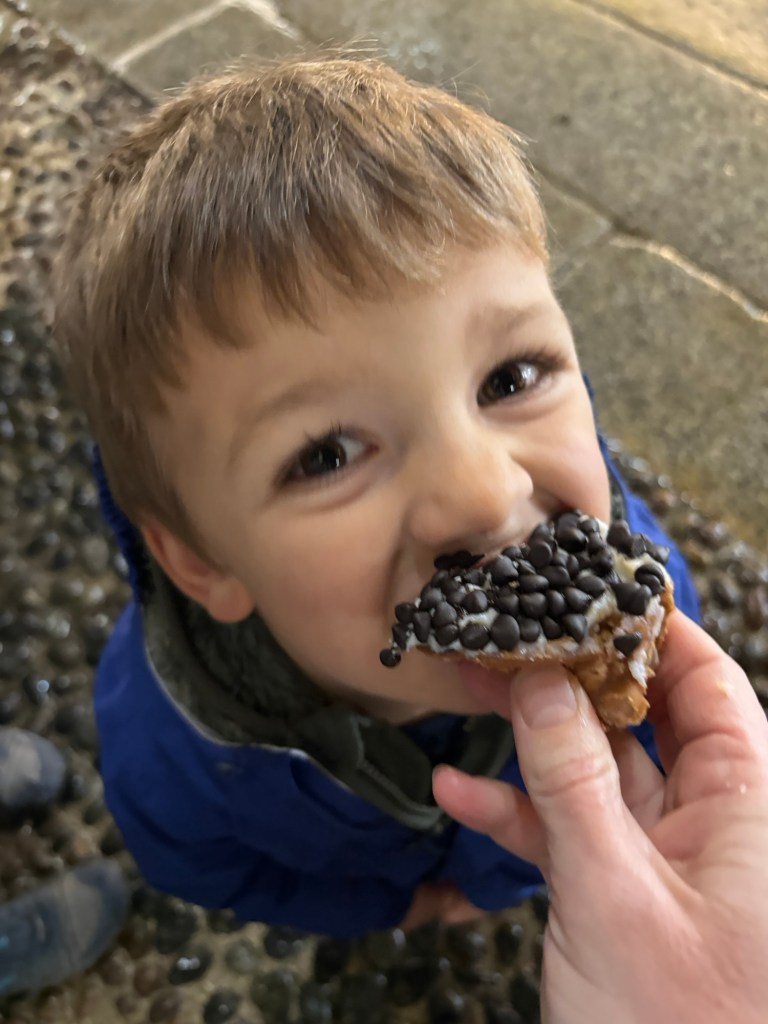
How do I begin to describe a pit stop in Milan after a month in Albania? How can I write a paragraph about visiting the Duomo? Can I adequately communicate in print the rich perfection of Sicilian cannoli? No way!
We made the mistake of scheduling very little time in Italy. We didn’t originally plan to visit Italy at all, but it ended up being cheaper to stop briefly in Italy going to and from Albania. So our time in Milan was way too brief. Someday we will figure out how to spend a big chunk of time in the land of amazing food, coffee, history, art, and way too much secondhand smoke.
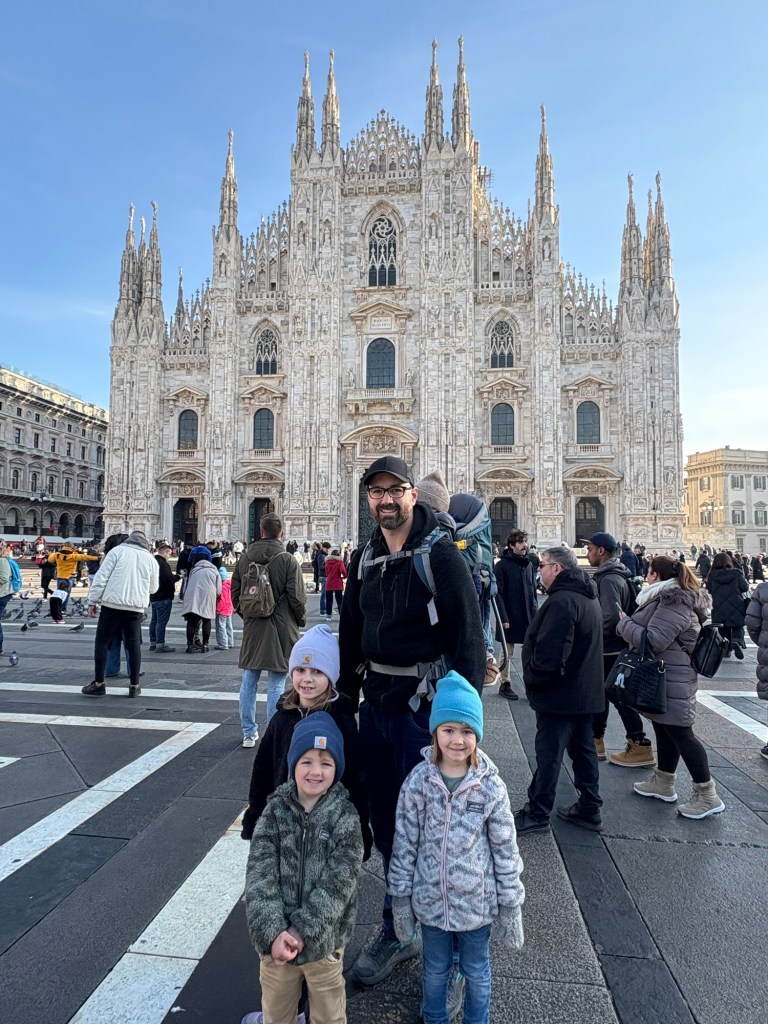
Although it rained half of our time in Milan we found time for some special outings, especially the Duomo. It’s the largest cathedral in Italy proper, and you just have to see it in person.
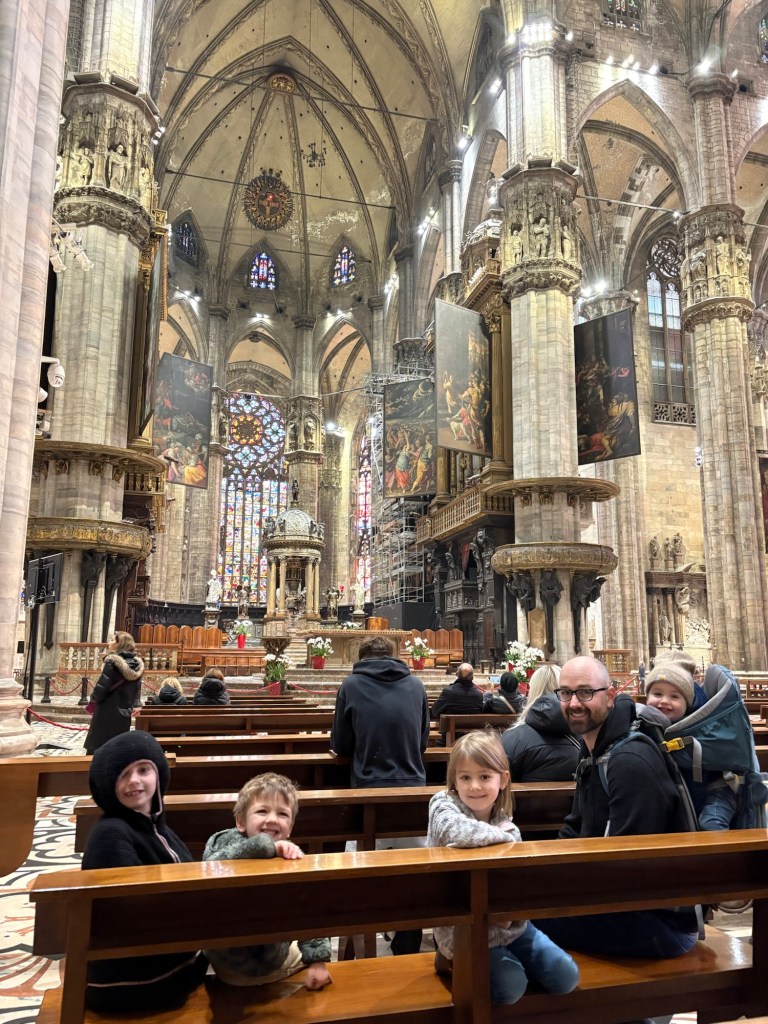
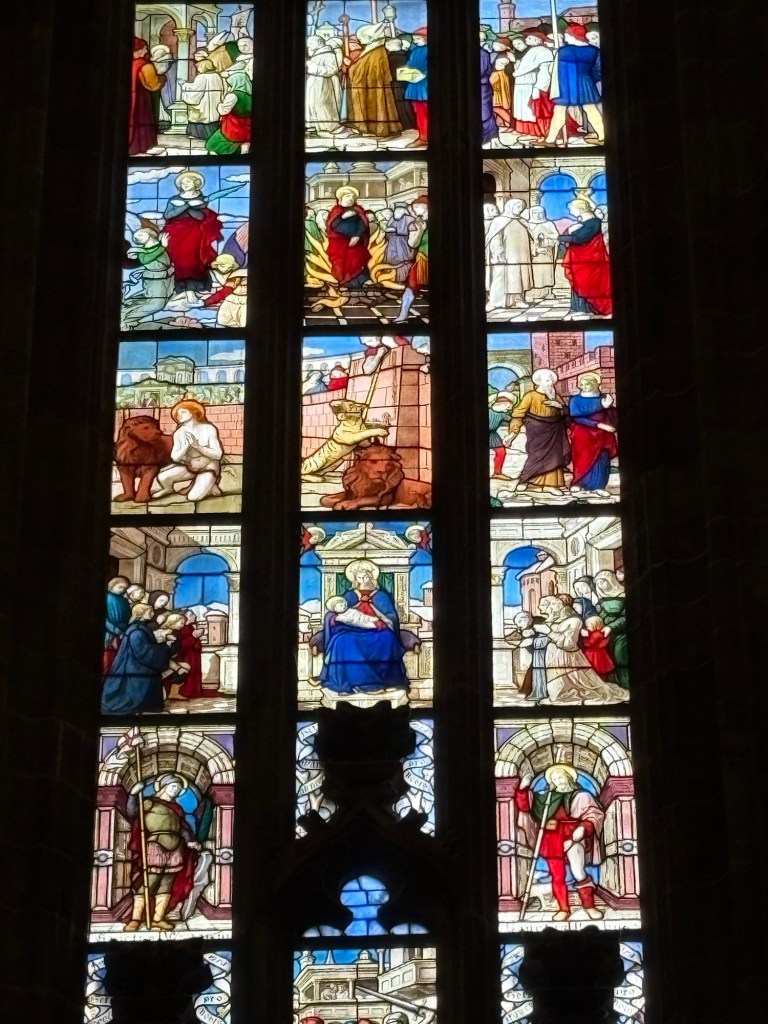
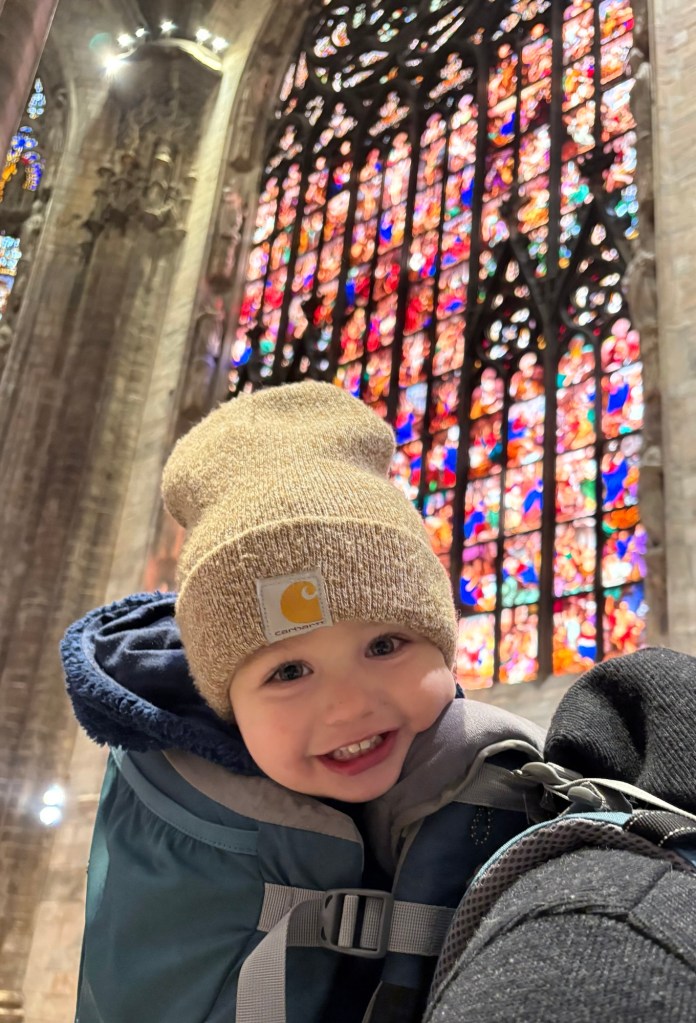
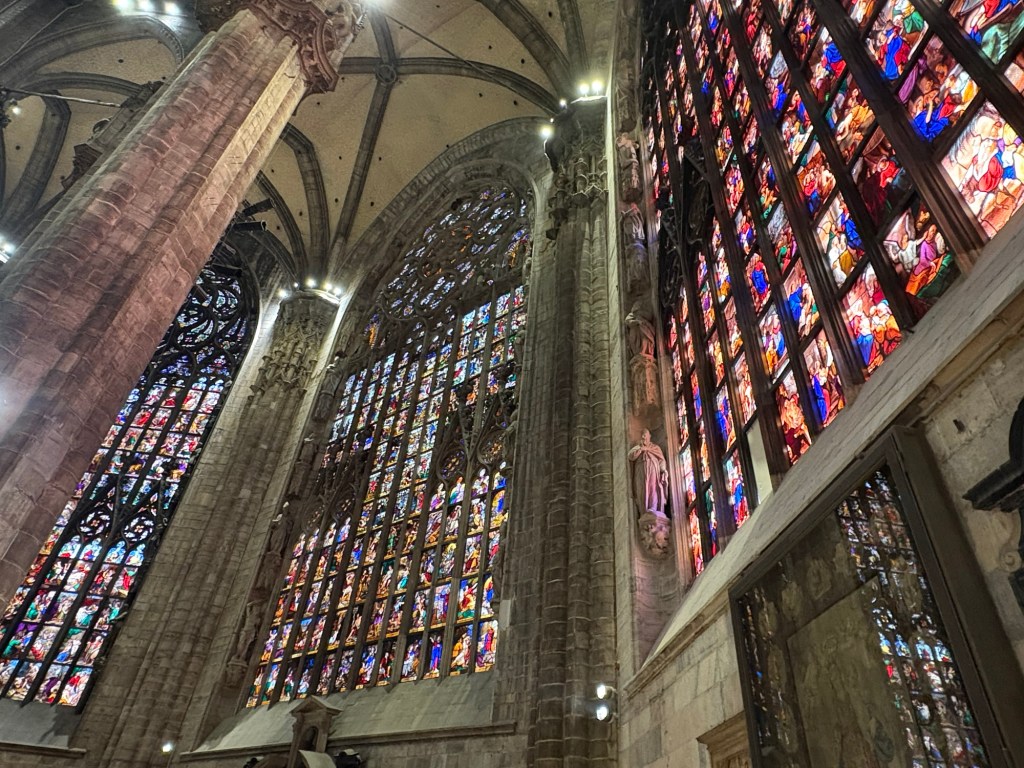
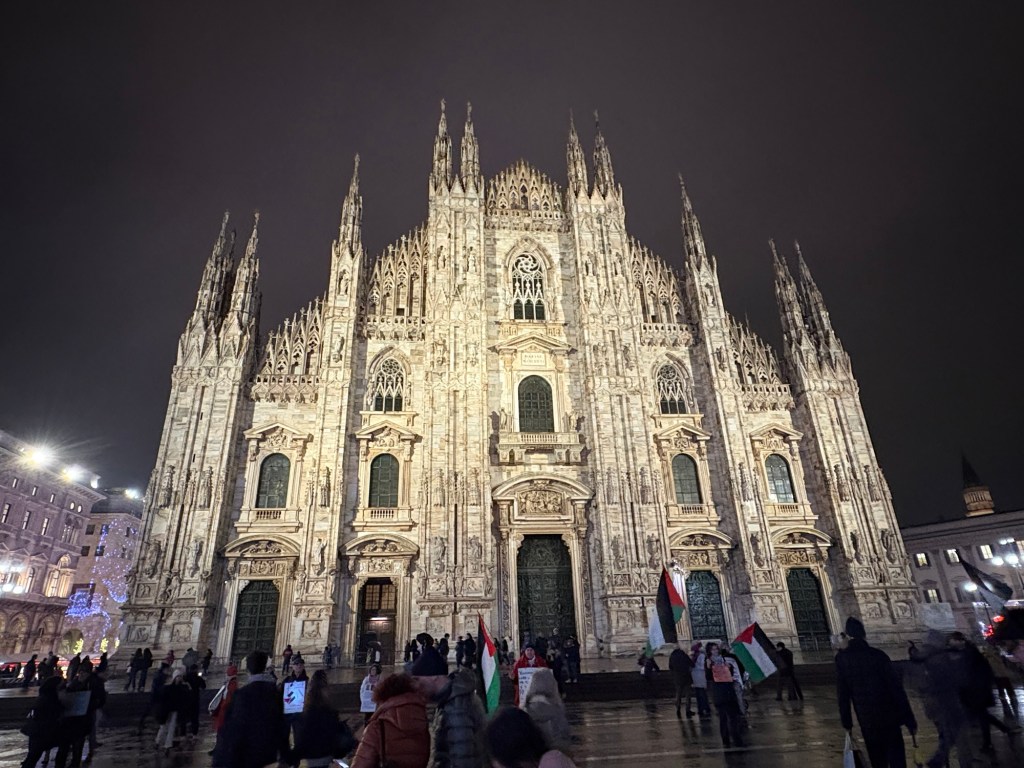
Work began on the Duomo di Milan in 1386 and continued for six centuries. Streets radiate out from the Duomo, and as you approach it after first glimpsing it around a corner, it seems too big and fantastic to be real. Incredibly detailed stone carvings adorn every inch of the exterior walls. Statues top each spire, soaring high above the pavement. The scale of it all seems far too big to have been built without modern technology. And just when you feel like your mind can vaguely understand the grandeur, you go inside, and it all seems impossibly detailed and beautiful once again. Each panel of stained glass and piece of art displays incredible workmanship. The days and months and years of work required to construct even a tiny part of the building must have been extensive. The whole thing is truly amazing and awe-inspiring.
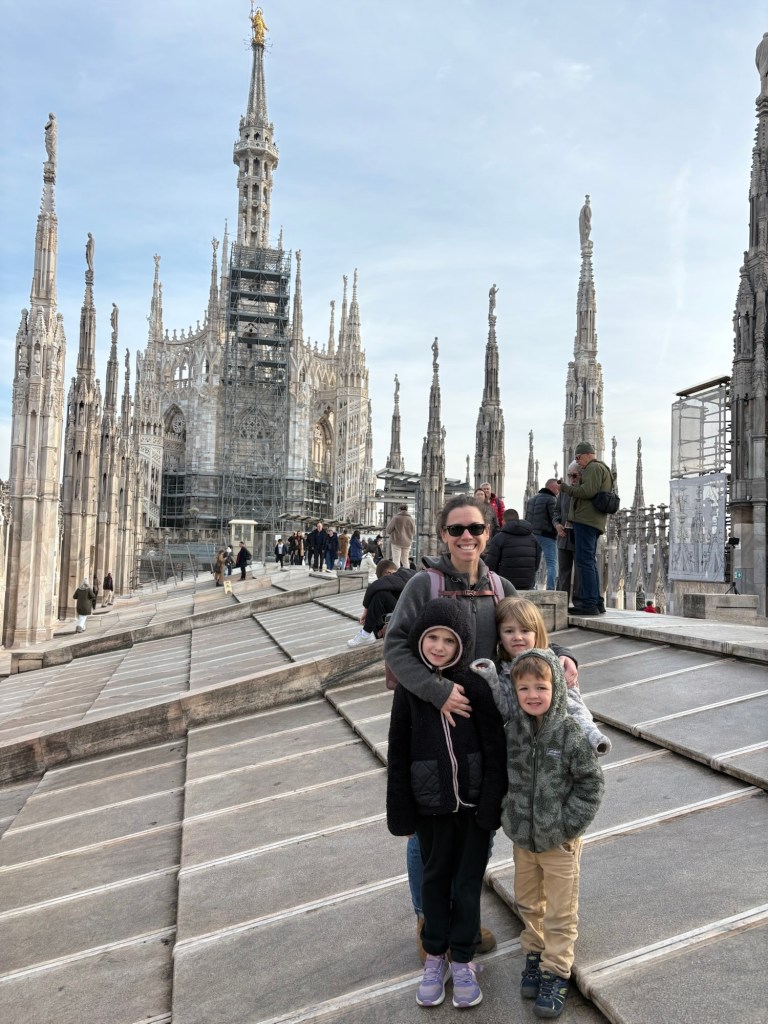
We took advantage of the sunny day and climbed the winding stairway up to the terrace and roof. The roof provides some great views of Milan, but it was hard to look away from the building’s details. With hungry kids and Jude’s unpredictable outbursts, we spent less than two hours at the Duomo, but it was a place we will always remember!
See the statues?On the roof!
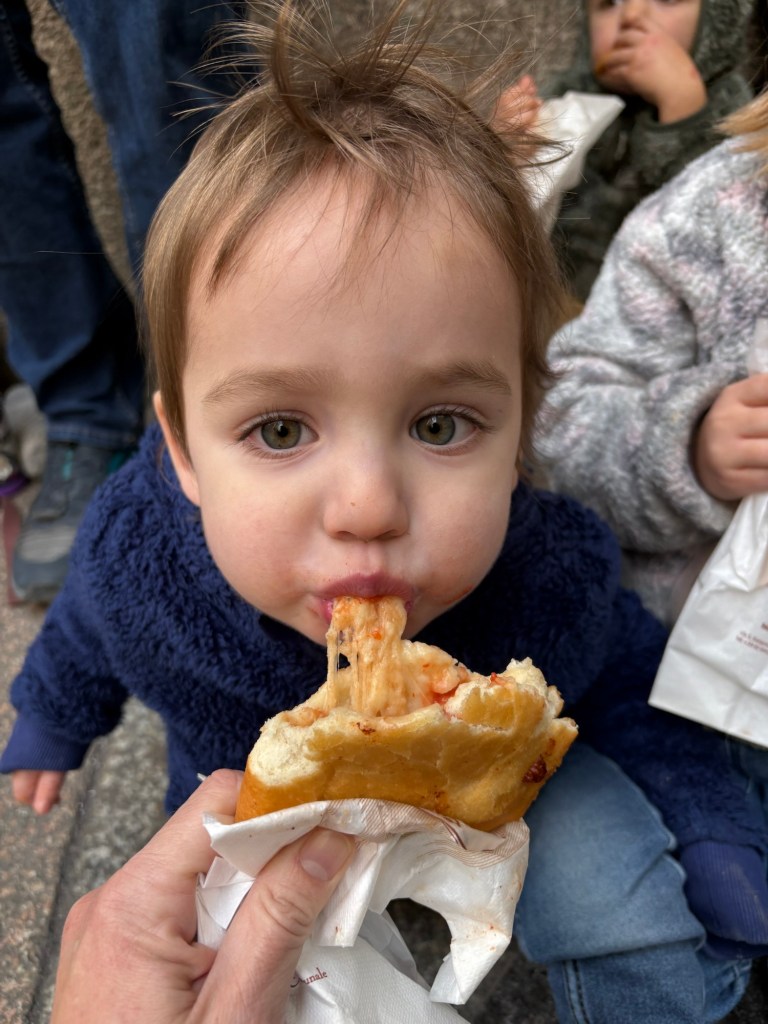
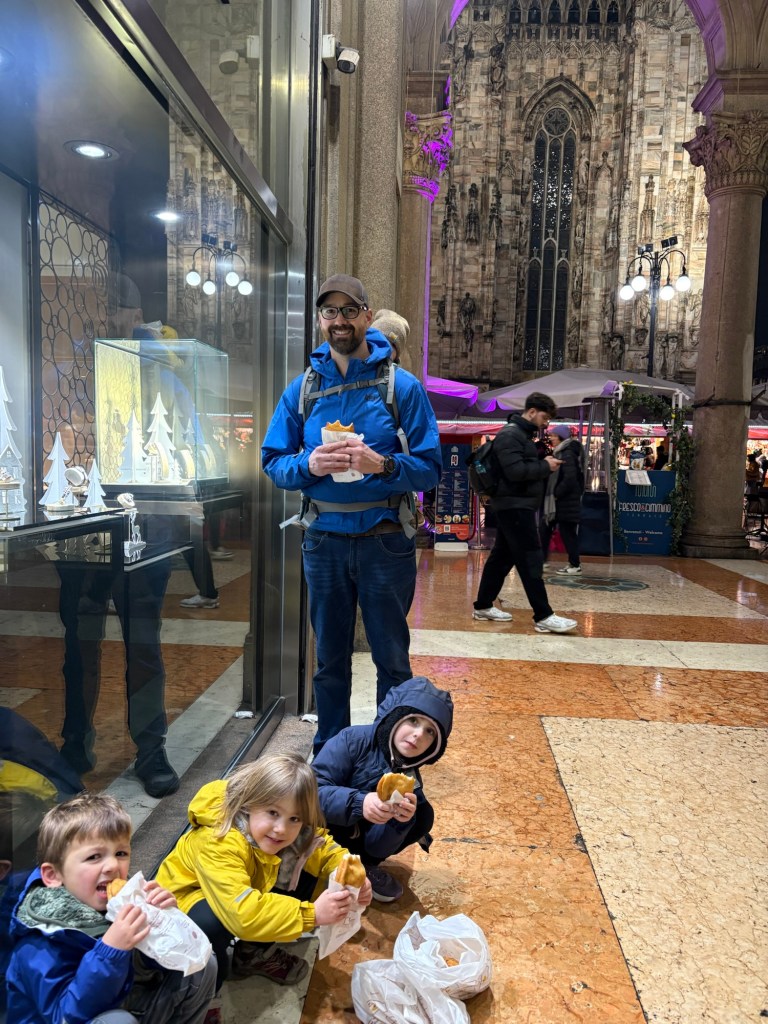
We also found time in Milan for some delicious food: panzerotti (from a restaurant recommended by my sister in-law), an assortment of Neapolitan dishes, panzerotti again, and Sicilian cannoli. After the limited food options in Albania, the food here was over-the-top amazing.
Panzerotti, the family favPanzerotti with a view!YUM!
The only reason we could bear to leave Italy was that we flew to Belgium to meet up with my parents. But Italy, we will return!
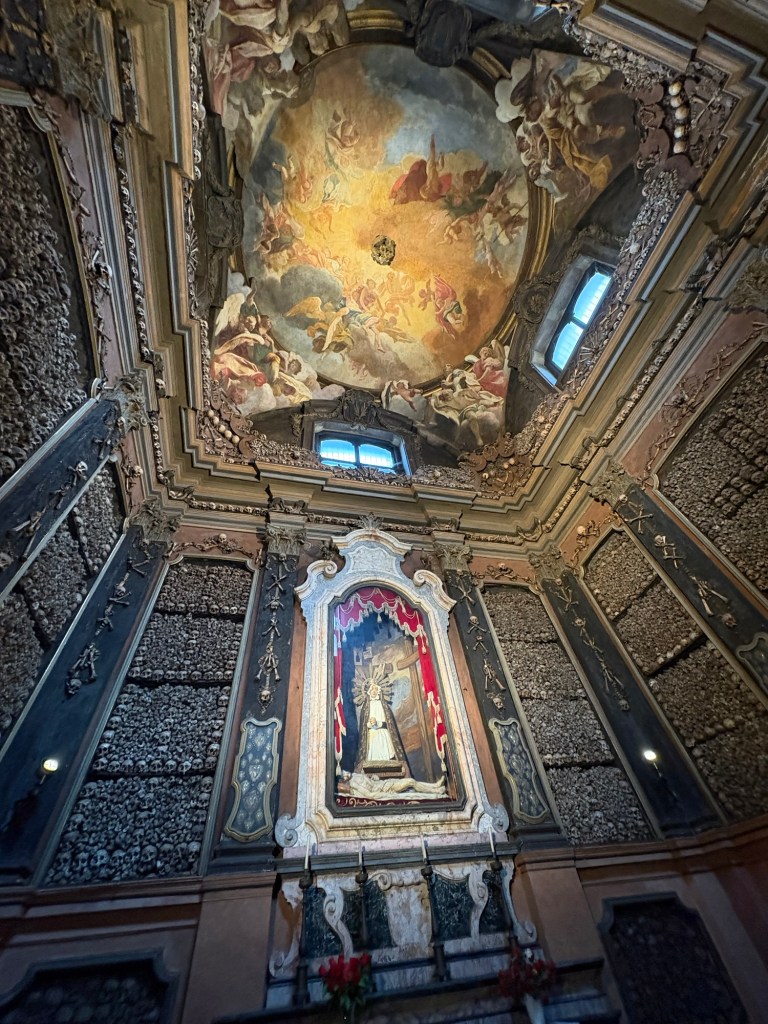
Santuario di San Bernardino alle Ossa – look closely!Approaching the Duomo
Goodbye, Albania! After a month in this very interesting and at times very backwards corner of Europe, we have departed Albania and are now in Milan, Italy.
Some of us were very excited to leave; a few of us could think of many things we loved about Albania. One thing we can all agree on is that spending a month in Albania has given us some major perspective and a new appreciation for some of life’s luxuries. We’re all happily adjusting back to flushing toilet paper. I briefly considered filling wine glasses with Italy’s tap water and clinking glasses to clean water! We are looking more carefully when crossing the street and using crosswalks now. Even in crowded Italian stores, we have been so pleasantly surprised to see people politely moving around each other and respecting each other’s space. And the options in grocery stores are simply amazing after seeing the same exact limited number of items for a month. What luxuries!
We did end our time in Albania on a good note, even managing to improve our overall vomit odds to a mere nine out of thirty days. After an easy drive to Tiranë, Nic especially was very, very happy to return our rental car. Some insane taxi drivers got us to our lodging. Honestly, we don’t understand how they didn’t hit anyone with their merciless driving, further confirmation that we’re just not really cut out for city driving in Albania.
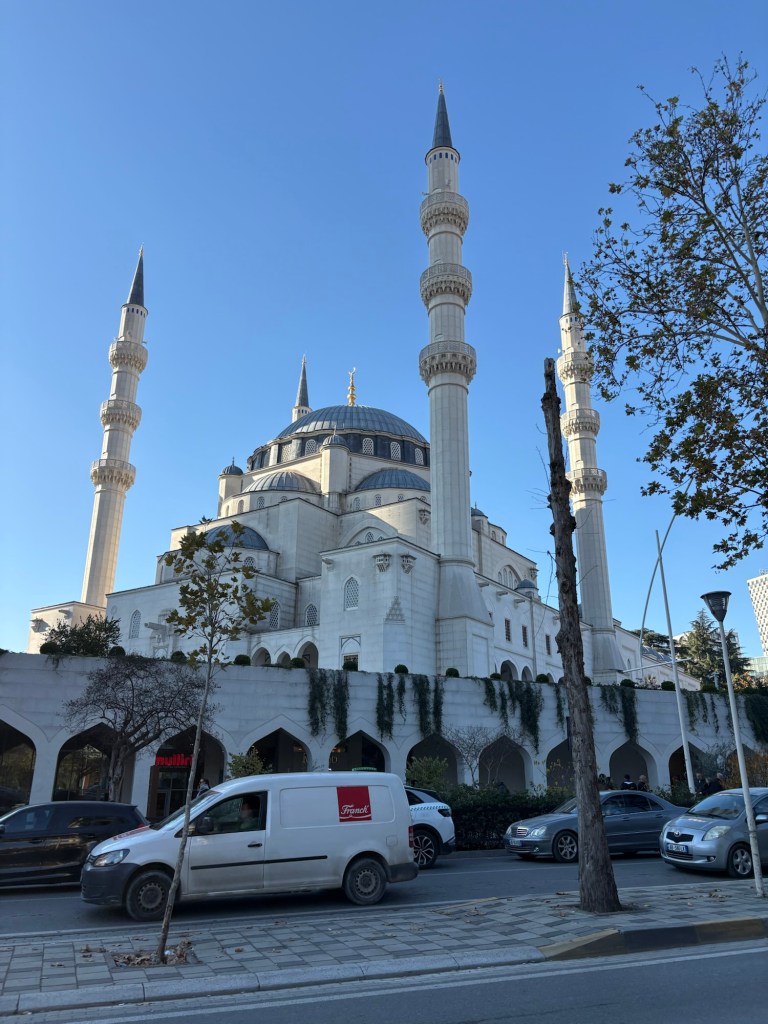
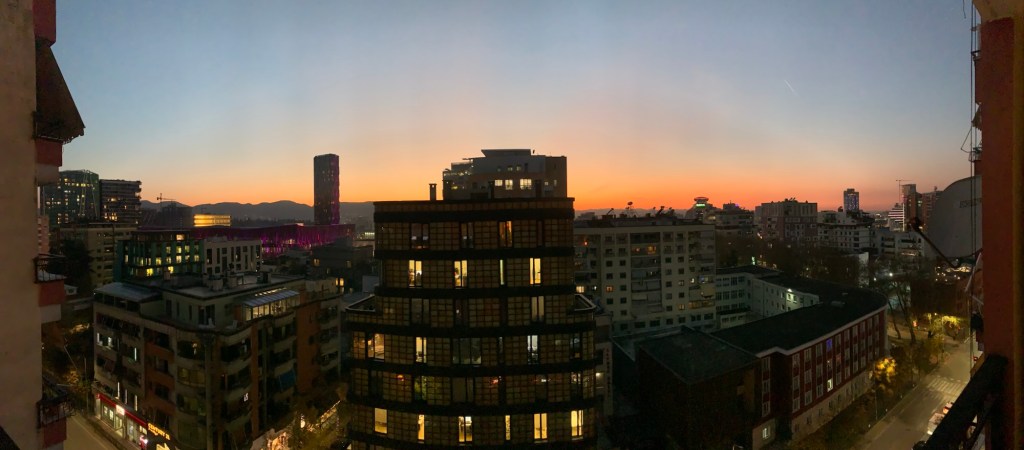
Tiranë differs greatly from the rest of Albania. We stayed in a pretty shiny part of town right next to the US Embassy, and town felt safe and clean and, dare I say, modern? Our apartment still had some typical Albanian issues, but it was a step above all our other lodging. The town is a strange mix of sleek modern buildings, mosques, cathedrals, and more typical glimpses of the more common Albania down alleys and in certain neighborhoods. We appreciated the chance to shop in an organic food store and an open-air produce stand in the same shopping trip. In one day we also ate traditional Korçë lakror from a hole in the wall place by the bazaar before ordering dinner from a heavily Italian-influenced pizza place where all the staff spoke English. The contrasts could be disorienting, but after spending a month in Albania, I’d like to think we appreciated the best of it all.
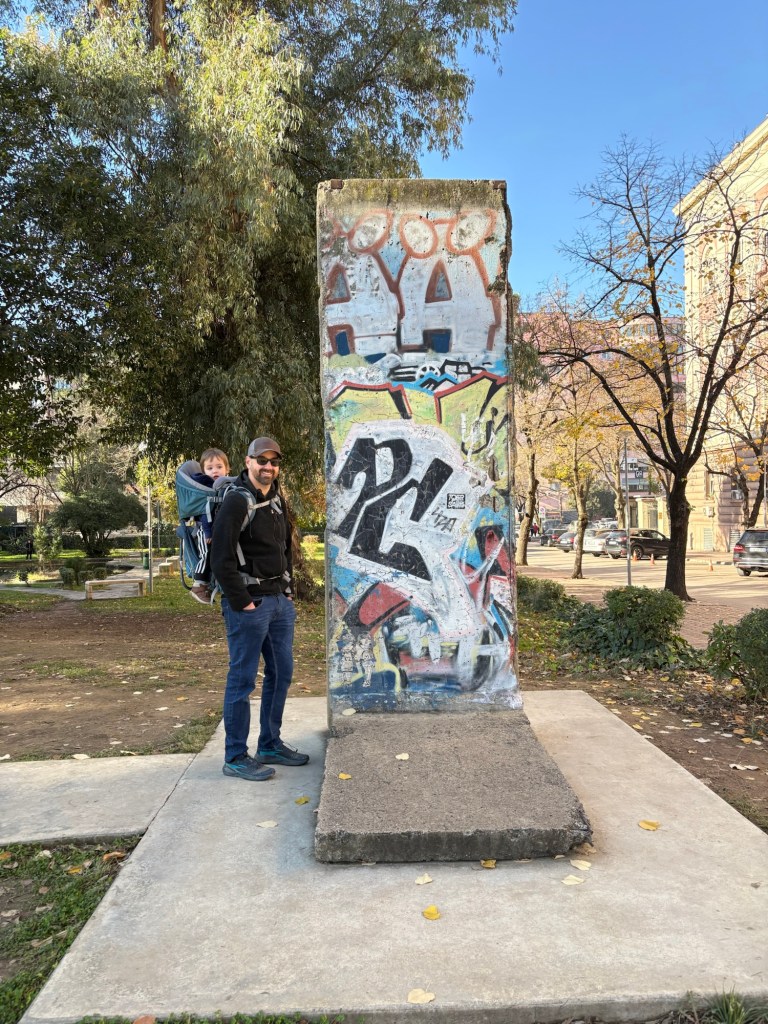
The strange mix of sights in TiranëAtop the Pyramid of TiranëA chunk of the Berlin WallOrthodox Cathedral of ResurrectionThe largest mosque in the Balkans – Mosque of Namazgah
I believe we will be mulling over the lessons learned and what we observed in Albania for a long time. It wouldn’t be at the top of my list, but I’d like to come back someday, hopefully at a point when the country has been able to gain some distance in time from their Communist years and establish a higher standard of living for their people. And I’d like to hope that someone will pick up some of that trash in the meantime!






















 Are you having fun with me today?