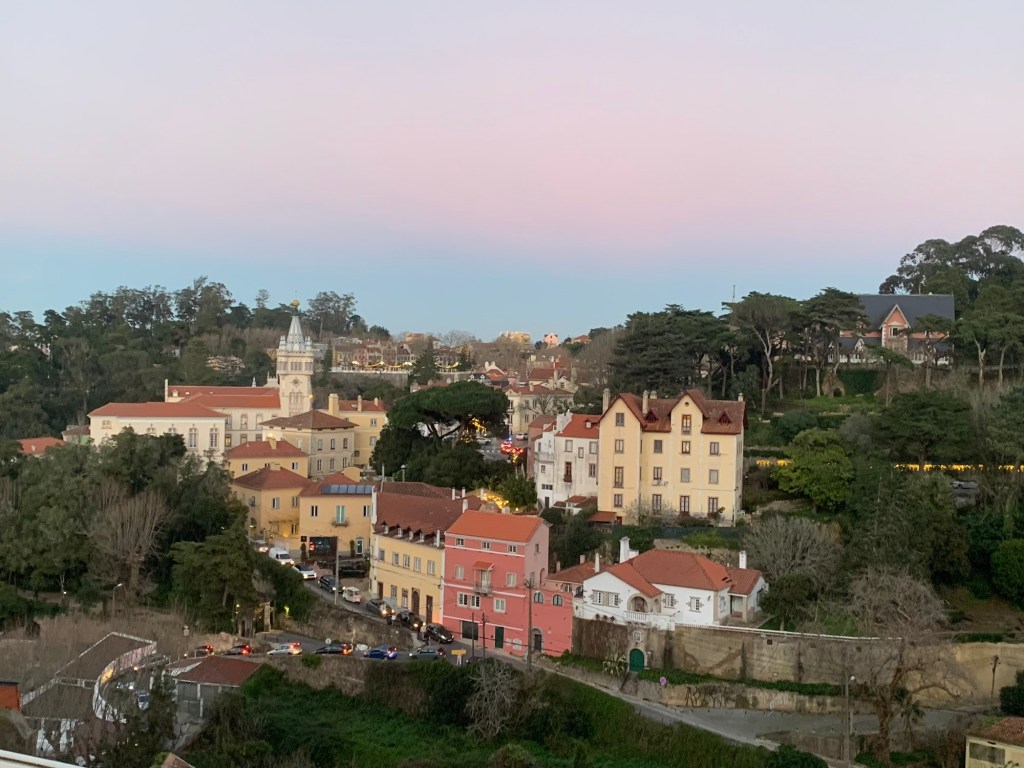
Goodbye, Portugal!

It feels like we’ve been in Portugal for a long time, and so we have! At the moment we’ve spent 45% of our big trip in Portugal, although that percentage will drop to about 1/3 of our time by the time we go home. We saw a good portion of the country in the big loop we drove, covering ground from the very southern edge of the country to the northwest corner just south of Spain. In one sense we feel that we’ve seen a lot and understand the country fairly well, but in another sense, we know there is so much that we didn’t get to see. We’ve witnessed the culture and learned some history, but we didn’t really eat out or have many conversations with natives. We have certainly experienced the full spectrum of winter weather Portugal can produce. Here are some of the things we’ll remember about Portugal:

  • The scent of a Portuguese grocery store. We’ve written about the bakery cases in grocery stores, but have I mentioned the fish counter? Depending on the size of a grocery store, you will smell the stink of fresh fish in part or all of the store. It’s overpowering, and I’m not sure how pregnant ladies survive the smells.
  • Olá, bom dia. The polite Portuguese will almost always greet you with hello and good day, afternoon, or night. No rude scowls from grocery clerks here, only what seems like genuine friendliness. People are quick to give you space, yield for a pedestrian, or lend a quick helping hand, welcome gestures after the colder cultures we’ve experienced. Nic says he did not feel an overwhelming sense of welcome, though, so maybe it’s just me.
  • Mold and mildew. Pretty much every lodging smells like mold and mildew, covered at moments by scented “stink sticks” and cleaning product smells. You might not detect the odor until the bedroom door has been shut for a while, but it’s always there. 
  • Roundabouts. We must have gone through hundreds of them! Maybe this is true in all of Europe, but Portuguese roads involve way more roundabouts than traffic lights. They can be annoying, but it’s very easy to turn around of make a left turn, and unlike in Albania, everyone follows traffic rules in an orderly fashion. On the topic of driving, Nic reports that it was pretty easy driving. Be careful with the historic old town areas though, as you’ll be inching through some incredibly narrow situations!
  • Portuguese. In print I can understand quite a bit with my Spanish background, but spoken Portuguese is a challenge to decipher. I found it quite difficult to speak the little I know as well. With all the nasal sounds and “zh” and “sh” sounds, it sounded like Russian to us. 
  • Shelf-stable milk. We had a hard time finding fresh milk occasionally, and even when we could find it, whole milk wasn’t always available. A latte just isn’t the same with shelf-stable milk! 
  • The wine. Our lodgings gifted us enough wine that we didn’t have to buy more than a bottle of port to try. The wine varieties we tried were universally delicious. We will have to look for Portuguese wine in the USA.
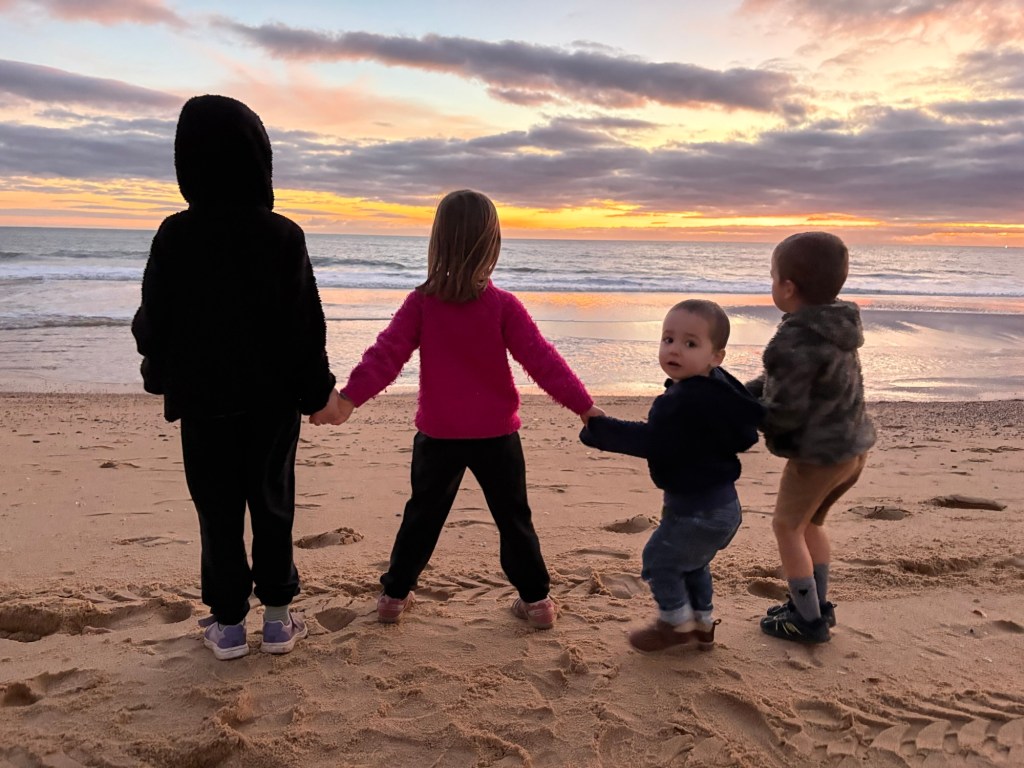
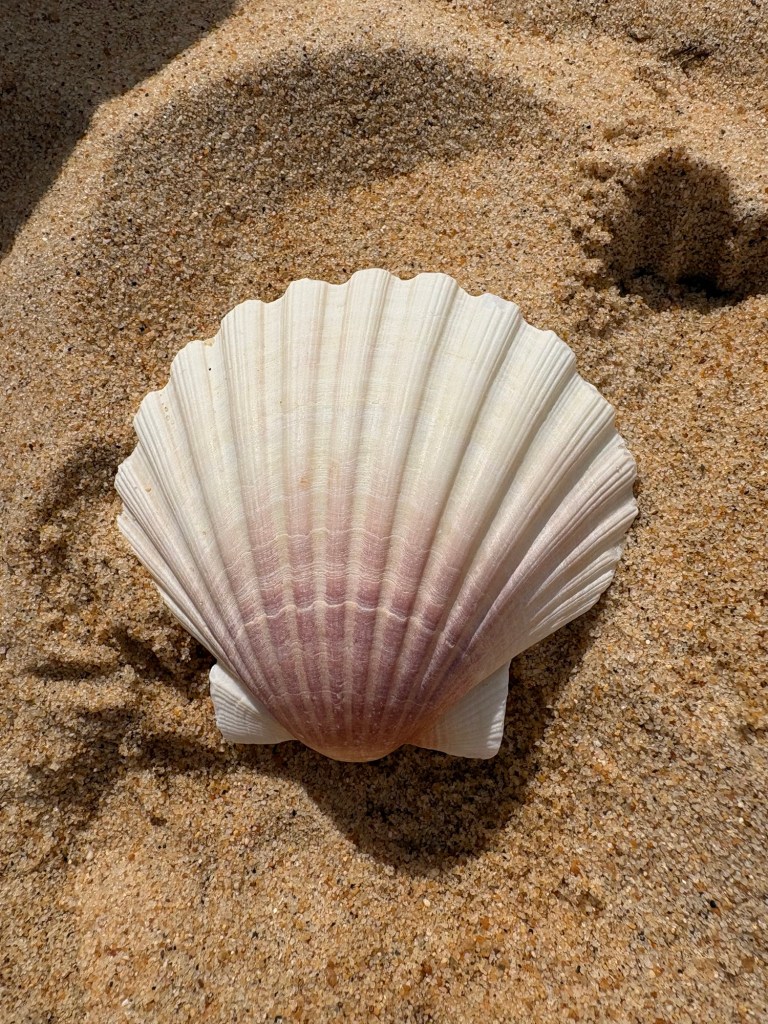
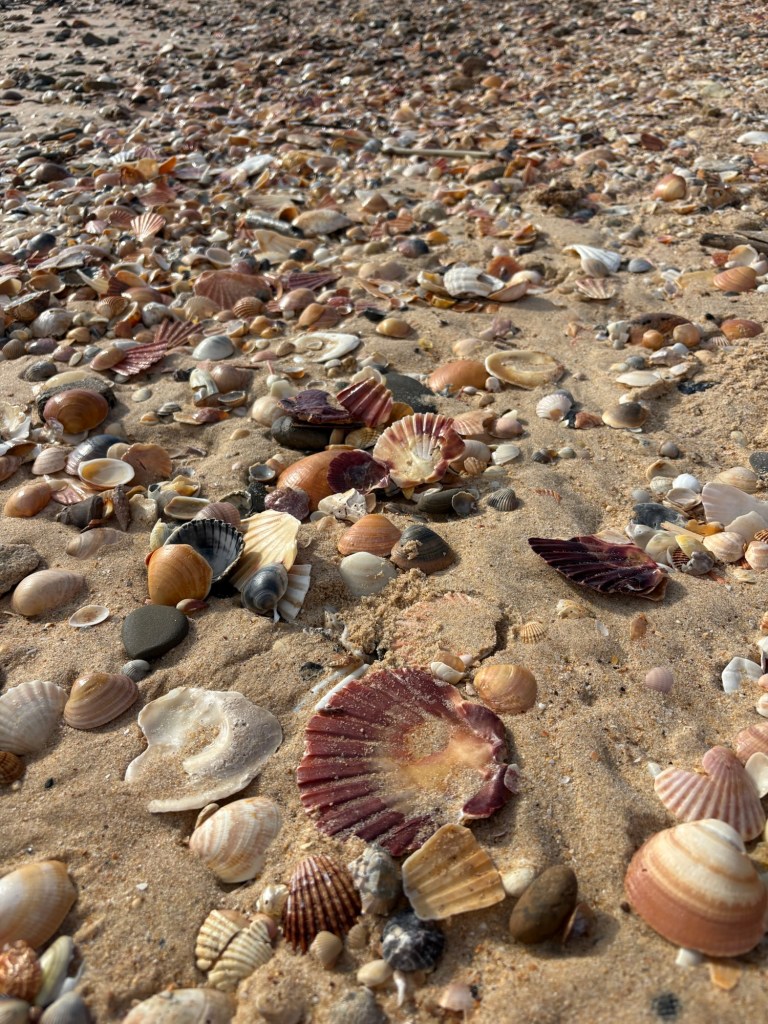
  • Sandy beaches. Even though the weather worked against us, we loved the sandy beaches, and our kids found loads of shells. We will have to return when it’s warm enough to swim!
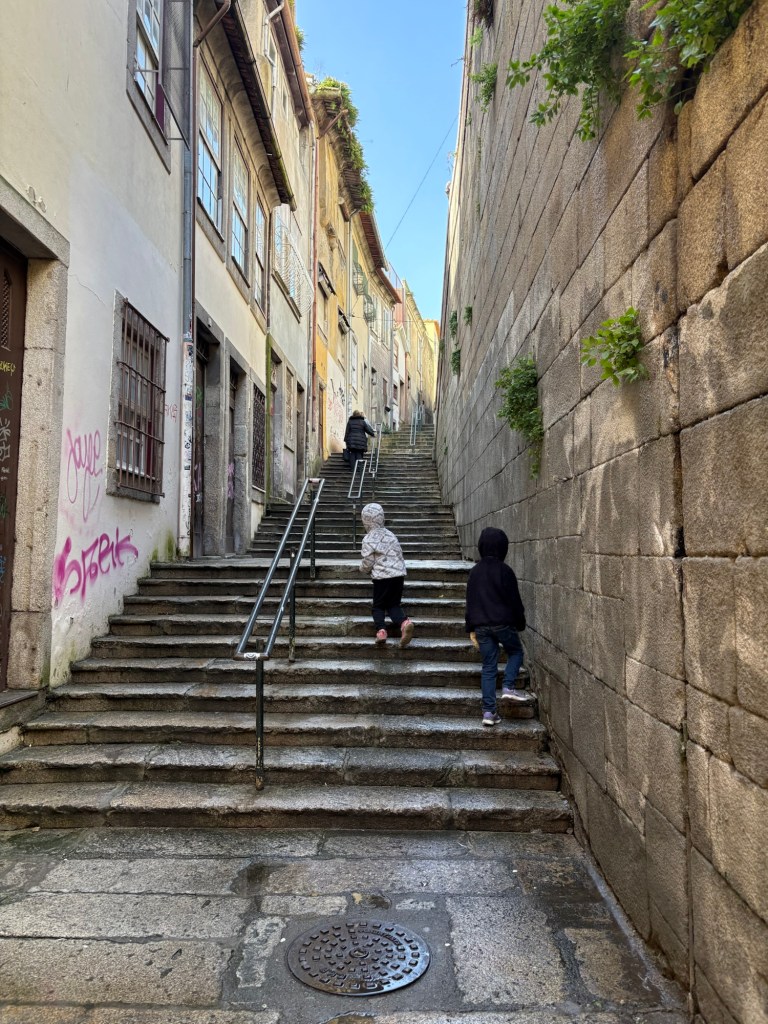
  • Stairways. I’m not sure that there is such a thing as a flat Portuguese city, so touring around on foot inevitably involves climbing up and down and all around. Hidden stairways tucked away where you least expect them make short work of climbing.
  • Public gardens. We found tranquility (and peacocks) in many public gardens. With careful design and tidy upkeep, you can’t go wrong visiting a public garden.
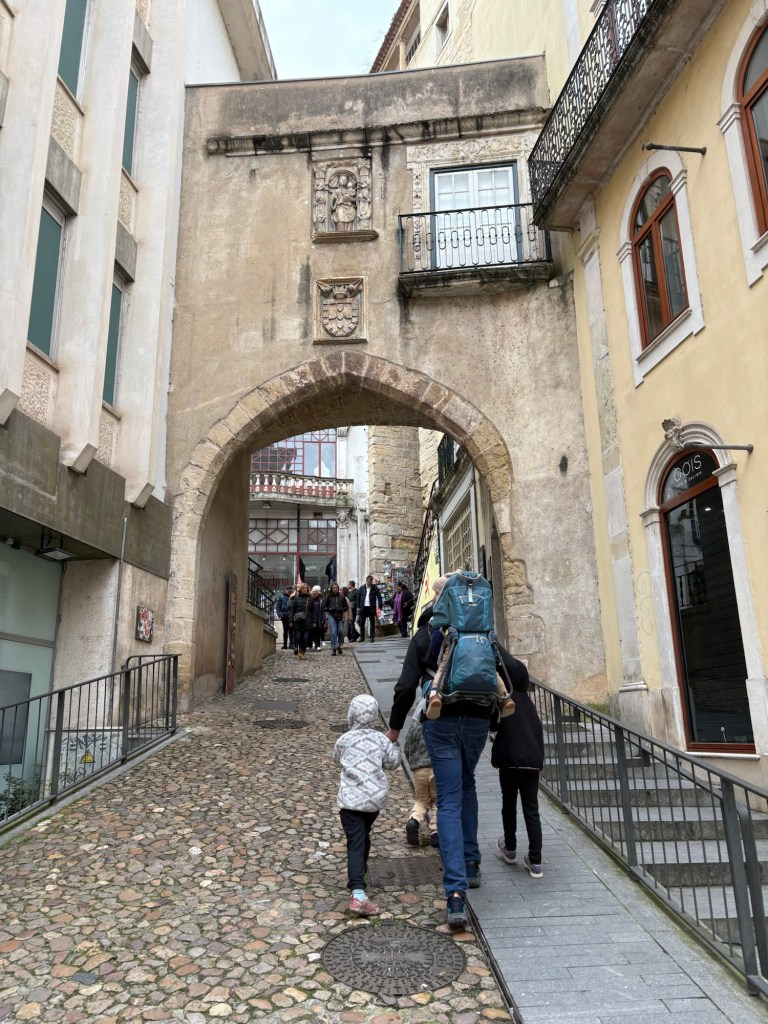
Coimbra

Évora and the Algarve

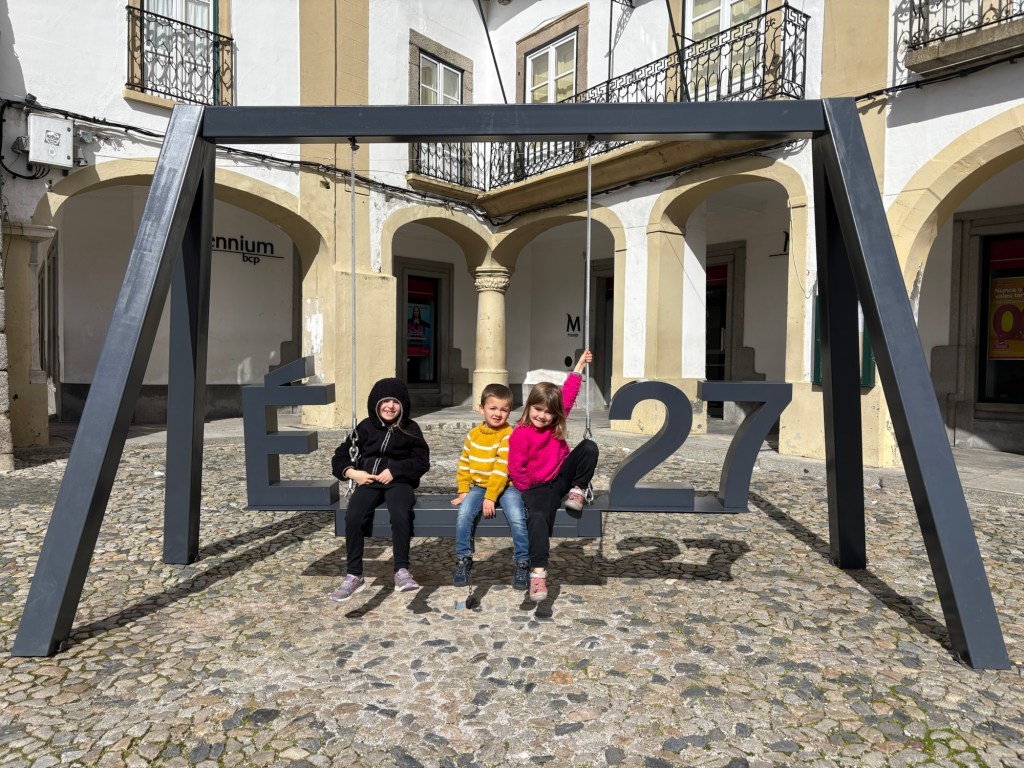
Friendly little Évora kept us busy on Valentine’s Day. Thoughtful Quinn somehow made some Valentine’s art for us, kept it hidden from me while I went through every item in her backpack in hopes of getting rid of some weight, brought it to another city, and presented it to us on the morning of Valentine’s Day! You never know what she has up her sleeves!

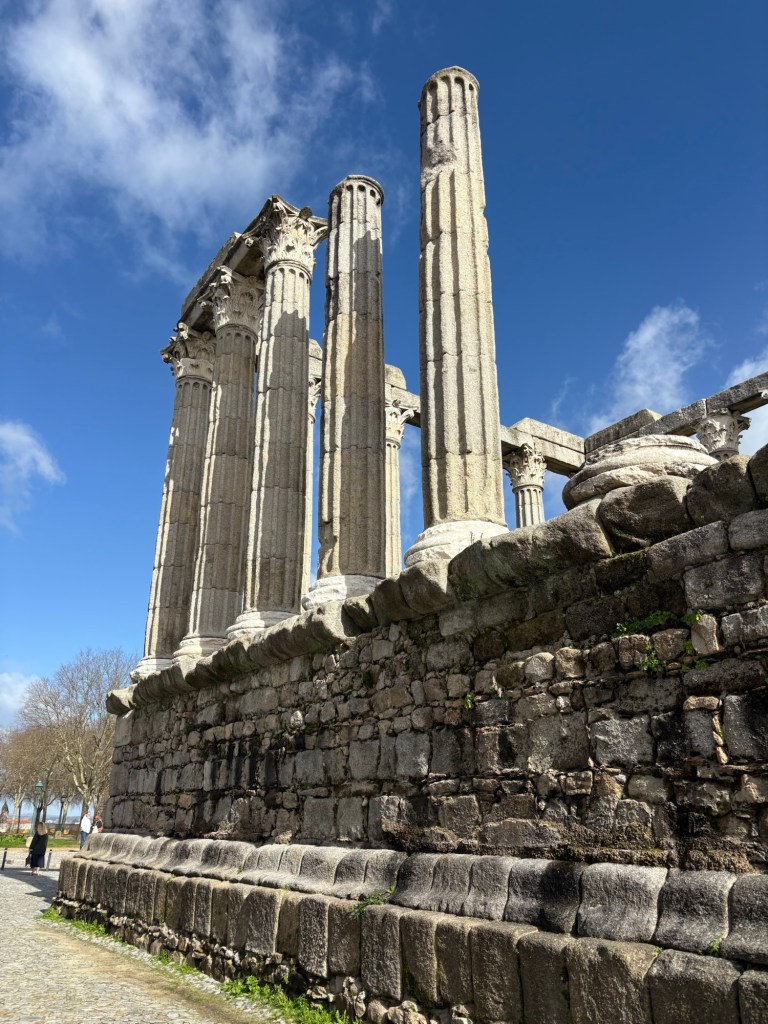
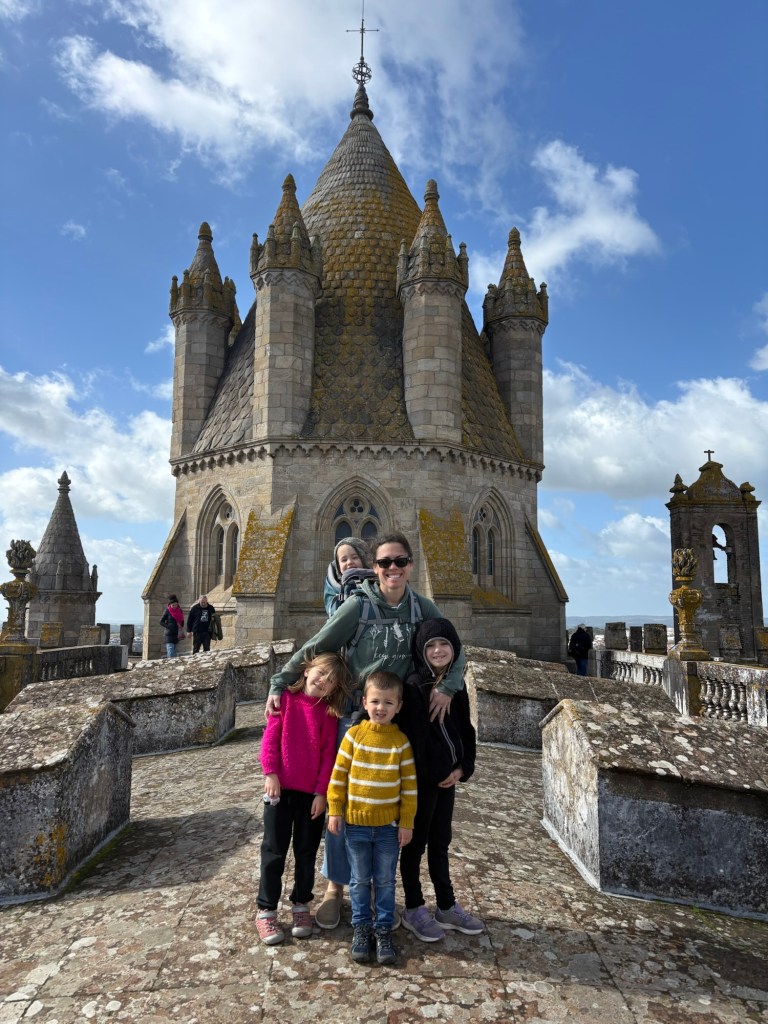
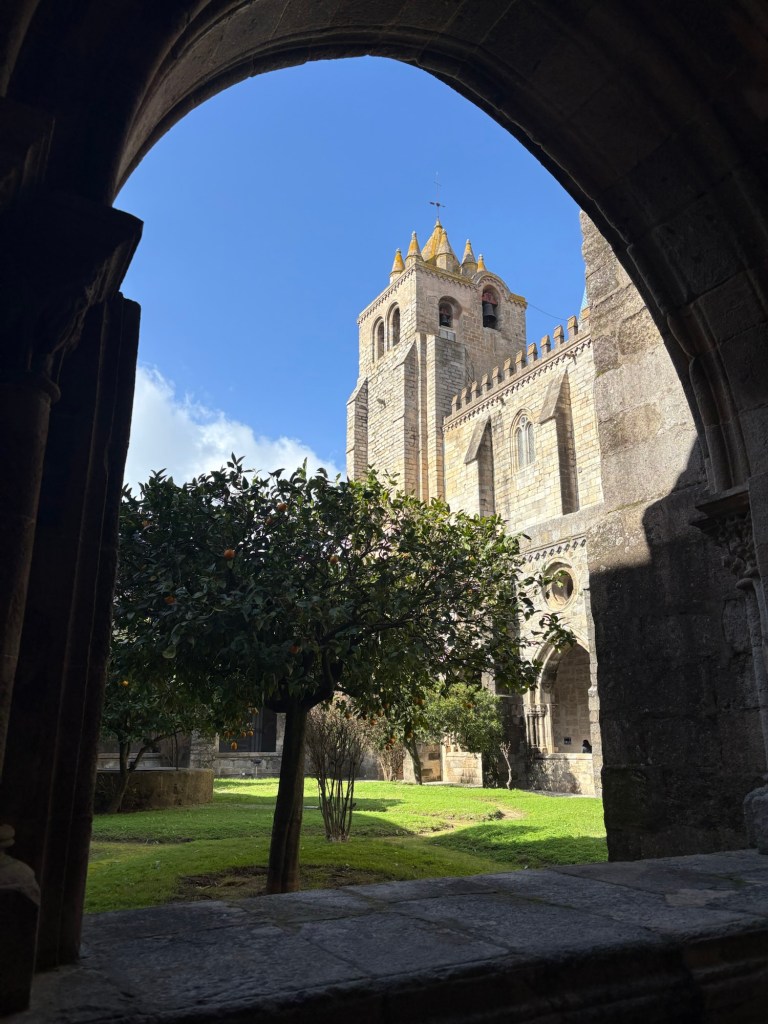
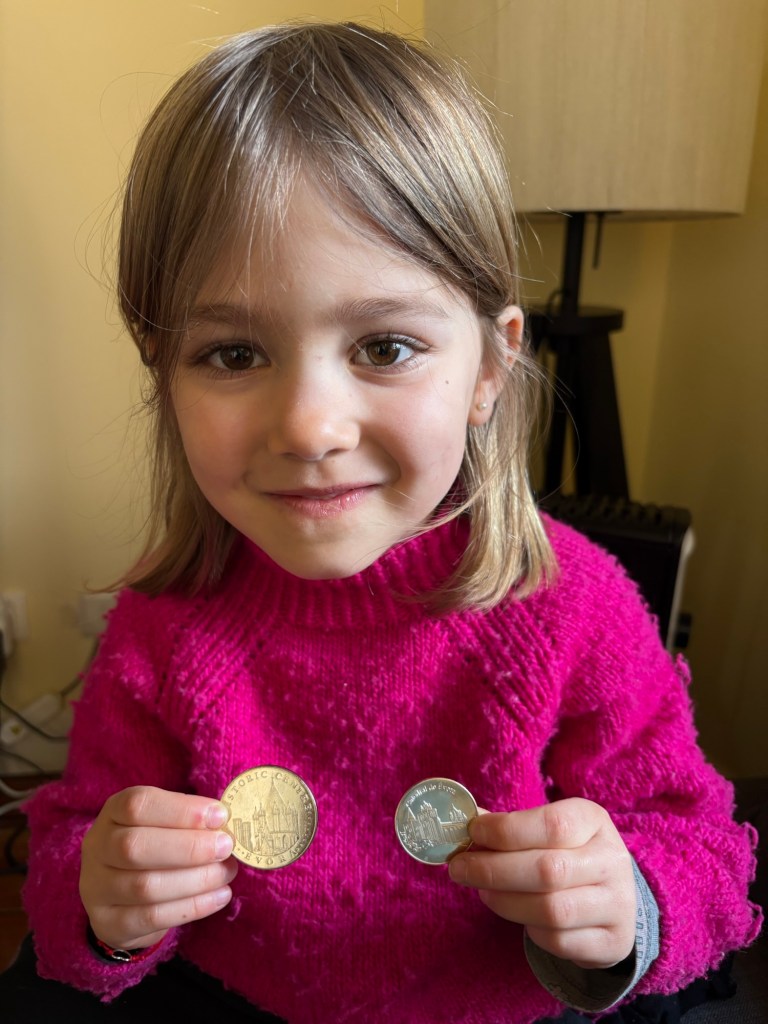
In the brisk, breezy sunshine we admired the first century Temple of Diana briefly before visiting the Catedral de Évora. We grumble a bit about paying for church entrance, but this cathedral ticket included a rooftop view, the cloisters, a religious art museum, the cathedral itself, and not one, but three commemorative coin machines. Picture a noisy, larger-than-normal family with a bunch of scruffy little kids clustered around said coin machines for ten minutes. Over the kid chatter you can hear the jingle of coins and the occasional clank of a heavy coin hitting metal. Oh wait, and there’s the sound of the crank as one of the machines smashes a nickel into a copper blob with the virgin of something-or-other pressed into it. Yeah, that’s us. My parents can claim full responsibility for funding the commemorative coin shopping spree with their donations.

Temple of Diana
On the roof of the Catedral de Évora
Orange trees in the cloisters
The bling
Évora

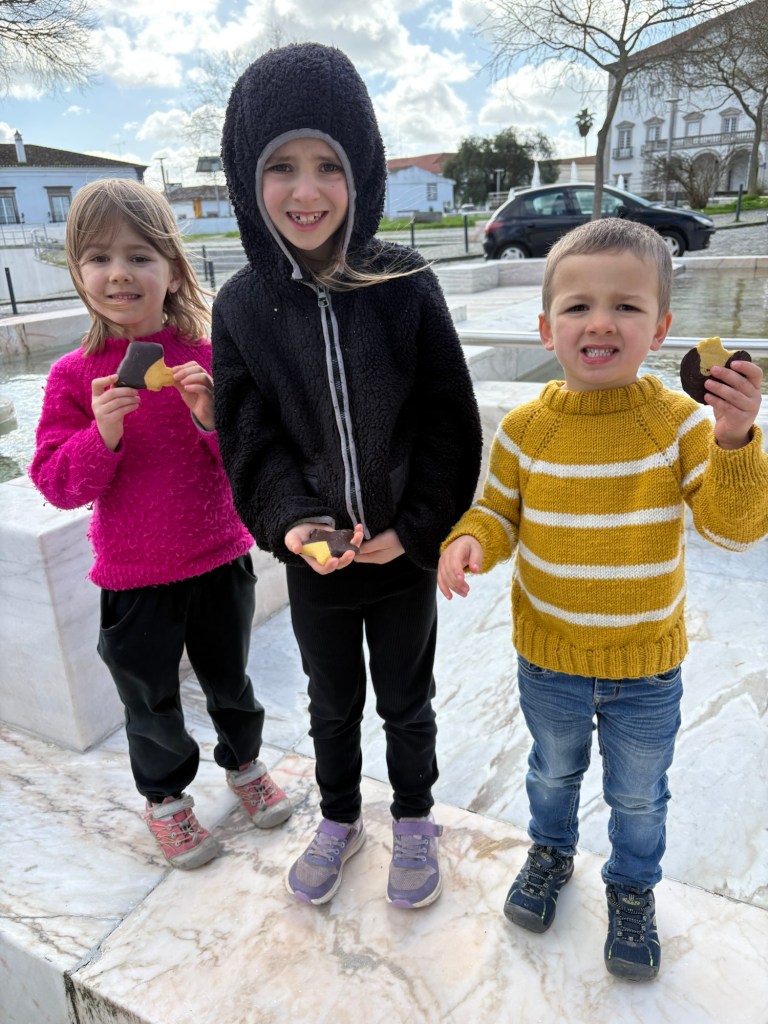
We visited the pretty little Pastelaria Violeta for a Valentine’s Day treat: chocolate-dipped cookies tasting faintly of orange and some sort of glazed pastry dough confection that I don’t know the name of. Packaged in a cute little box, they were devoured immediately.

Sweet treats

We’ve seen and sampled various sweets all over Europe. Portugal’s sweets perhaps haven’t been the absolute best, but they are decent quality and widely available. Aside from the numerous charming little independent bakeries, almost every grocery store has a bakery section with cases of various types of fresh bread and baked treats. We have sampled croissants, chocolate croissants, cream-filled croissants, chocolate muffins, cookies, the national favorite pastel de nata (like a little cream custard tart), brioche rolls, cheese puffs, and many varieties of bread. I’m not big on carbs, but when in Portugal, you can’t avoid them! To purchase baked goods, you select what you want from the cases and package it yourself. Sometimes you print your own label, and you can often use a bread slicing machine to cut your loaf as desired. The bakery cases are almost always the busiest section of the grocery store, and we can understand why. You will see anyone from old ladies to groups of teenagers to workmen buzzing around the cases to choose their daily treat. Everything is so fresh, and the irregular shape of the bread loaves shows that they are being formed from fresh dough by human hands.

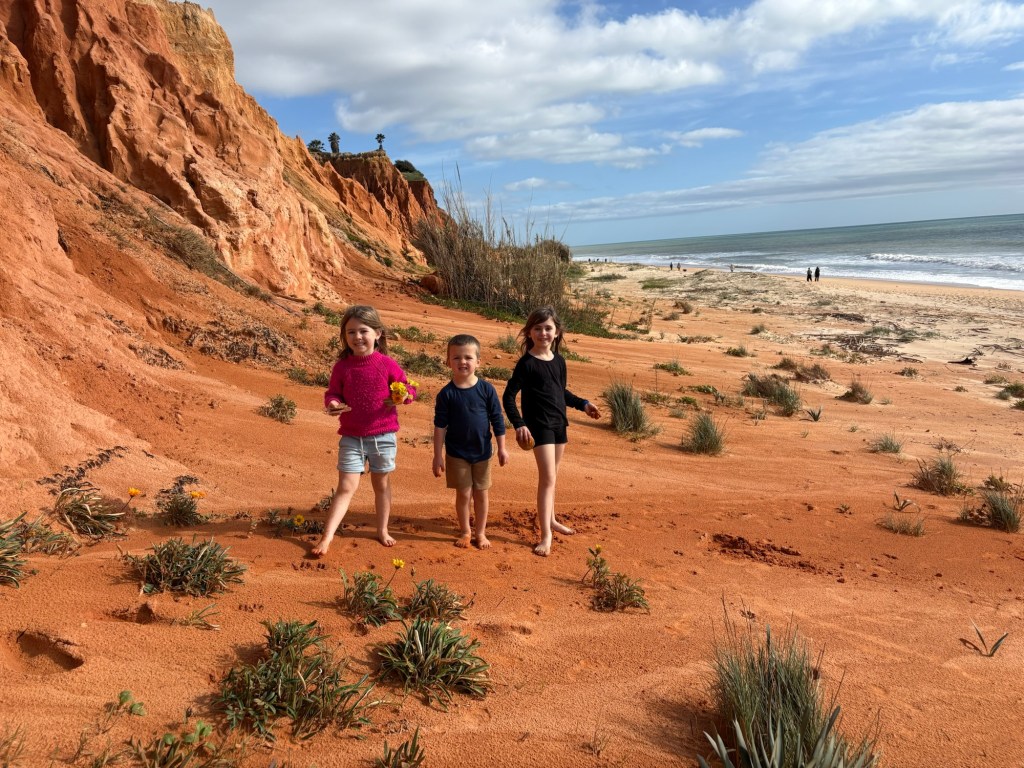
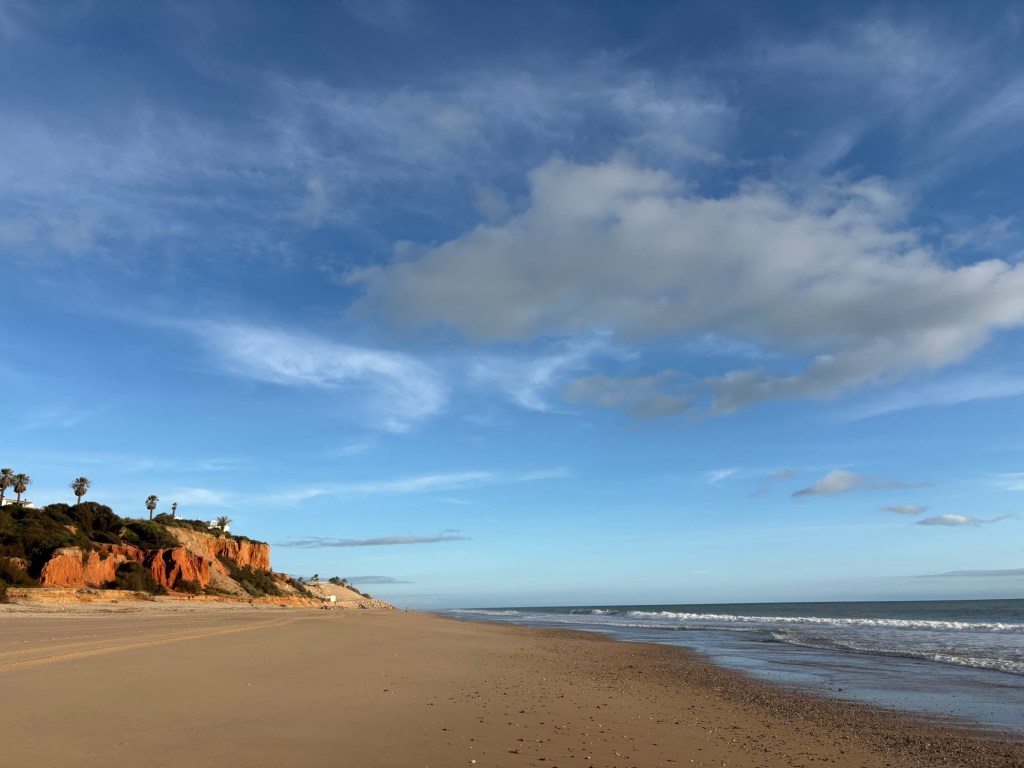
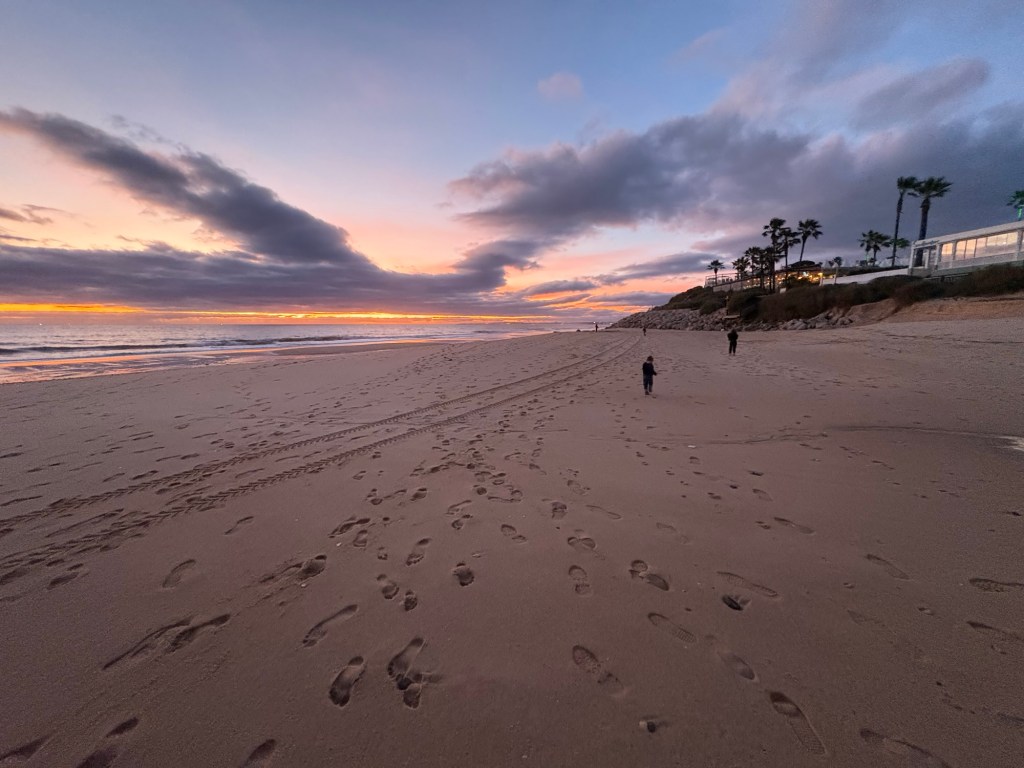
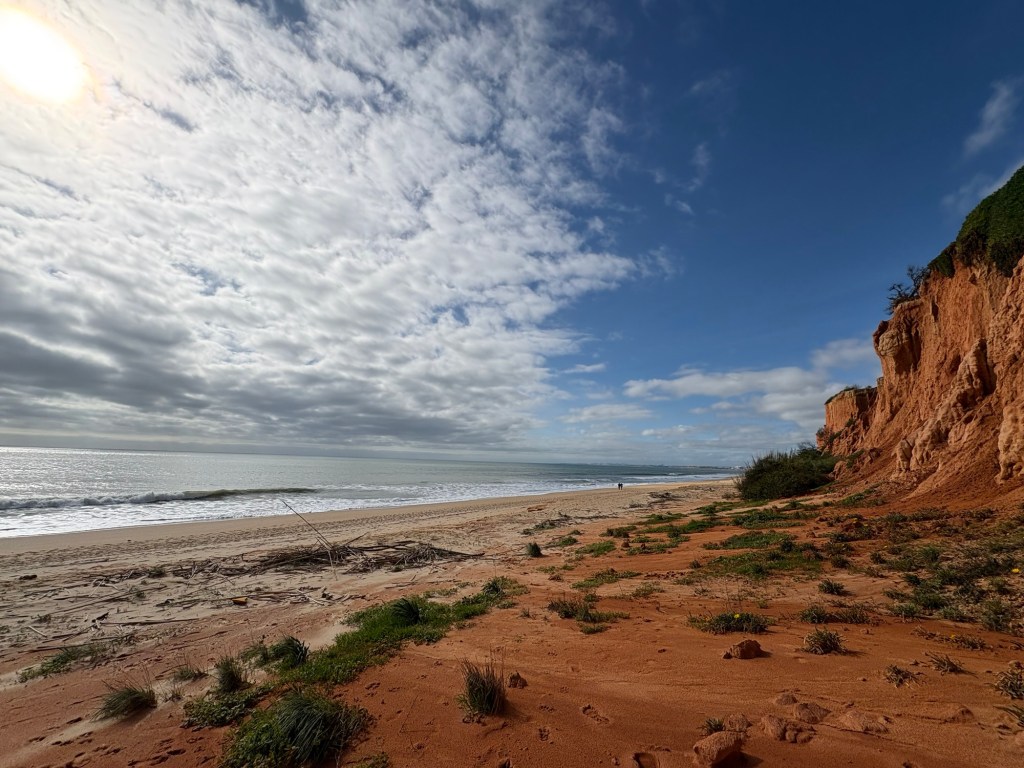
We left Évora to drive south to spend our last few days in Portugal in Vale do Lobo, an extensive golf resort community. Walking around the orderly neighborhoods inhabited at the moment by mostly British or northern European expats/tourists, the atmosphere feels quite different from other parts of Portugal. We’ve seen lots of signage with Portuguese as the second language, preceded by English, and then followed by German and French at times. The weather feels like Newport Beach, but add some heat, and it could be Central Florida. In any case, we have enjoyed walking down to the beach and finding endless treasures.

Playing too close to the crumbling cliffs
Can you tell Jude took a very brief break from screaming so I could take this picture?
Sunset walks
Perfection
Piles and piles of treasures!

Portugal put on a show with delightfully perfect weather for our last few days. With cool breezes, gentle sunshine, and amazing scenery, we can see why so many people come to this area for winter or forever. We’ve eaten dinner outside, left doors open all day, dried laundry on the rooftop terrace in the sun, and been comfortable in shorts and sweatshirts. And I guarantee we can appreciate it all the more after the weeks of stormy weather.

We leave tomorrow morning for the United Kingdom! We are eager to be in an English-speaking country but will definitely miss many things about Portugal – more on that in another post!

Winding down in Portugal

Perhaps to tease us, or just to convince us to return, Portugal is putting on a show for our last week here. After feeling like we haven’t seen the sun in weeks, we’ve had a string of beautiful days to end our time in Portugal.

Our original travel plans did not include more than a possible quick stop for a few hours in historic Évora, but I am so glad our plans changed to include this compact UNESCO world heritage jewel. Wandering the quiet warren of whitewashed buildings and cobblestone streets proved to be a beautiful example of a typical Portuguese city, relaxed and comfortable in its state of ancient splendor/decay.

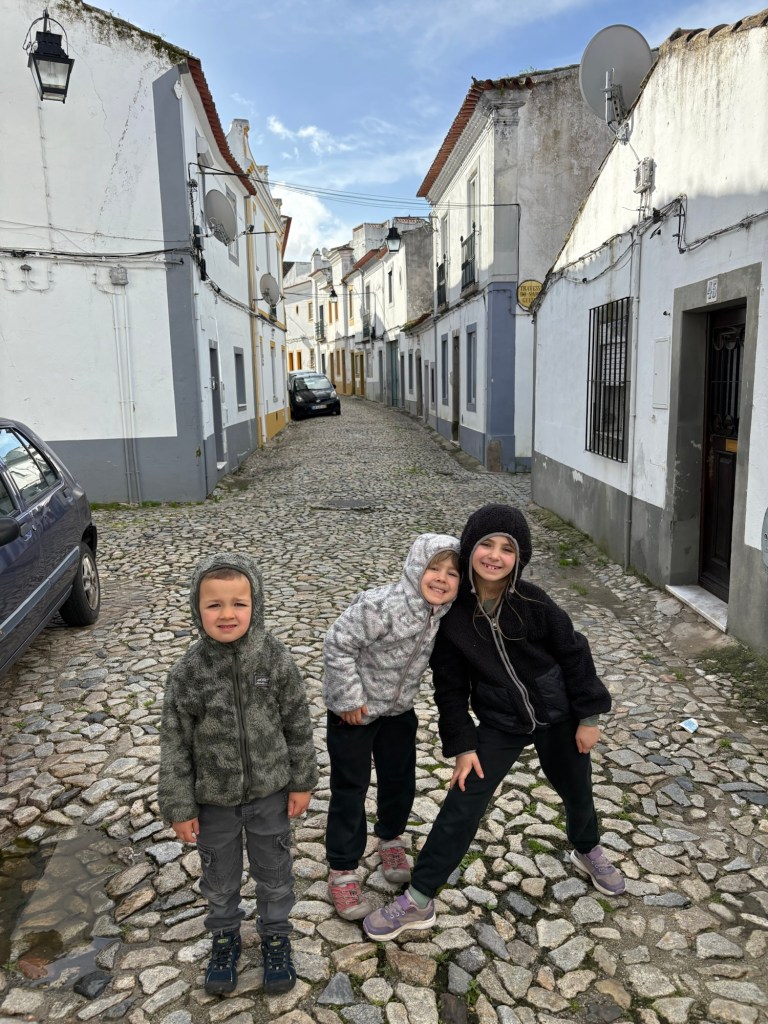
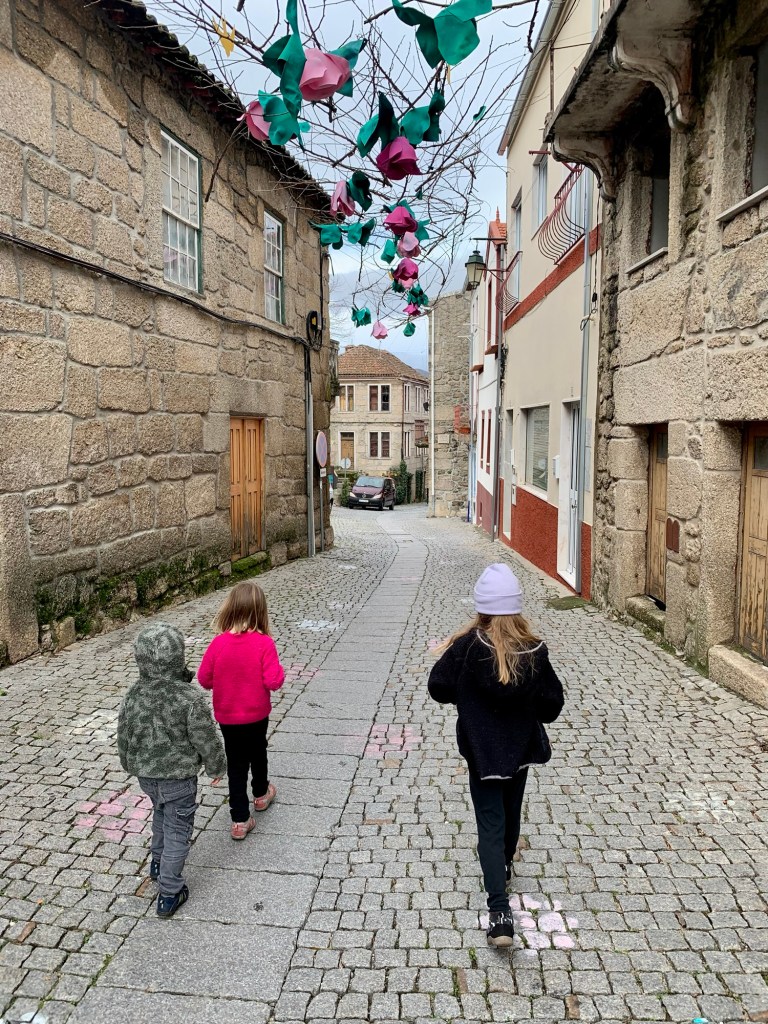
Outside our lodging – narrow streets!

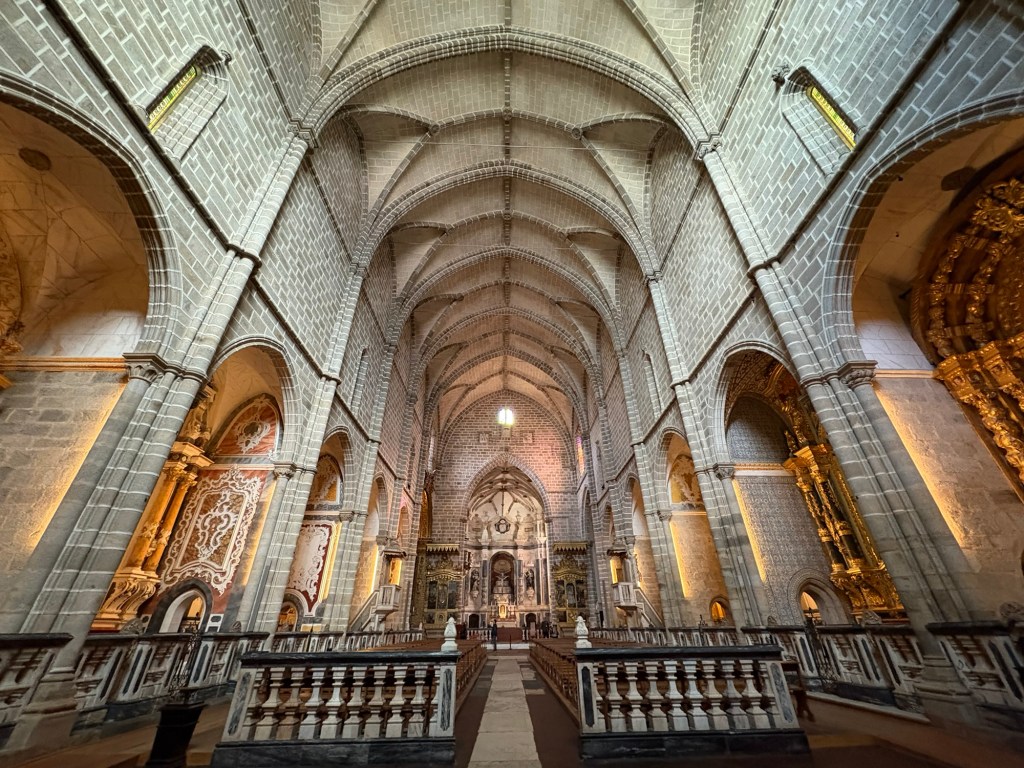
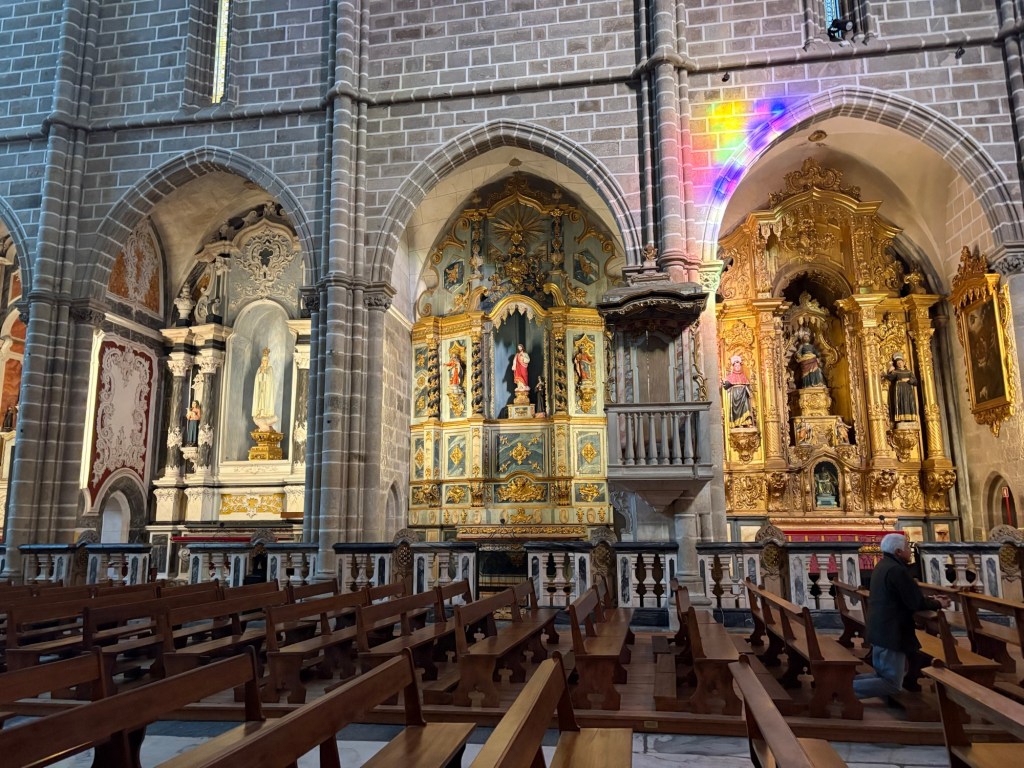
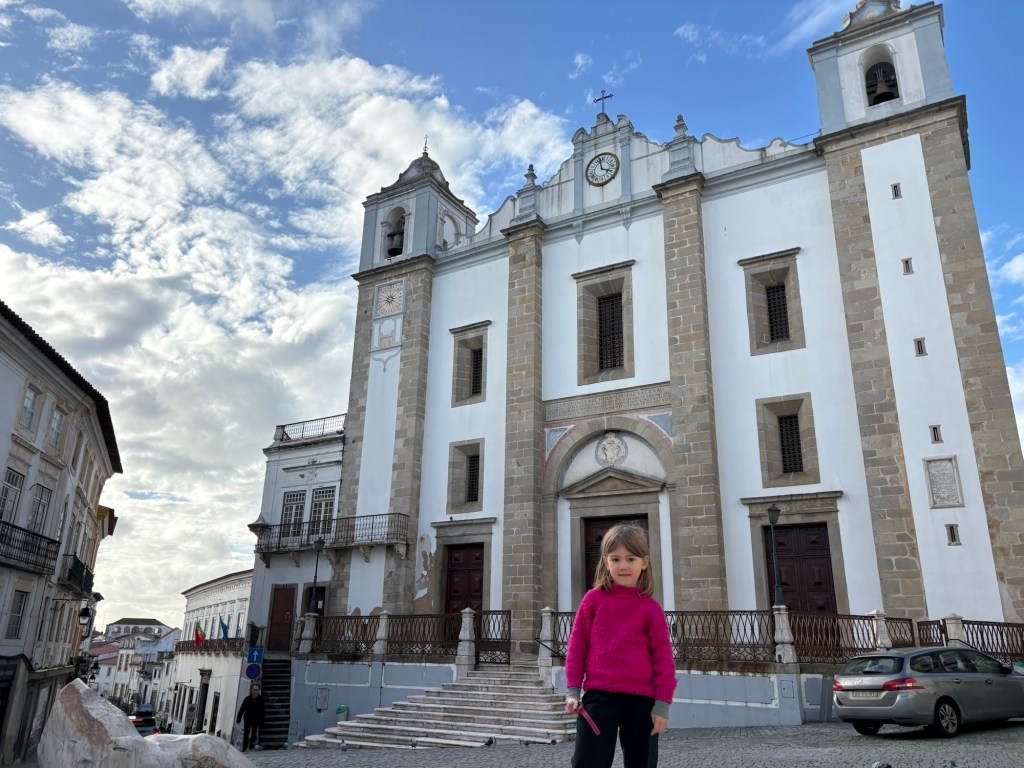
Our first morning of exploration sent us scurrying into the Igreja de São Francisco de Évora to avoid a rapidly approaching rain storm. Portuguese cathedrals haven’t been our favorite visually, but it all looks amazing when it’s pouring outside.

Igreja de São Francisco de Évora

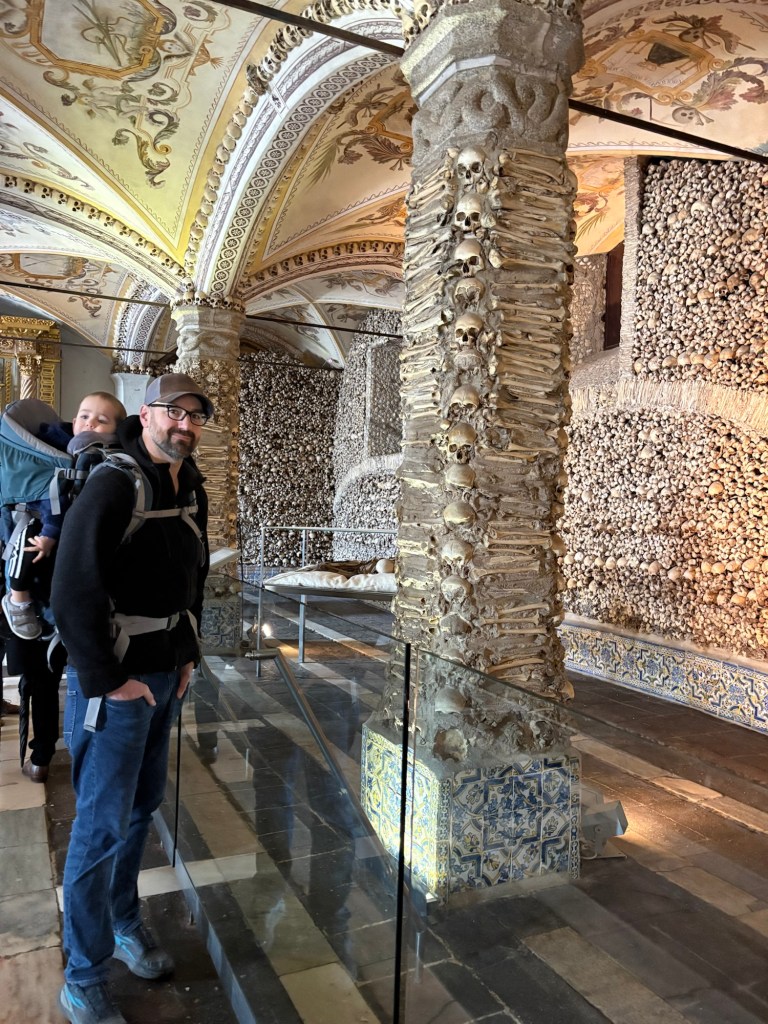
The adjacent Capela dos Ossos was the second chapel of bones we’ve visited on this trip, and Morgan said that both were creepy.

Capela dos Ossos

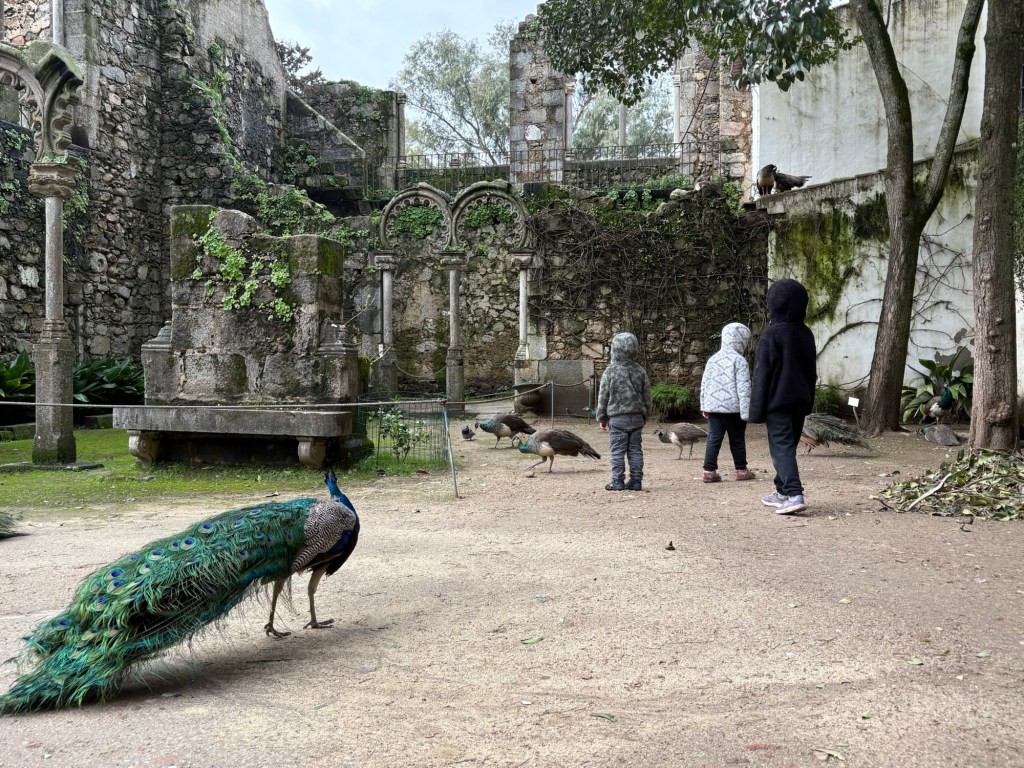
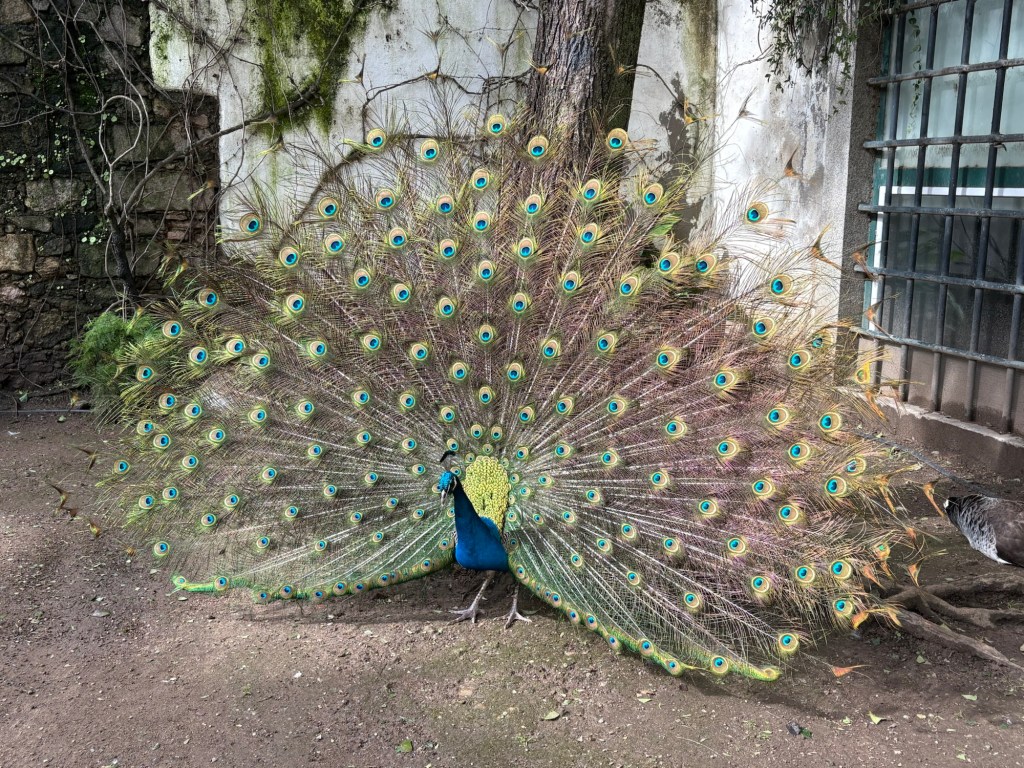
We found peacocks galore in Évora’s public park, providing endless fascination for the kids. A quick search just told me that Portuguese park peacocks are a result of the 15th-century Age of Discovery in Portugal. Explorers brought them home from the East as exotic status symbols to adorn important gardens. Evidently they adapted well to the climate here and have flourished in public parks all over the country for many centuries.

Laila is trying to figure out if she can catch one.

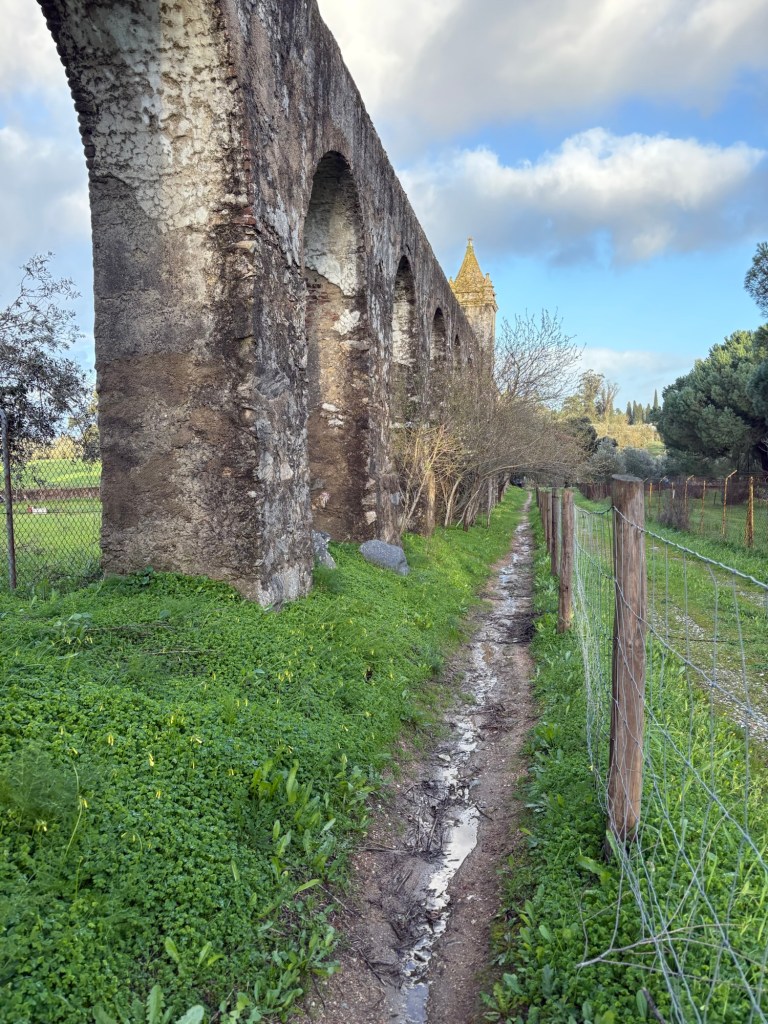
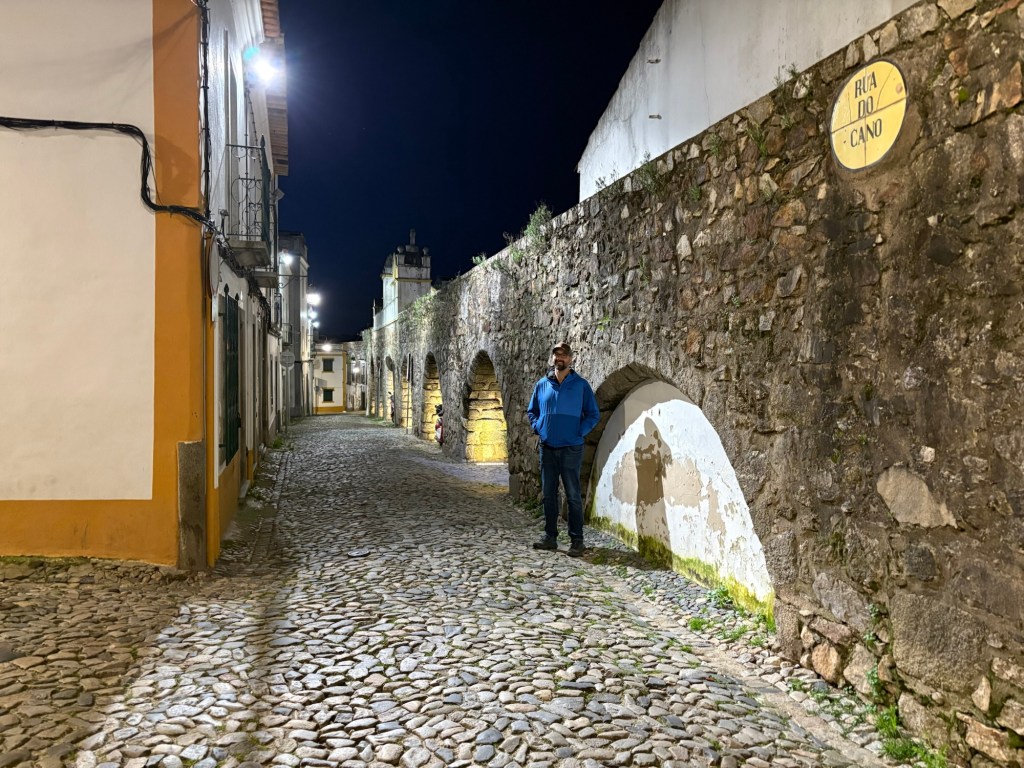
I squeezed in an afternoon run by the Aqueduto de Água da Prata, an aqueduct built in the 1500s over the ancient Roman aqueduct. The aqueduct stands high above the street as it enters the northern side of Évora, and as we saw on a nighttime walk, buildings have been constructed right inside its ancient structure.

Aqueduct by day
Aqueduct by night

Finally, some sunshine!

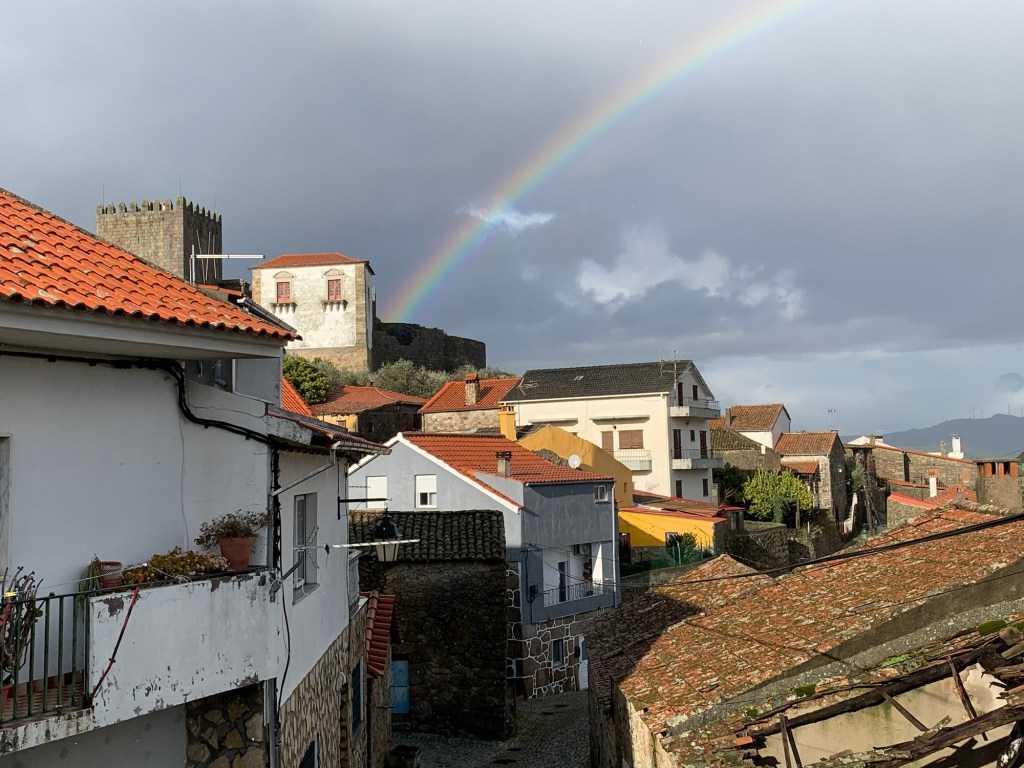
The sun made a rare appearance a few days ago, allowing us a chance to get out and explore the little town of Belmonte, known for its enduring Jewish community. Jews here have kept their faith alive for many centuries, often in secret, and throughout various periods of intense persecution. I have noticed only maybe one other visible instance of Judaism elsewhere in Portugal, but you can barely walk a block here without seeing a menorah or a mezuzah.

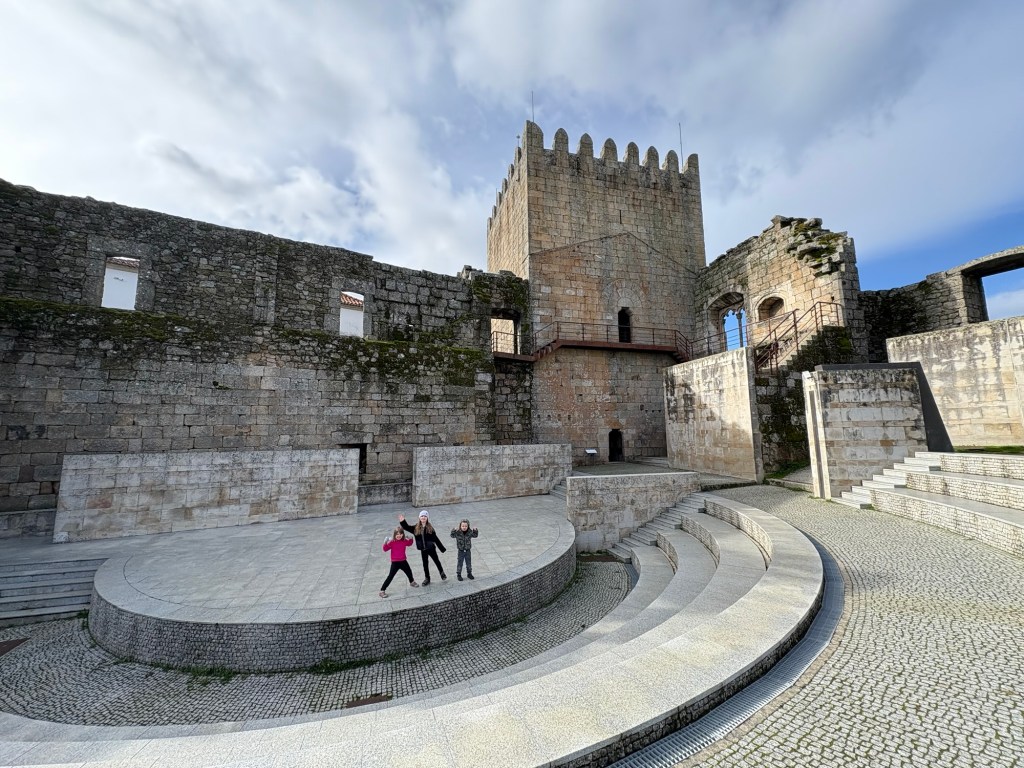
Castelo de Belmonte

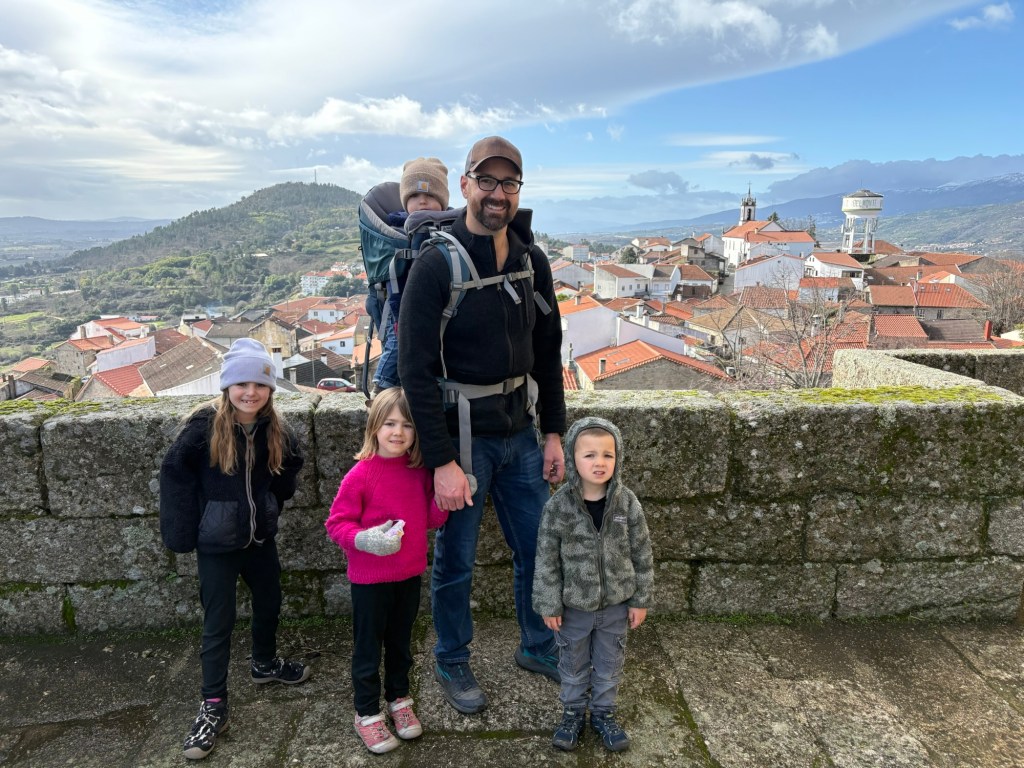
We headed straight to the castle, a short walk from the very old little stone house where we stayed. We had the place almost entirely to ourselves, and the kids always love a good castle. With relatively warm air, sunshine on our faces, birdsong on the breeze, and beautiful views of the rolling countryside, our spirits felt revived. The weather held for wandering around town and getting in a good afternoon jog – a gift!

We booked this stone house ages ago, shortly before leaving home, and since it was a nonrefundable booking, we had no choice but to stick with our plans and stay. While charming a bit in its age, we quickly noticed that everything was old: mattresses, the sponge, towels, appliances that barely worked, etc. It made for our most uncomfortable lodging in Portugal.

Quinn and the little stone house, Belmonte
The view from our balcony

One silver lining, for the first half of our stay while it worked, was watching the Olympics on TV. Nic and I have not had access to watching the Olympics since we got married, so having cable while traveling is awesome! Our kids have seen very little Olympics footage, and they are loving it now. Figure skating wins as crowd favorite, but they are happy to watch skiing, snowboarding, luge, speed skating, or hockey.

Persistent rain dampened the rest of our Belmonte stay after the one day of sun, so we didn’t get to do much other than school there.

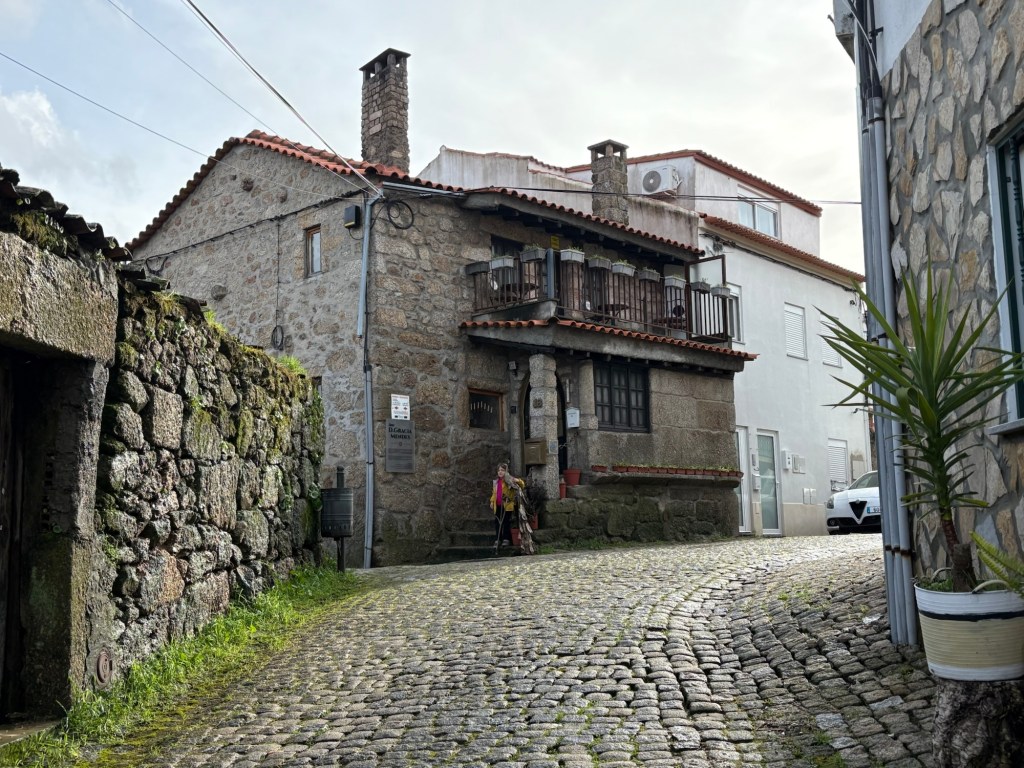
Narrow Belmonte streets

We have moved ourselves south to historic Évora now, after a driving day that brought us back to barf territory. Jude got carsick partway through our drive, unfortunately preceded by a breakfast that included a full cup of Greek yogurt. He appears to be just fine now, and we’ve managed to clean the car seat up in our Airbnb shower.

Évora

We arrived in Évora in sunshine, on a vibrant early spring day. Driving south through central Portugal, we saw little other than endless green fields of grazing sheep and cows. The occasional whitewashed village with accompanying castle dotted the countryside. Eucalyptus and pine trees tilted east and had obviously received a tough thrashing in recent storms. We drove over one dam with crazy churning water on the low side. As Portugal continues to struggle with flooding, we continue to be grateful to be away from the problematic areas. All the water from the higher inland areas where we have been for over a week now is flowing down and still causing major problems by the coast.

Rain, rain, go away!

The constant deluge of rain has sapped my inspiration to write a bit. Since leaving Porto we’ve had very limited opportunities to get outside. Other than a few short consecutive hours, it has rained to an almost unbelievable degree. Evidently they call this series of storms a storm train – not a train we’d like to ride again.

If you have been watching international news, perhaps you’ve seen footage of some terrible flooding in Portugal. Alcácer do Sal, a place we ate lunch en route to Sintra, is underwater. Many rivers have reached levels not seen for a number of decades. Powerful waves have scraped at beach cliffs along with enough rain to cause landslides. The windstorm we experienced only a small part of two weeks ago has led to over ten deaths and long term power outages. We have been fortunate to not be in the worst of the weather, and for this last storm system, we were on high ground with a big view. We suffered no more than boredom and a lack of exercise, but we are praying for those affected in the rest of the country.

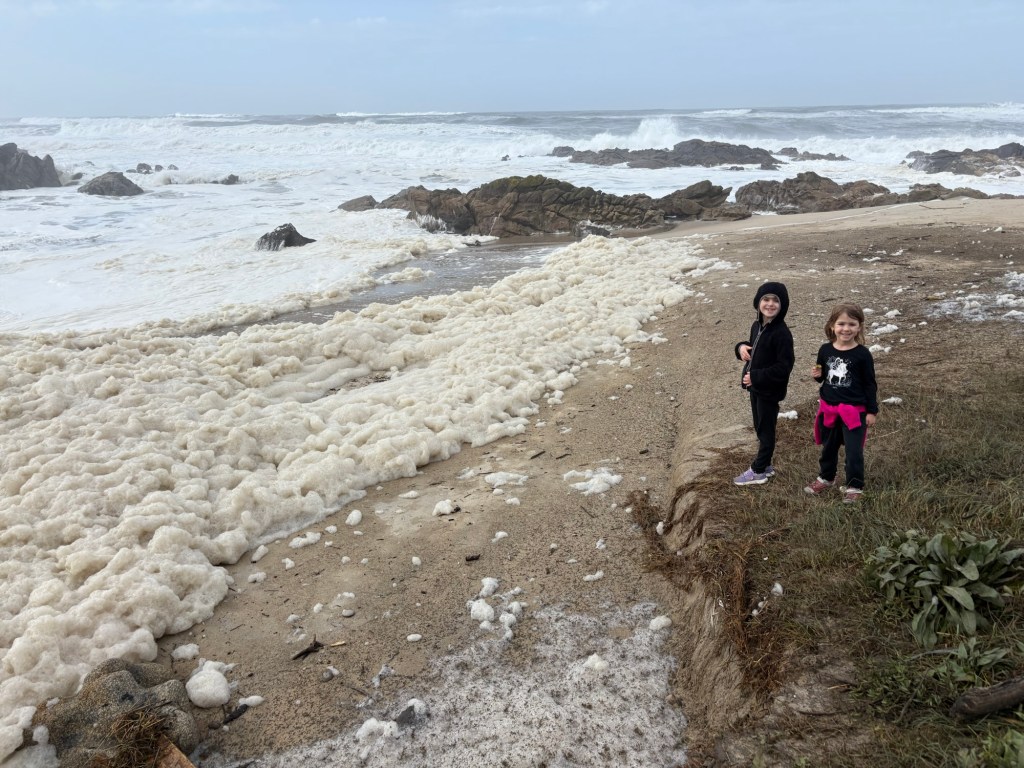
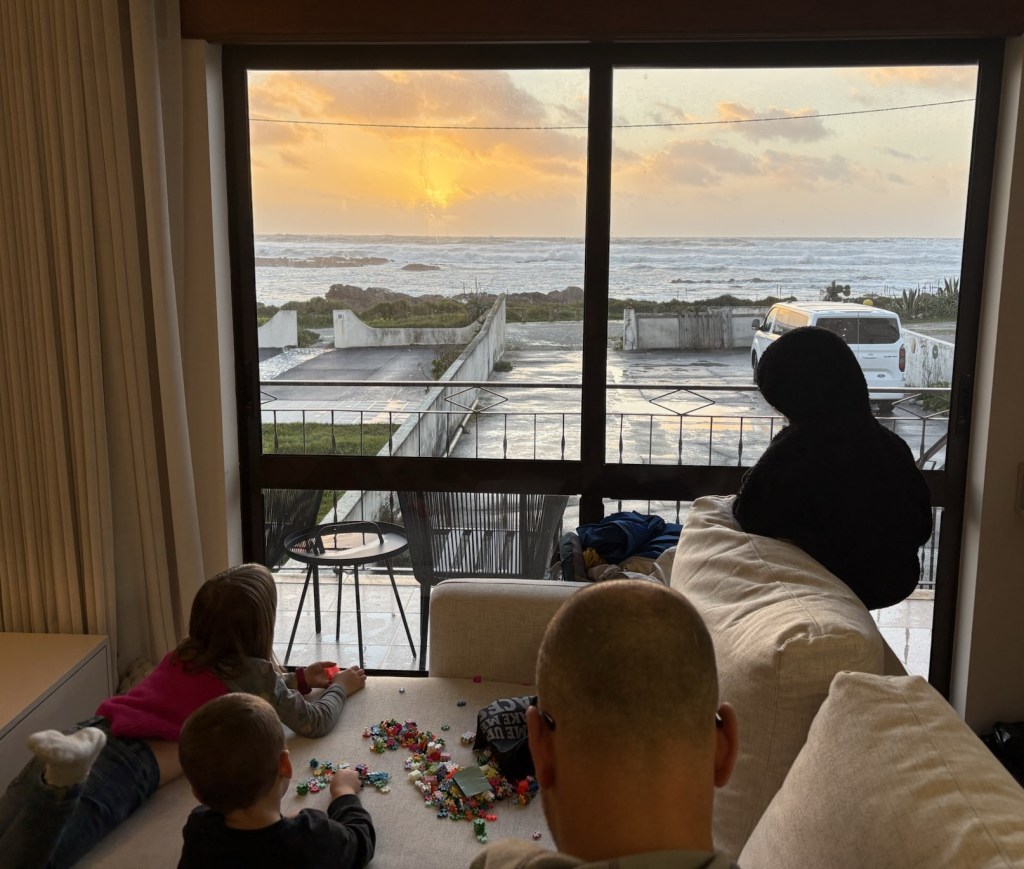
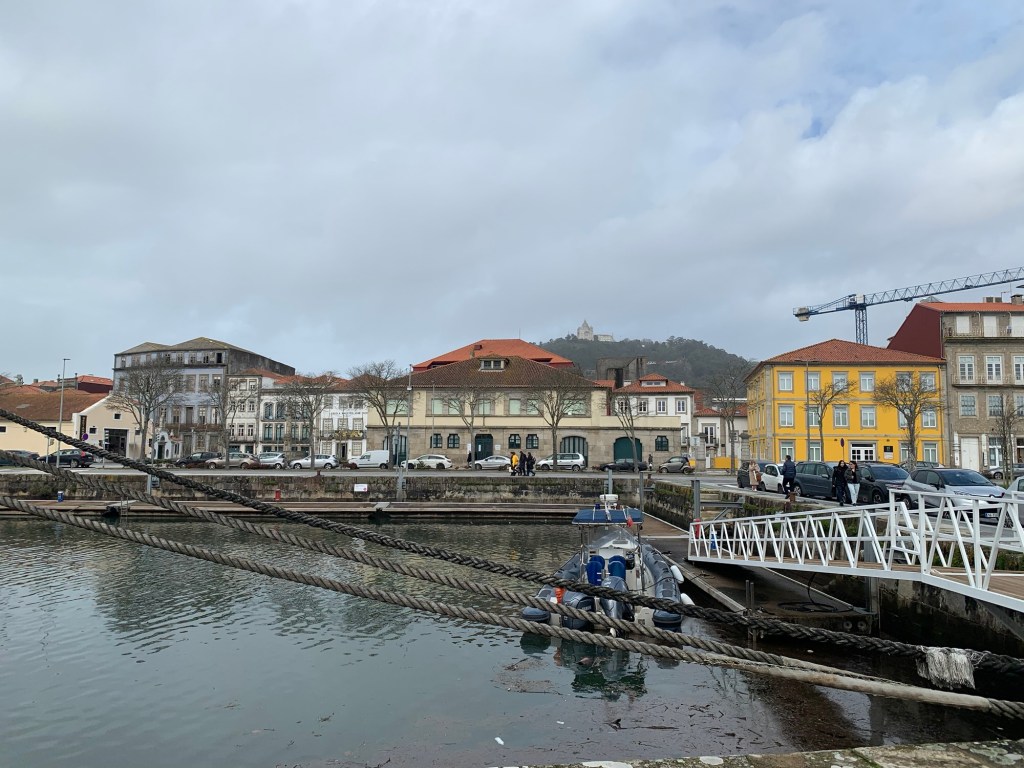
We left Porto to drive north just past Viana do Castelo. For the most part, we were stuck inside our small beachside apartment. At least we had a front row seat to the powerful weather, as our front door looked right out on the churning ocean. For several days, the surging waves produced huge quantities of foam that piled up on the shore and were then blown a fair distance from the water, like snow. Cars driving past on the narrow road that separated us from the water looked like they had driven through a snowstorm!

A rare sunny moment and foam
The one sunset we could see and Plus-Plus building

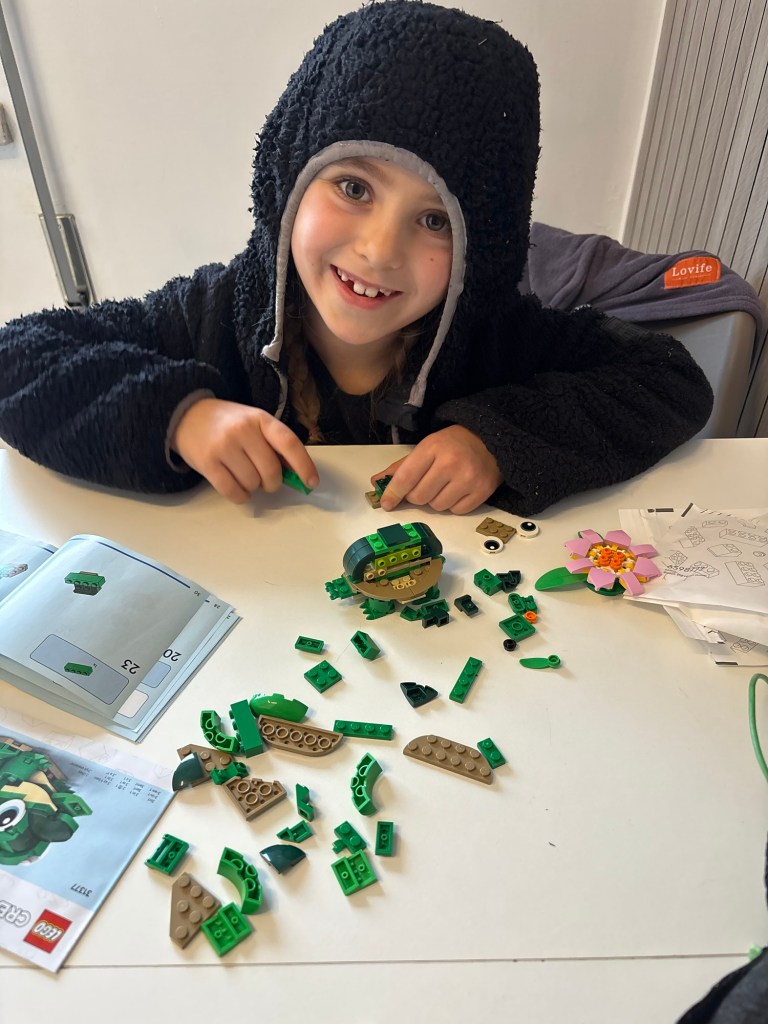
Our kids love the little plastic Plus-Plus blocks we’ve seen all over Europe. We’ve collected quite a few colors now, and the big kids can easily spend an afternoon buildings designs they find on an app. A few new small LEGO sets have kept them busy as well on these rainy days.

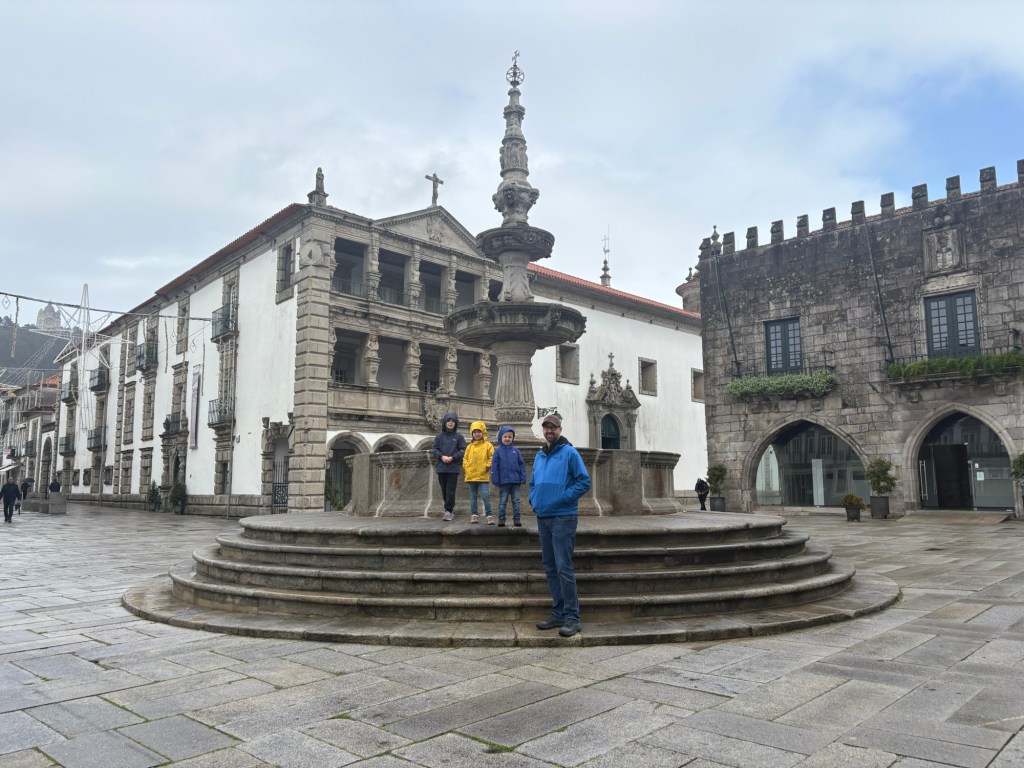
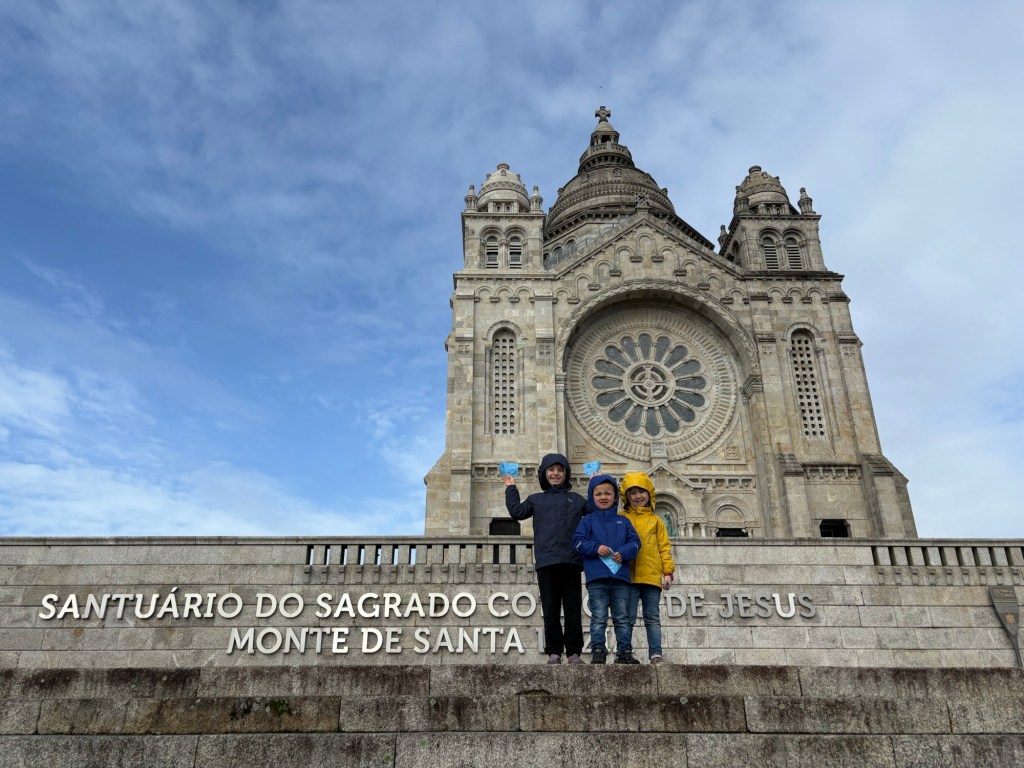
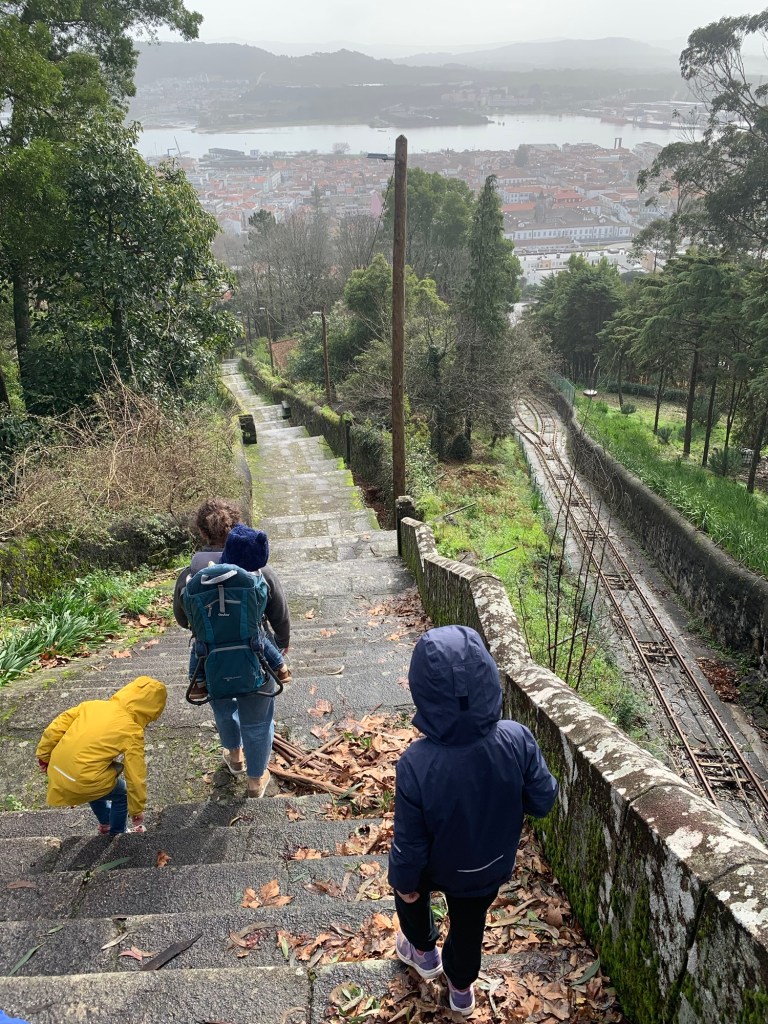
We got lucky with a few hours of sunshine and explored Viana do Castelo on foot. We took the funicular uphill to see big views and a cathedral. Many, many stairs brought us back to town and sea level.

So many stairs!
Viana do Castelo
Looking uphill towards the cathedral

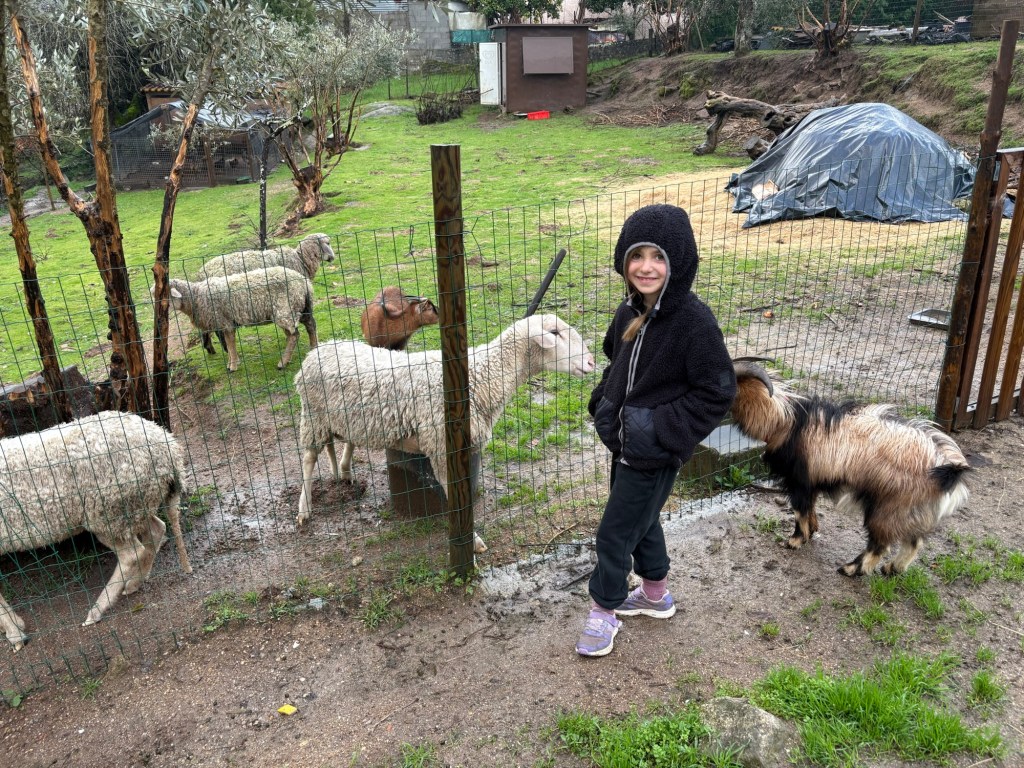
While Storm Leonardo rolled across the Iberian Peninsula, we traveled southeast to a rural property in Fagilde. In better weather the kids would have found loads to do outside, but their chances to interact with the animals and play on the property were quite limited by the heavy and persistent rain. We paid extra to use an inflatable hot tub, which was great for the nasty weather. (Just remember to turn the heater off before using the microwave, or you’ll flip the main breaker!) Booking the hot tub included two bottles of local wine from 2015 – delicious!

We traveled in the rain (fortunately, not snow) this morning to Belmonte. We’re deep in the center of Portugal now, with snowy mountains nearby. Among other things we’ve had our main credit card compromised now. Our back-up was compromised two months ago, and we don’t have the new ones with us yet. Oh, the joys of travel! With only about 1.5” of rain forecast in the next five days, we’re hoping we can get outside more!

Our view in Fagilde

Porto

On the four Porto days that were clear enough for us to attempt exploring, our odds were about 50% for dry sightseeing.

We got all dressed and ready for our first day in the city only to head home after getting soaked in the first twenty minutes of walking.

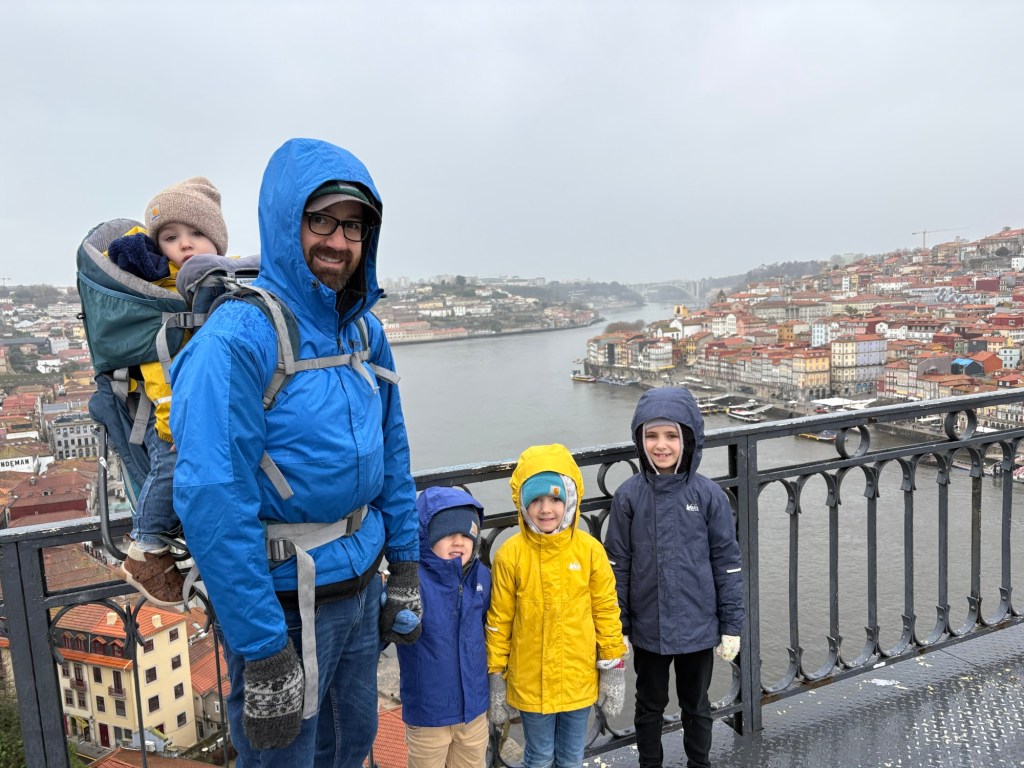
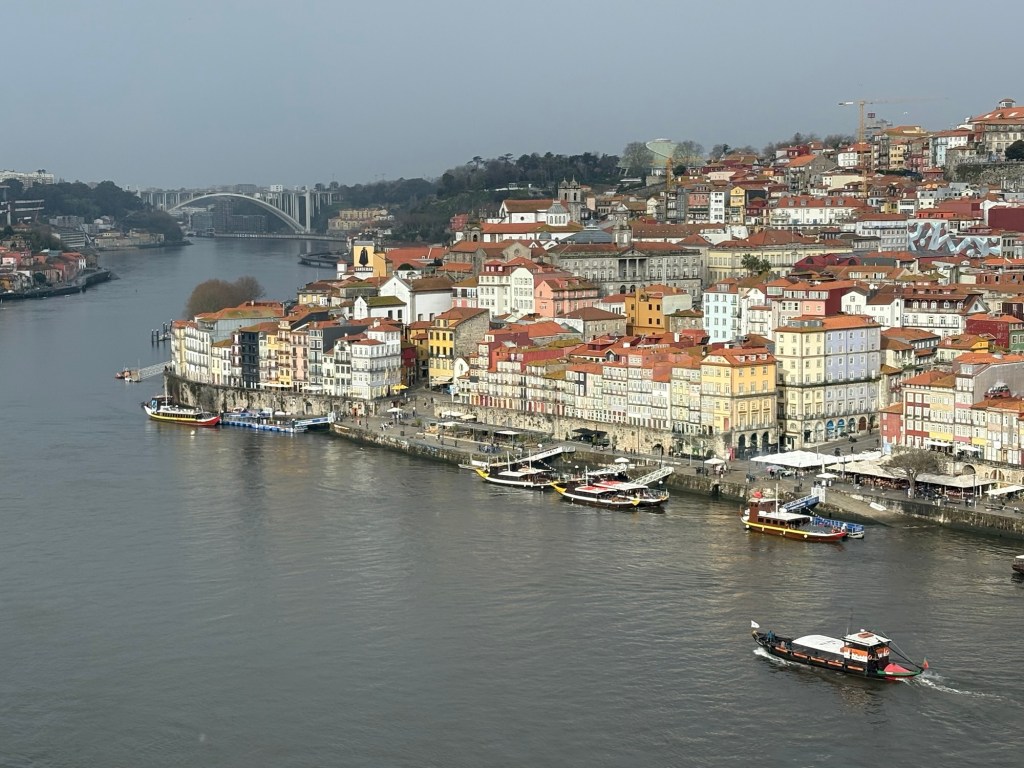
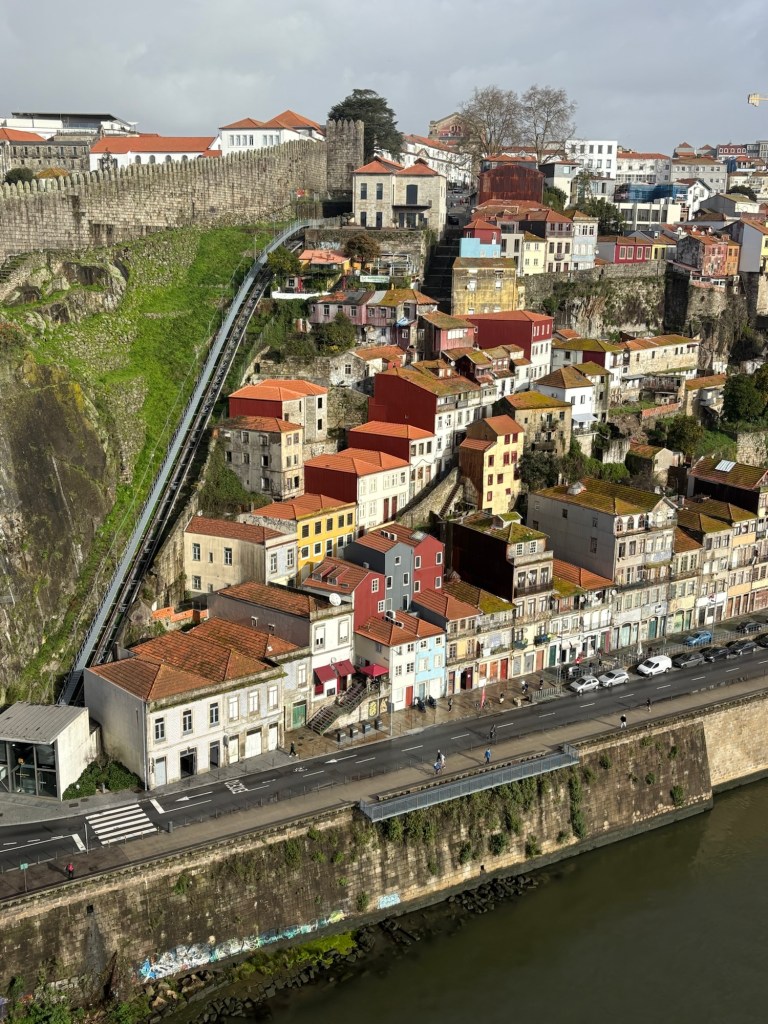
Learning from our first attempt, we took the metro straight to our destination the second time around. It started to sprinkle the moment we got off the metro, naturally. We have seen sprinkles turn quickly into torrential rain here many times, so it seemed inevitable that we would soon be rained out. We walked across the Ponte Luis I as the rain rolled in, enjoying the views of the Douro River and all the buildings and activity of the Ribeira.

High above the Douro River

As it began to rain in earnest we ducked into the cathedral and watched mass begin. It cleared up enough for us to leave our dry spot and get soaked walking down to the river’s edge. One funicular ride up and two metro rides later, we were back at home base, defeated again! This weather has inspired all sorts of superstitious talk: leaving sunglasses at home ensures sun, packing lunch equals rain, etc.

Our third attempt provided better results with enough sunshine to walk around town on a brisk but beautiful day.

The funicular and a small part of the Ribeira in the sun!
Stair climbing: mandatory in Portugal!
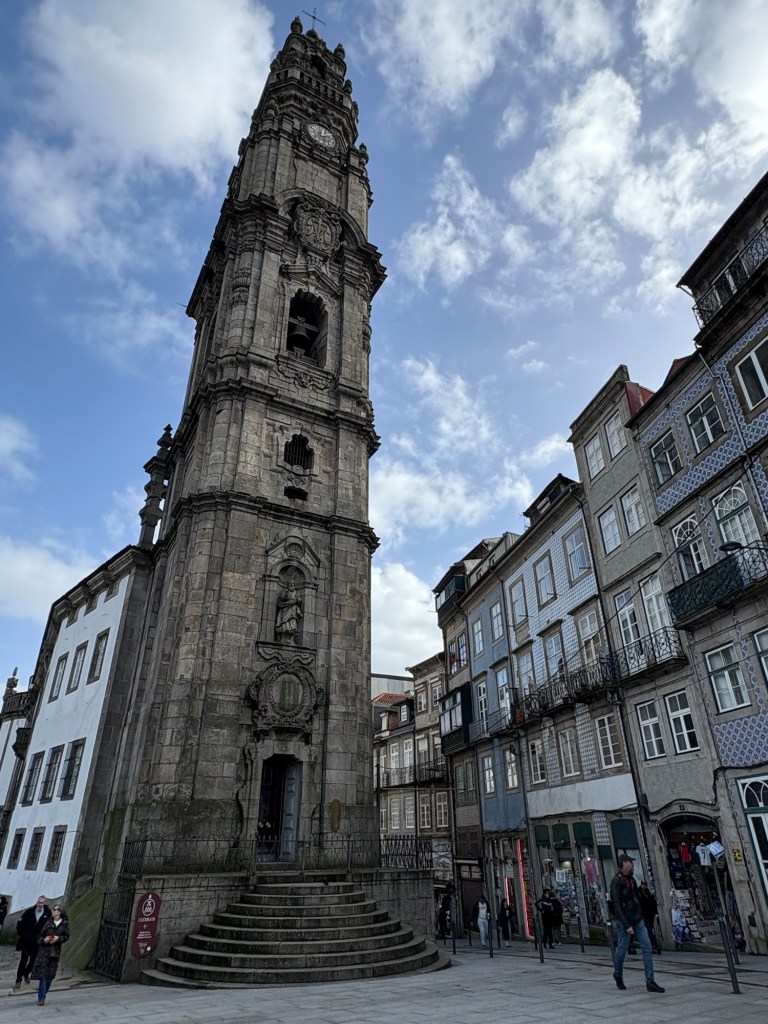
Torre dos Clérigos
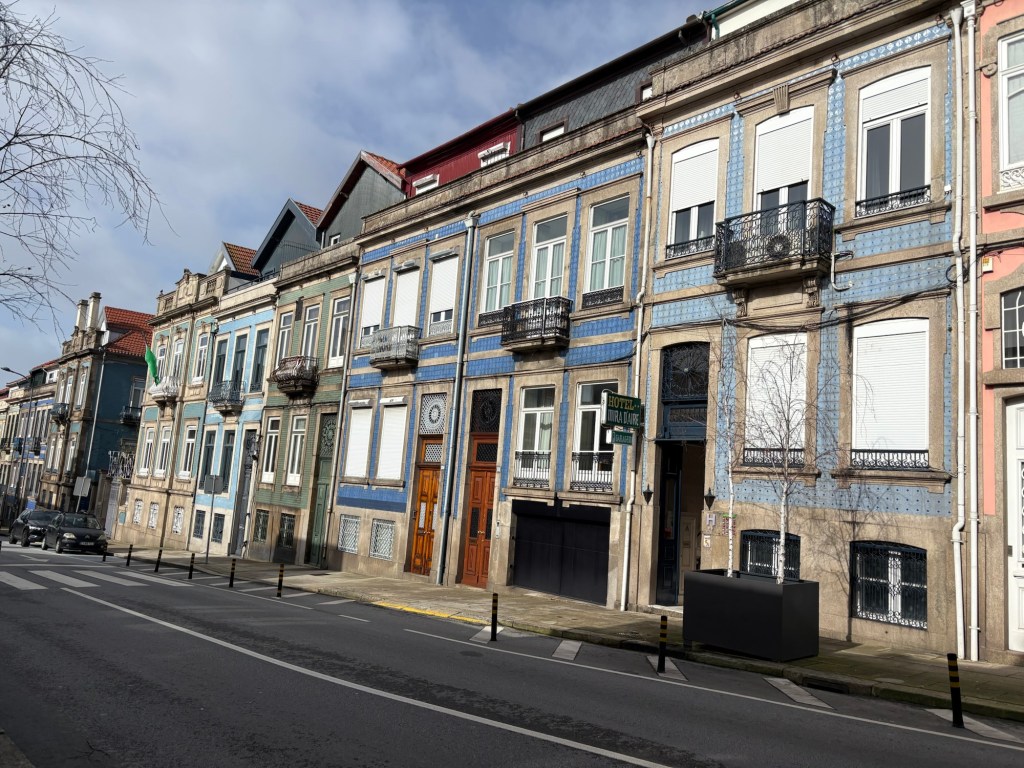
A residential street with pretty azulejo facades

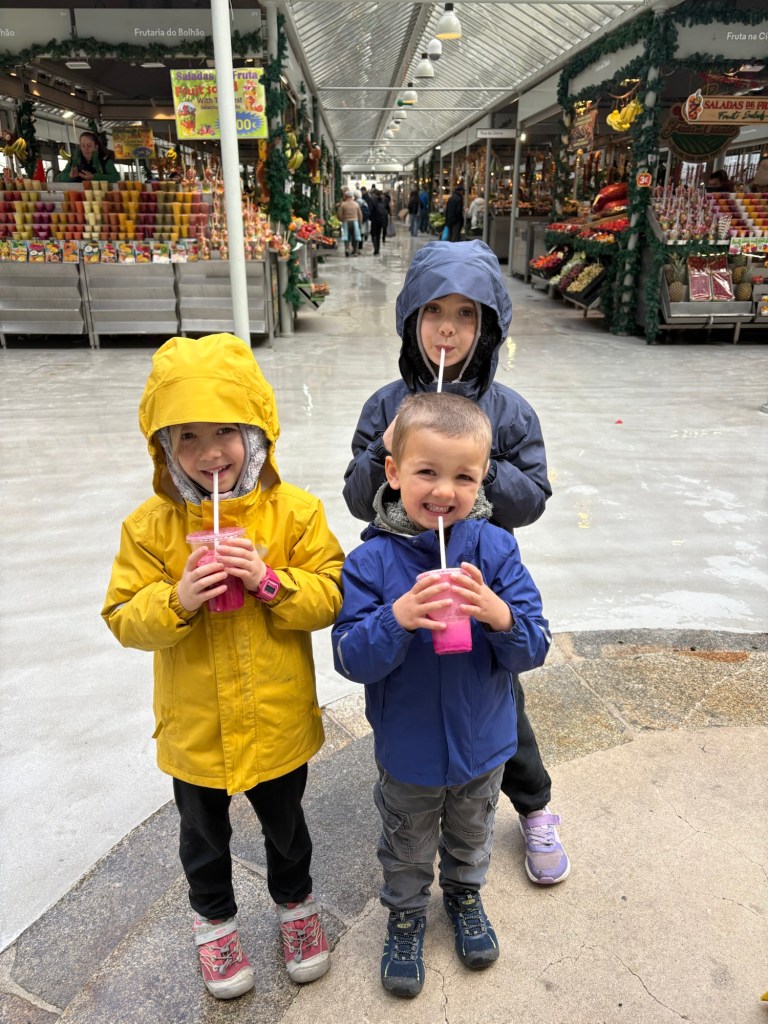
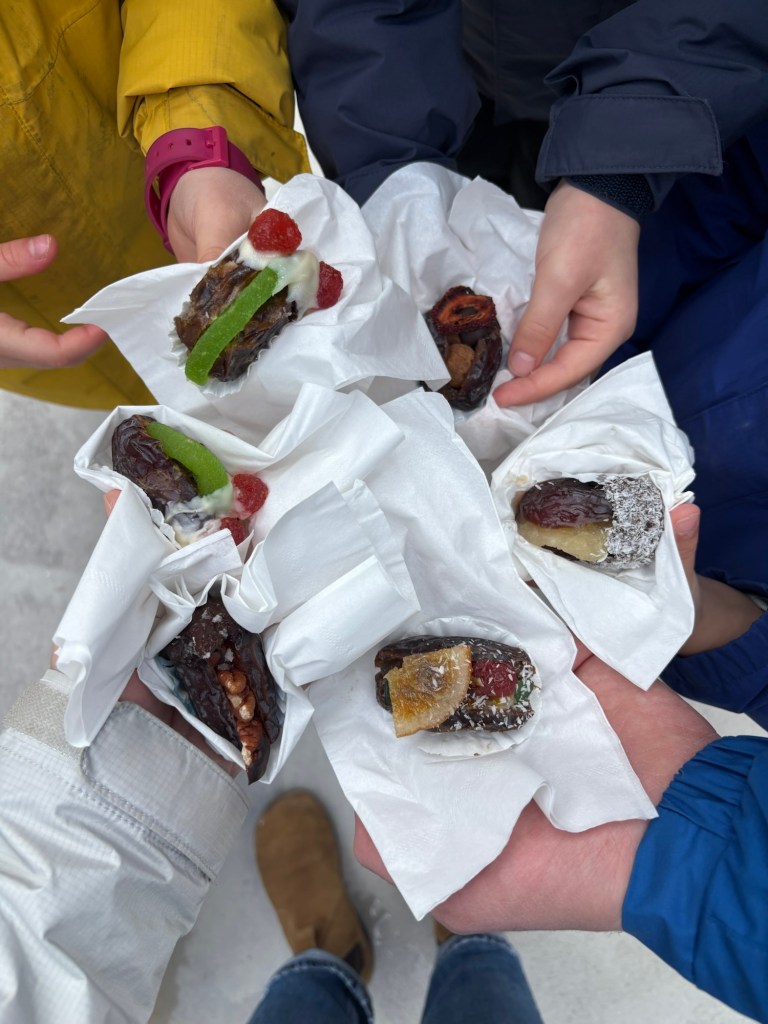
We expected to be rained on yesterday but went out anyway to try to see a few more things before leaving Porto. We found some friendly faces and fun treats at the Mercado do Bolhão: fresh and colorful fruit smoothies and dates stuffed with fillings in the theme of many countries. It poured for about ten minutes while we stayed nice and dry at the market – what luck!

Smoothies at the Mercado do Bolhão
Date candy – clockwise from the bottom, we chose Italy, Mexico, Japan times two, Belgium, and the Azores

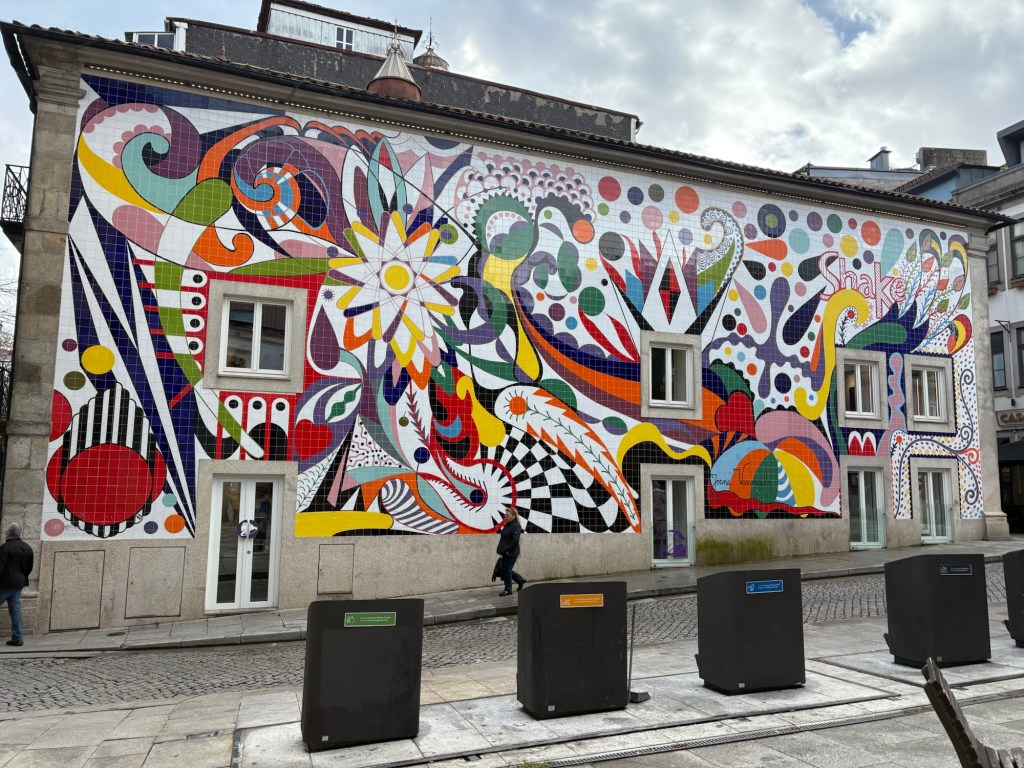
We absorbed a bit more of Porto’s colorful, creative vibe in the sunshine, grateful for the chance to sightsee under blue sky. Portugal’s second largest city is a wild mix of old and new. You can see ancient churches, shiny department stores, fine art, and graffiti in the same block.

We are about forty minutes south of the Spanish border now, at our northernmost point on the Iberian Peninsula. The crashing waves in our front yard remind us of the Oregon coast. As usual, it’s about to rain.

Porto

Rainy days

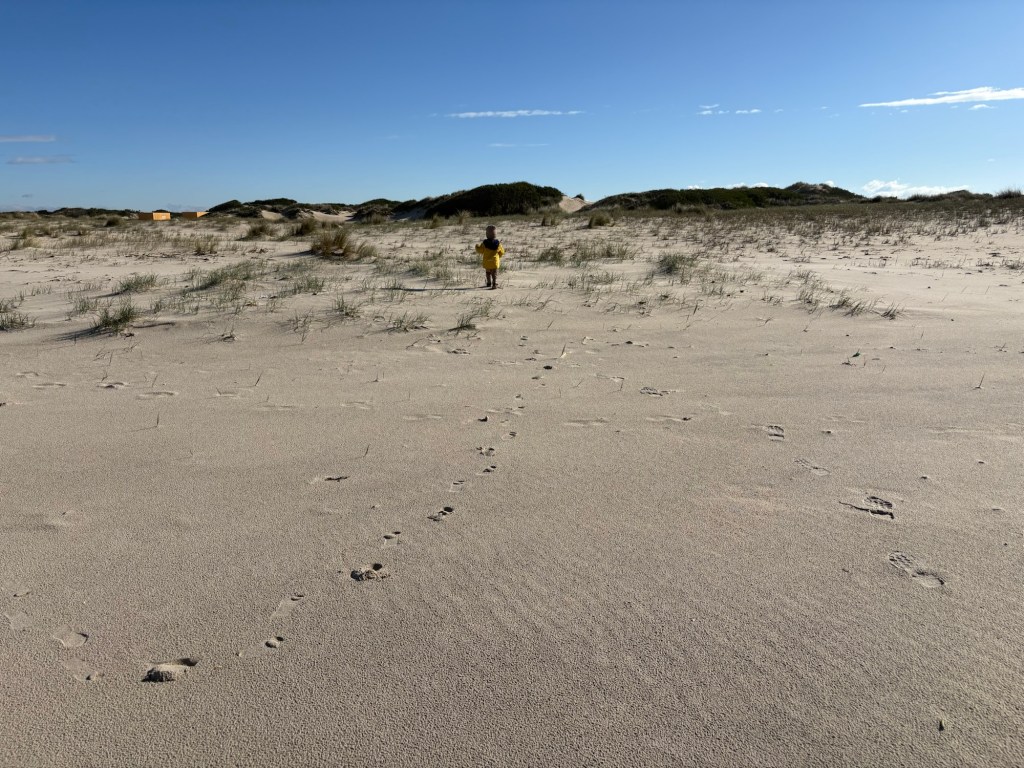
We spent a quiet handful of days in Salreu, Portugal, at the edge of a peaceful estuary. When the weather permitted, we took family walks and watched for wildlife, especially enjoying the enormous white storks we’ve seen around Portugal. On our one sunny day in Salreu, we drove out to the beach, and the kids ran up and down the dunes for as long as we let them. We like beach days in January!

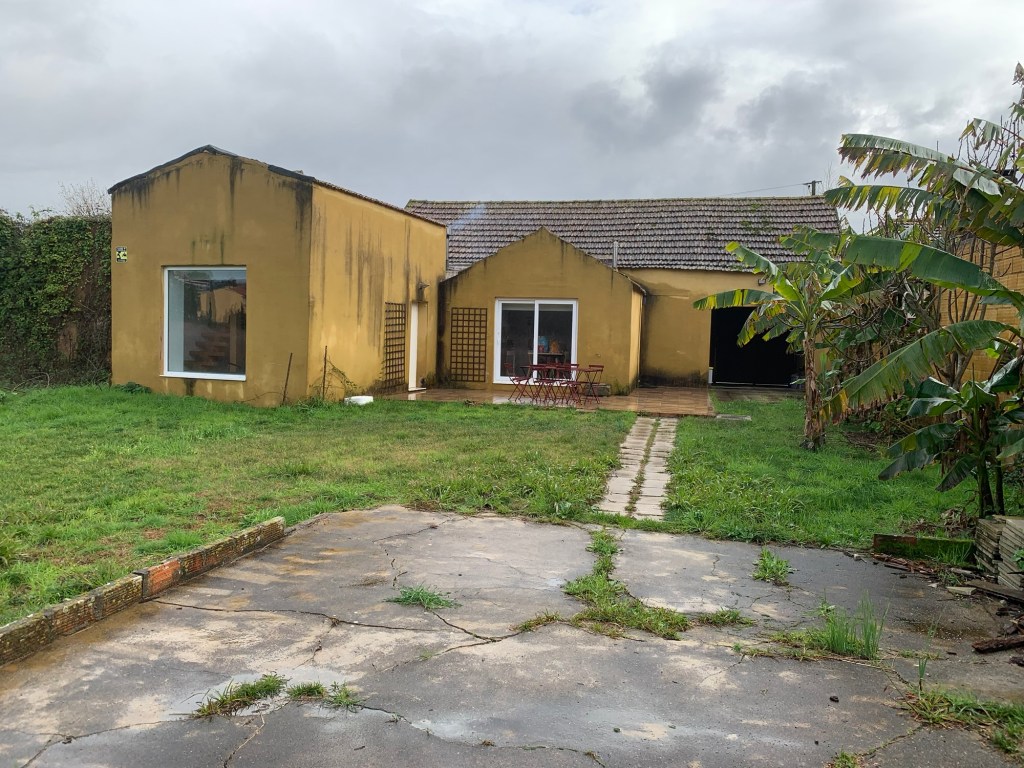
Every Portugal lodging where we’ve stayed has had evidence of some form of water damage, and most of our lodgings have also had some smells associated with water damage. With such a damp climate, mold and mildew proliferate. I haven’t spoken to a native about it, but Google tells me that most Portuguese feel rather helpless and resigned to the decay plaguing their homes and don’t see it as a big problem. And while we personally don’t have any apparent respiratory issues with mold, we are a bit sensitive where the smells are concerned. We’ve had two lodgings where a room smelled bad enough to warrant closing the door and not using that space at all. Other places had less evident problems, but you can always find signs of mildew and green or black gunk somewhere. And that’s just indoors. Every building needs a good power wash here, but I don’t think anyone feels it’s necessary. We’re not staying in the most expensive places, but we’re not slumming it either, so I can only imagine the issues with the even more affordable options. After reading many, many reviews on Airbnb, it seems that plenty of people either don’t notice the mildew, think it’s perfectly normal, or are only slightly bothered by it. Gross!

Our Airbnb in Salreu – can you smell the mildew?

Sometimes the mildew odors are masked briefly by cleaning products – another smell we can barely tolerate. It’s hard to find unscented anything in Portugal (as has been the case everywhere we’ve been south of Copenhagen), and we’ve often been overwhelmed by the laundry detergent, hand soaps, and any other cleaning products used on our lodgings. Proprietors will also add scent sticks (dubbed “stink sticks” by our family) to mask bad smells, and we have to take all these outside instantly upon arrival. Needless to say, we look forward to smelling the familiar (and unscented) smells of our home.

Now that we’ve been in a number of Portuguese grocery store chains, our menu has gotten just a little more creative. We don’t eat repeat meals all that often at home, since I get bored easily. But our menu while traveling has been more limited. I rarely have a chance to go to the same grocery store twice with our pace of travel, so it’s always hard work to translate the unknown ingredients, navigate an always-changing store layout, and to adjust on the fly as I see what I can find. If we can’t shop on foot individually, Nic will have the unfortunate task of entertaining our kids while I try to use my zapped brain to do the shopping. Our kids lack recent grocery store practice, as I have fully embraced pick-up orders at home. You can picture the circus, I’m sure. Even after figuring out what to cook and buying it all, there is at times the issue of how to cook given the wonky collection of cooking supplies we find at each Airbnb. This all requires more of me than I feel it should!

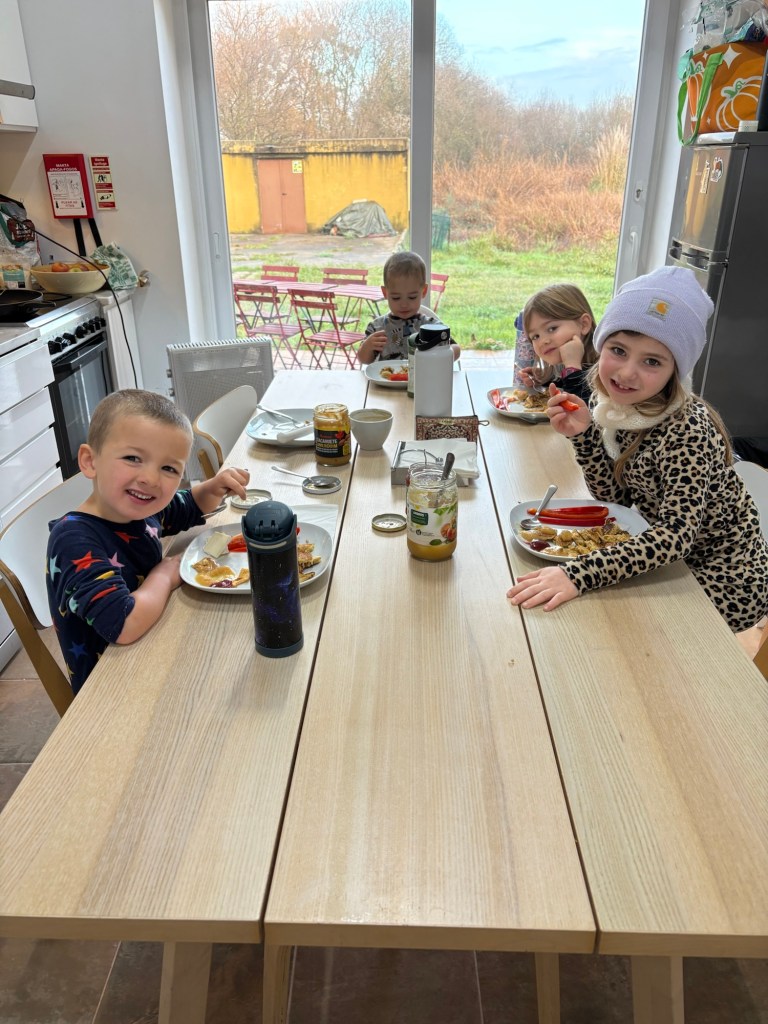
But since we have gotten more familiar with our options here, I’ve had just a little more brain power to send towards things like making homemade pancakes from the recipe I use at home. It took multiple trips to obtain baking soda, but all the other ingredients I use were easy to find. I haven’t seen a measuring cup in any of our lodgings, but I have figured out how to work without one. Laila is improving her pancake flipping skills since we added pancakes to the breakfast rotation, and everyone appreciates a familiar breakfast so far from home.

Pancake breakfast

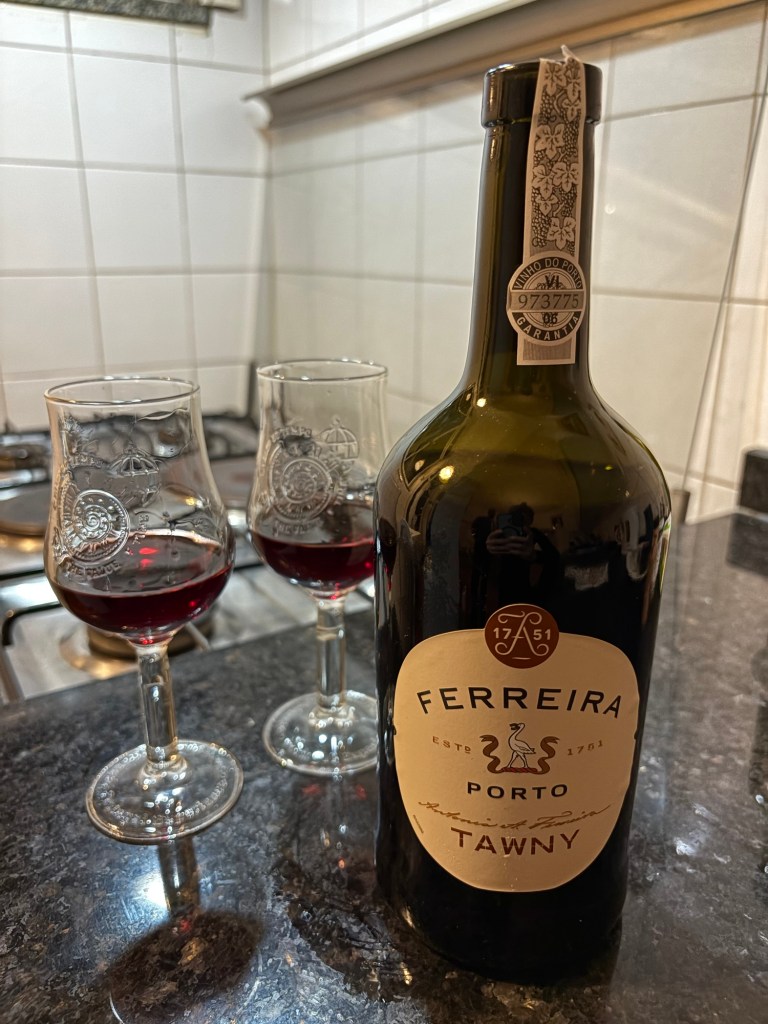
Another interesting difference about Portuguese grocery stores is the shelf space allotted to wine. You can buy a cheap bottle of wine for less than €2 here, and you will have literally hundreds of bottles of wine to choose from. I estimate even a small grocery store will give as much as 20% of the total shelf space to wine. We’ve received a few bottles of wine as welcome gifts, and that has kept us from shopping for it. We did recently buy some port wine, though, since we are in Porto. Port wine is produced exclusively in this part of Portugal and can’t legally be called port unless it originates in the Douro Valley of northern Portugal. Port is a fortified sweet wine typically served with dessert, and its high alcohol content runs around 20%! Nic found it drinkable, but I think it tastes exactly like the Robitussin of my childhood – blech!

Our high-class port tasting experience

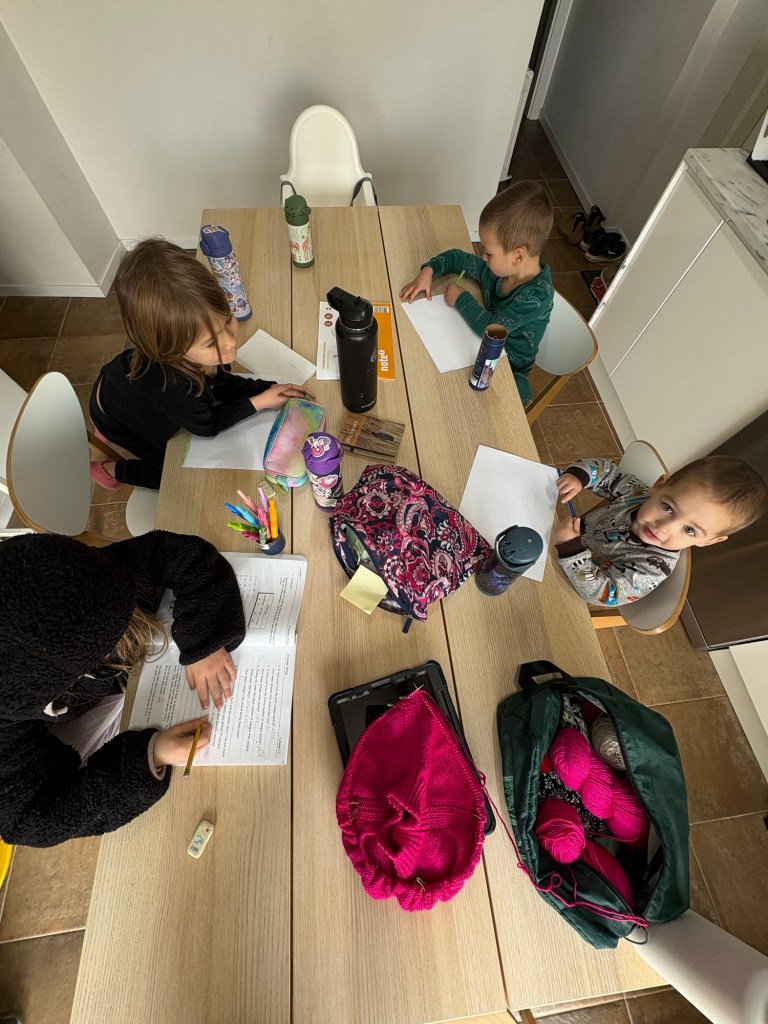
The other reason we have little to report is that it has been rainy. We must have seen Montana’s annual rainfall in the last ten days. It’s easy to get caught in an unpredictable rain storm and to be instantly soaked and pretty chilly. Without a dryer, we have to be smart about how soaked we get and when. Rain has foiled our plans a few times, which can be so frustrating when we’ve done all the work to get the whole family out the door. Rainy days make for good school days, though, so we are staying on top of that.

School (and knitting, of course)
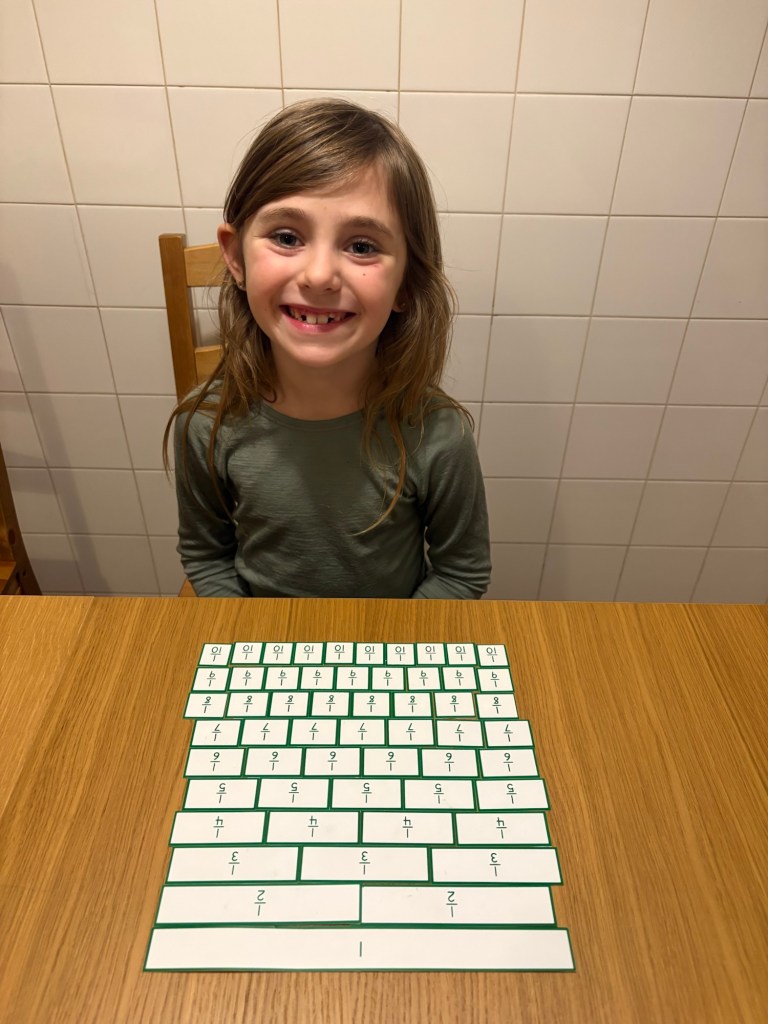
Working on her fractions

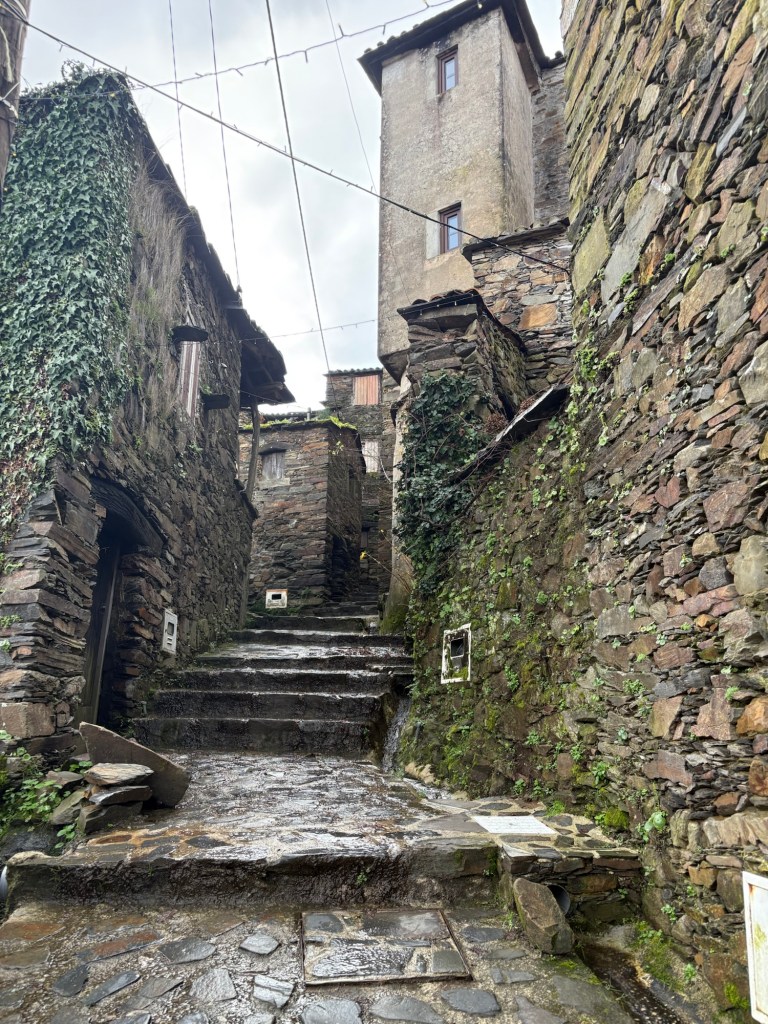
A schist village hike

The weather cooperated for a special hike on our last Coimbra day. We drove half an hour into the hills to Lousã, passing through beautiful rural scenery on the way.

In many ways, rural Portugal reminds us of Albania. The topography is similarly wrinkled, and the small towns here feel about the same size as many we drove through in Albania. Portugal and Albania are at a similar latitude, so some of the plant life and plenty of the weather overlaps. Both small countries contain everything from snow-capped mountains to sandy beaches. But where Albanian architecture seems blocky and utilitarian (and ugly), rural Portuguese towns are almost universally charming with their neutral and whitewashed buildings and terracotta tiled roofs. Albanian towns rest under a layer of scattered trash, and the Portuguese prefer to keep their small towns tidy with even construction debris piled very neatly. Portugal has invested money into road engineering that eliminates some of the curves the land could demand, whereas Albania just pours asphalt in a line along the hillsides, daring all to defy carsickness.

We hoped to reach at least one schist village on our hike. These tiny villages high in the hills of rural Portugal are built from schist, a local stone. The houses fade into the landscape seamlessly, and you could easily miss seeing a village if you aren’t looking for it. Many of the villages were mostly abandoned at some point in the 1900s, and efforts to restore the villages and bring tourism their way have made obvious progress.

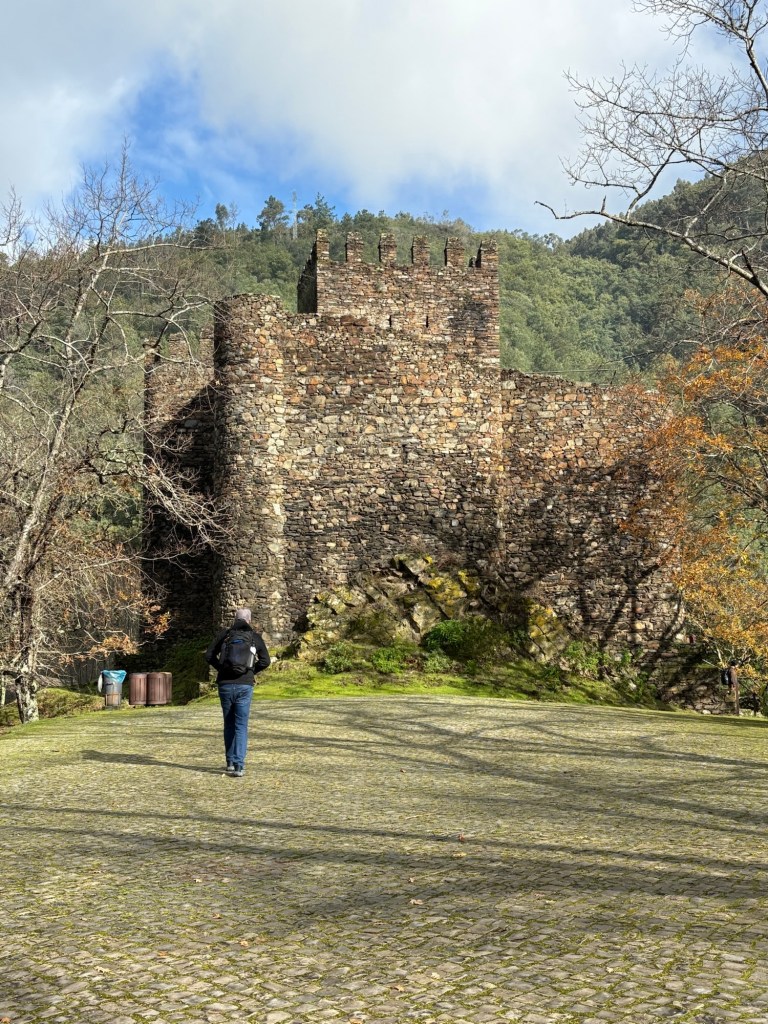
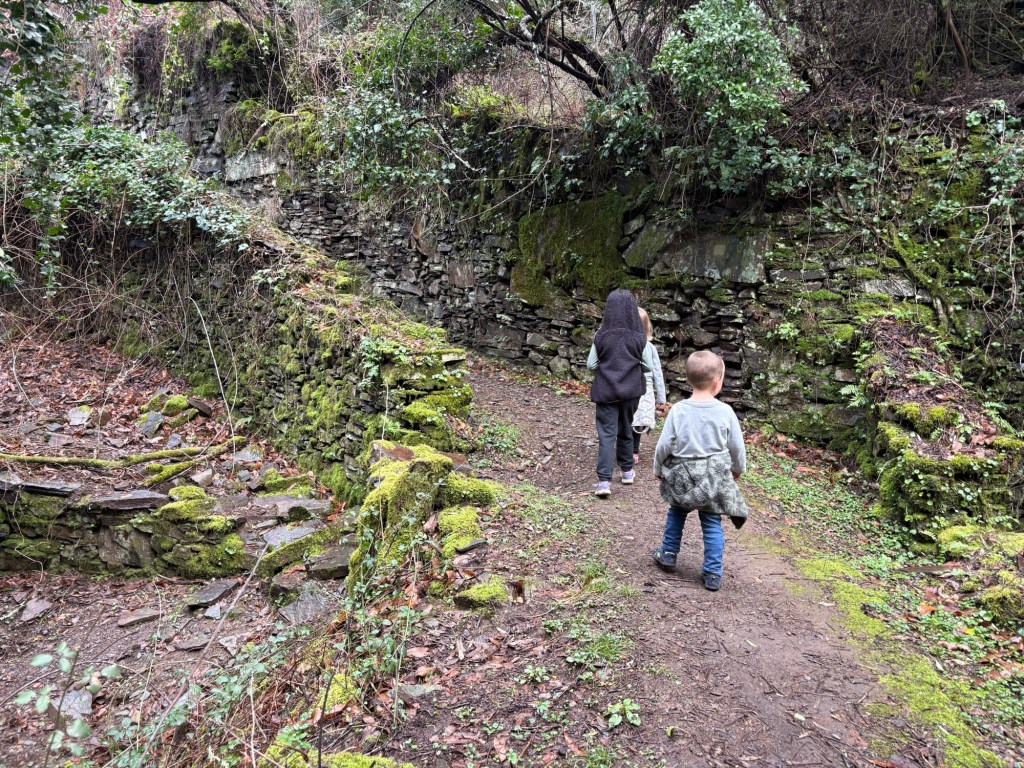
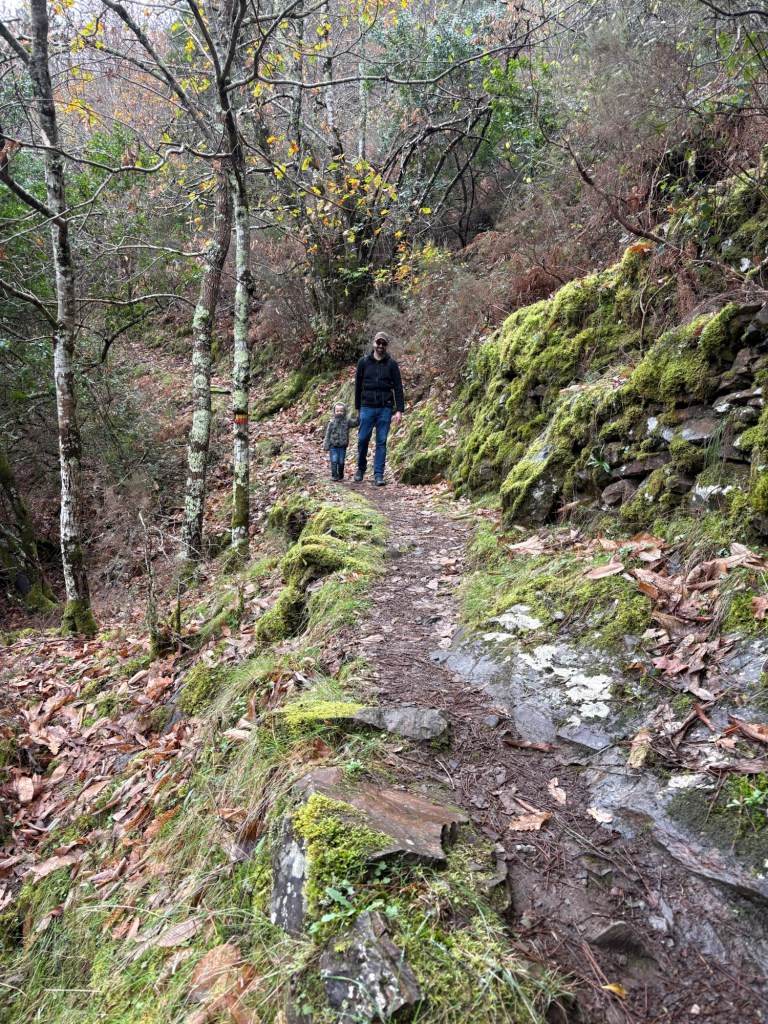
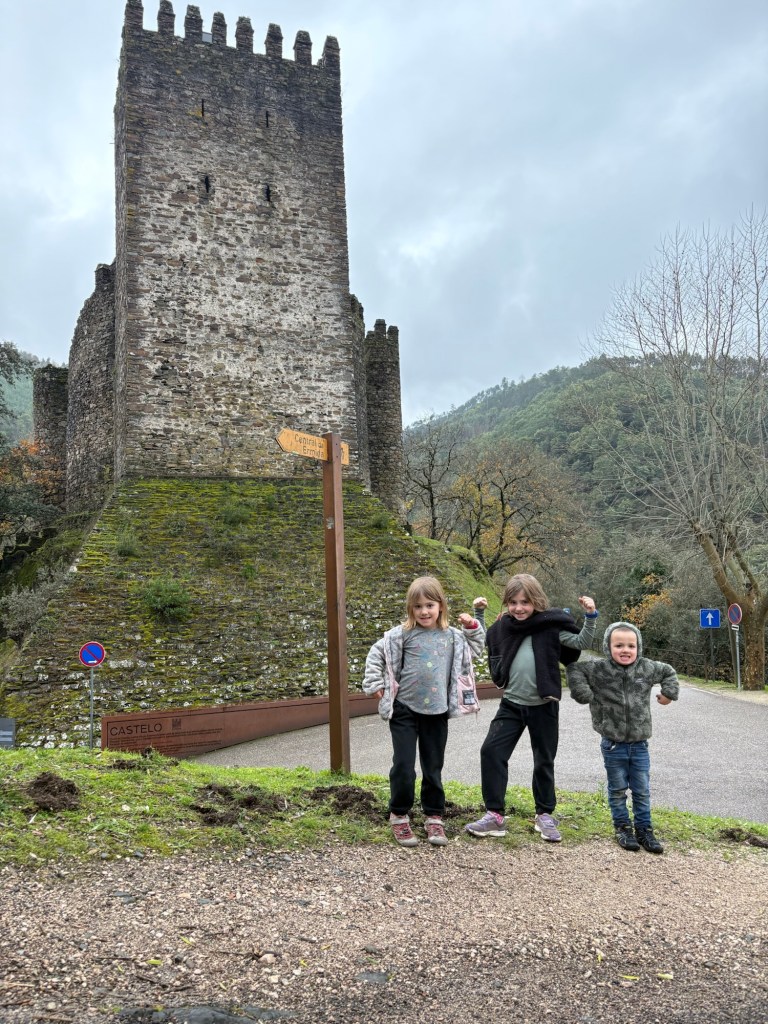
Our hike began a mile early due to road construction. After admiring Lousã’s pretty little ancient castle, we set off on the trail through a deep gorge and up, up, up to the village of Talasnal.

Good little hikers

The three big kids are champion hikers. We logged over four miles and at least 1100 feet of elevation gain. These kids tend to set off at a jog and would be quickly out of sight if we let them. We rarely hear complaints while hiking, and I’m not even feeding them candy or snacks to get that result! They just love a good trail, and I love that about them!

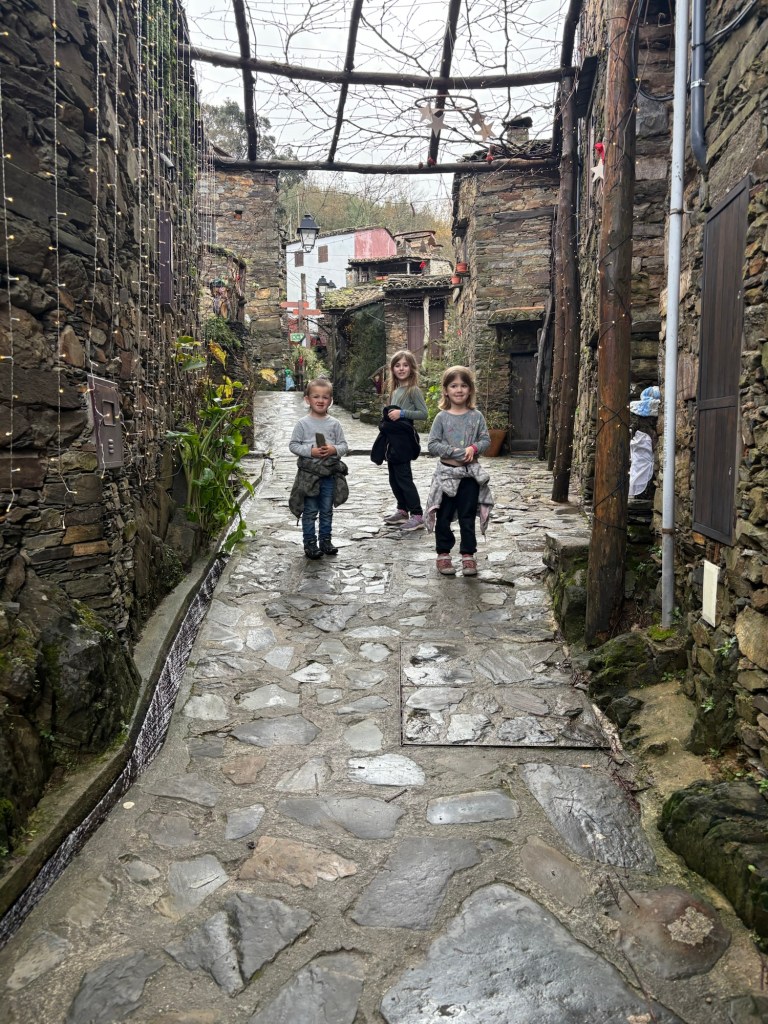
Talasnal

Walking into Talasnal truly did feel like walking back in time. Although you can drive to this village, it’s a place you wouldn’t imagine seeing cars. And anyone who does drive here has to park in a little area outside of town, since you can only walk on the narrow pathways between houses. I kept thinking I’d see an old man riding his donkey, or hear the bells of a flock of sheep, like in Albania. But in the off-season and on a weekday, Talasnal was almost completely deserted (and very decked out for Christmas).

Having added on the extra mileage at the beginning, we didn’t want to push it and visit another village – next time! There are several nearby villages that make for a nice hiking loop (if you think gaining a bunch of elevation is nice 😊). So we ate our lunch in Talasnal and headed down, down, down.

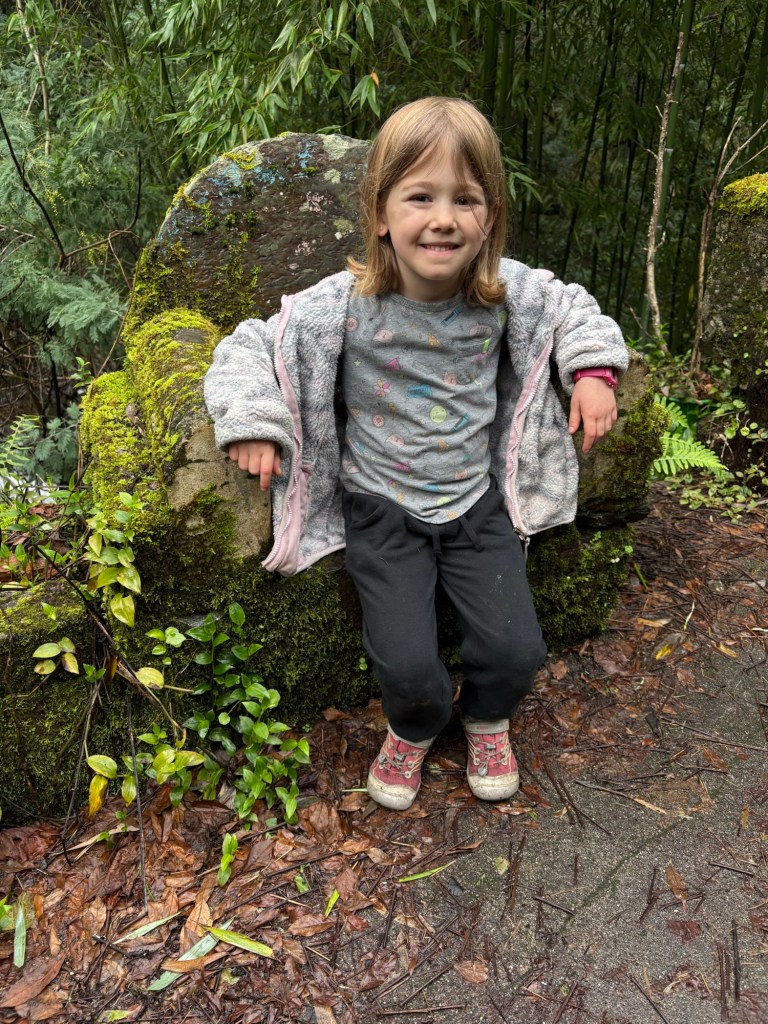
A perfect little stone armchair

Rain threatened, but we made it back to the car dry. We had a small world moment when some Helena people parked by us and asked questions about the road construction and trail. The guy’s daughter even went to high school in Polson!

All in all, the day was an easy win for the Hendrychs family. We’re happy to know we have loads of good hiking waiting for us at home, but we are definitely enjoying the unique hikes we have experienced on our trip.

So strong!

Coimbra

Continuing north, we left Sintra to drive to Coimbra, Portugal’s fourth largest city.

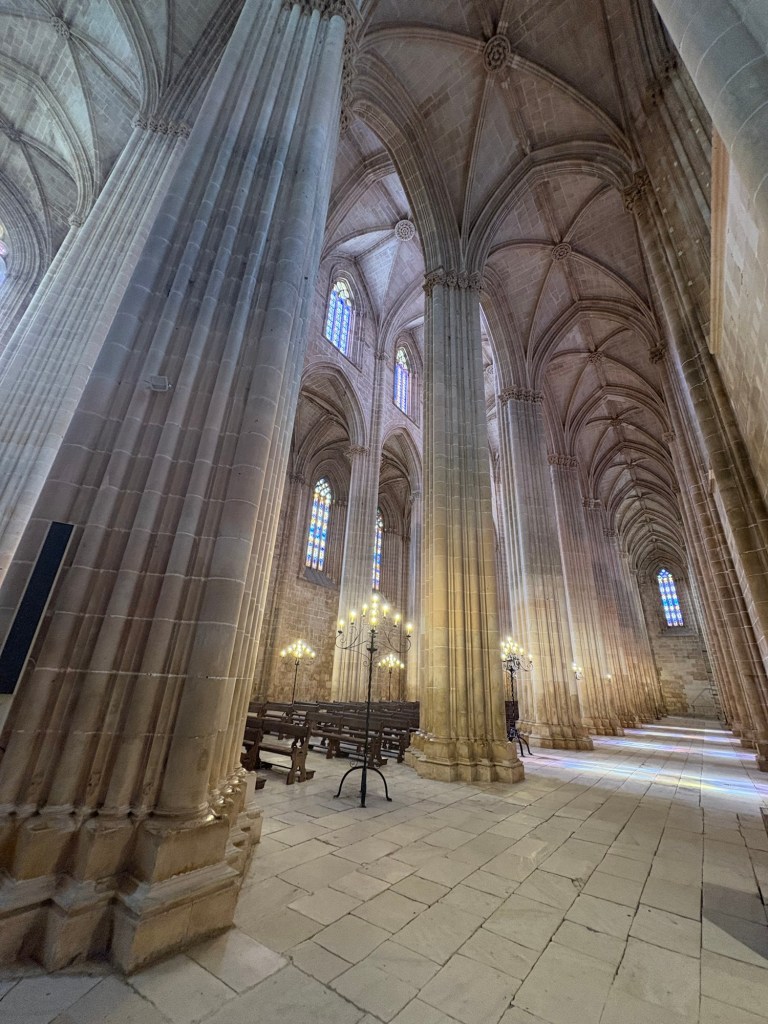
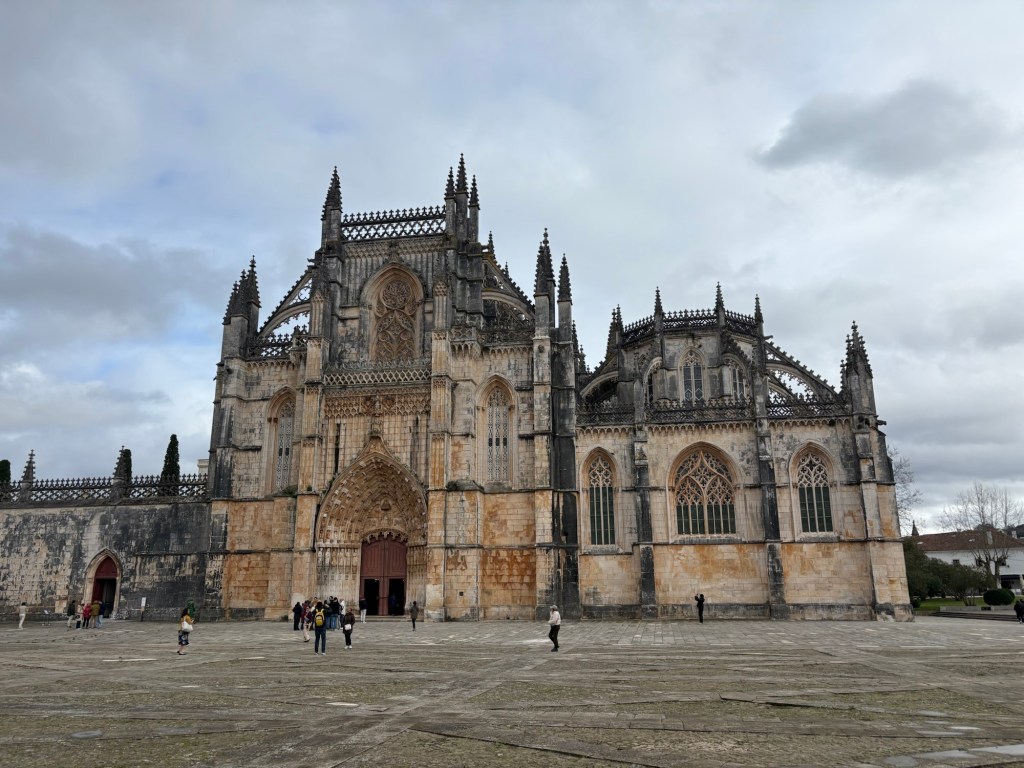
Nic had heard a podcast episode about a local hero who helped Portugal win the critical Battle of Aljubarrota against Spain in 1385. This battle safeguarded Portuguese independence and established a new dynasty. To commemorate the victory, John I of Portugal built a magnificent monastery and founded the town of Batalha. We stopped for lunch there and admired the soaring walls of the huge chapel. In an otherwise small and normal town, this huge ornate building really sticks out.

Mosteiro da Batalha
The barest church interior we’ve seen, but still dramatic!

Coimbra has treated us well this week. We’re staying right next to an old convent and monastery with views across the river to historic downtown.

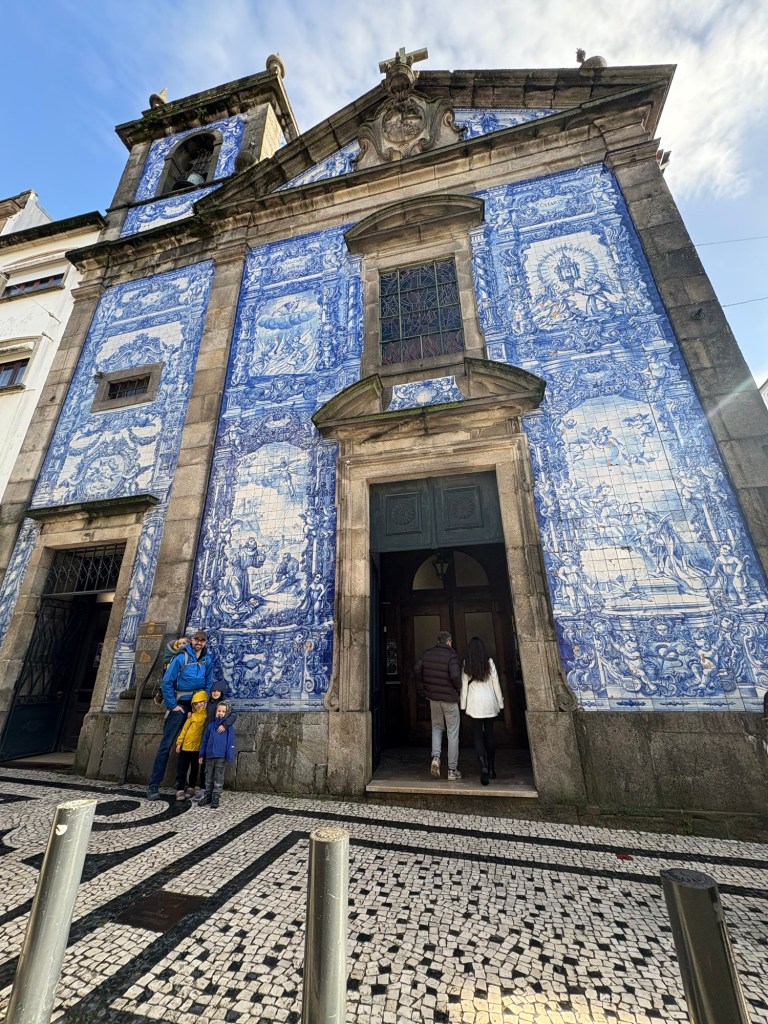
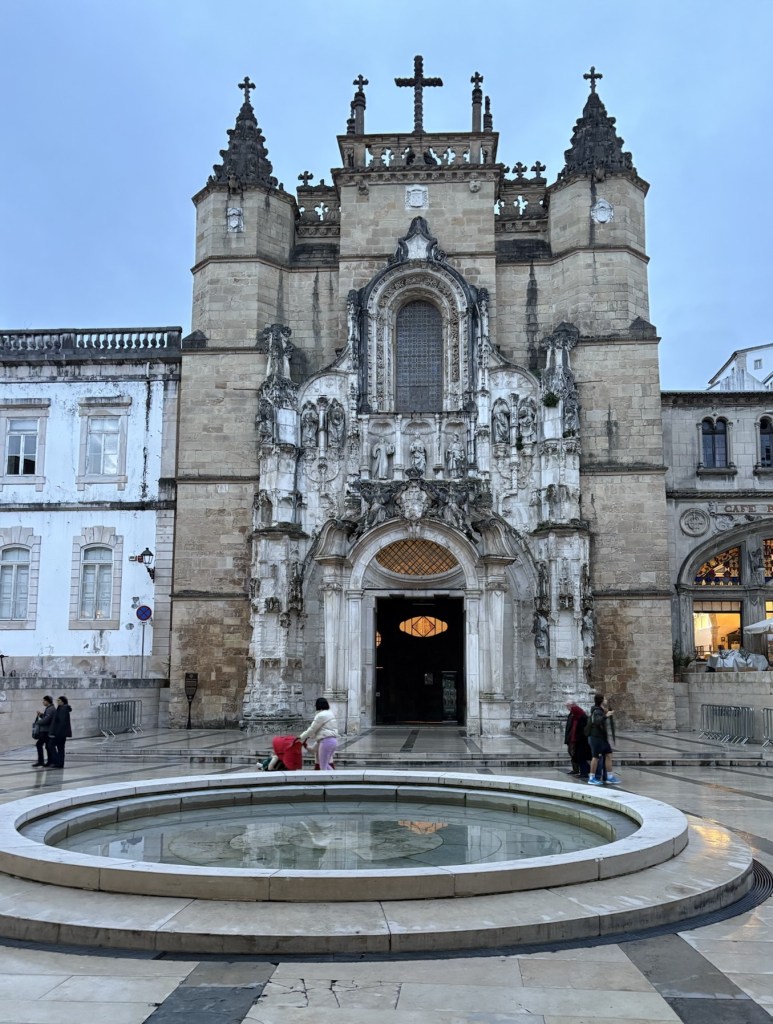
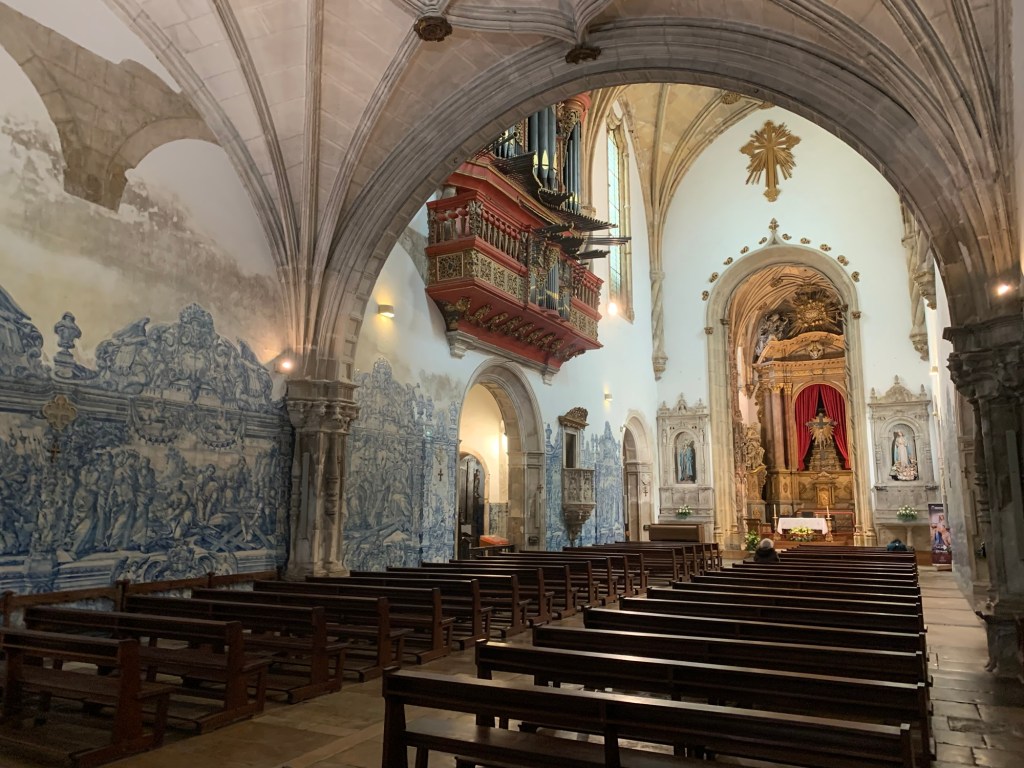
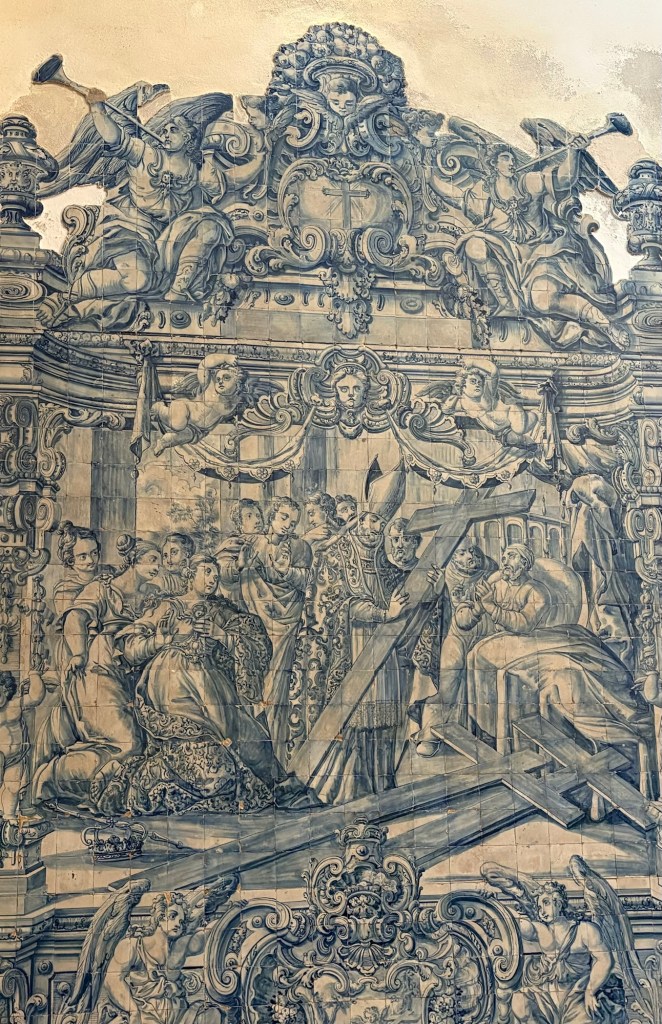
We walked into town a few days ago and visited the Igreja de Santa Cruz. We’ve seen churches decorated with oil paintings, tapestries, and stained glass, but this church has an azulejo-lined interior dating from the 1100s. I had seen the church first when taking a quick walk the night we arrived. I was walking through a charming pedestrianized shopping street, chatting with my mom on the phone and not paying much attention to my surroundings, and popping out at a pretty little plaza with this intricate church facade surprised me!

Igreja de Santa Cruz
Tiled pictures everywhere

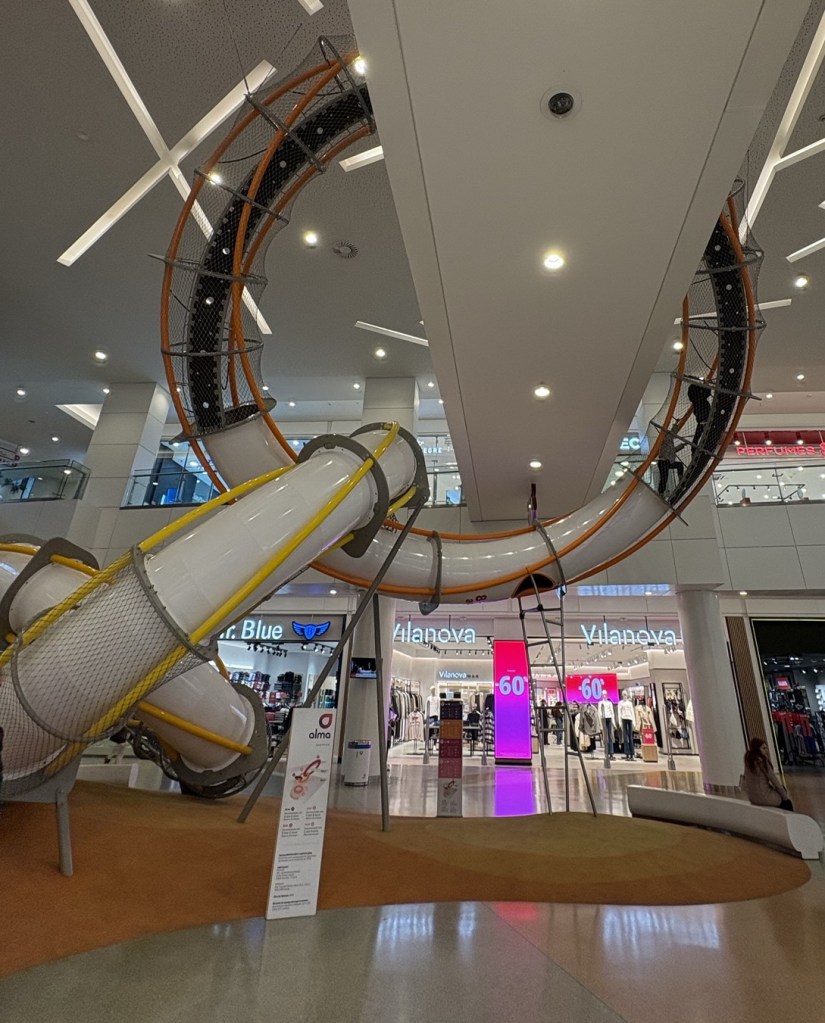
It has rained on and off here, so we’ve spent some time indoors doing school or shopping by car. We found one of the coolest playgrounds of the whole trip inside a mall. I haven’t been in an indoor mall since who knows when, but a few of us needed to replace some worn-out clothing items. We found much-needed socks and a shirt for Morgan, and the kids got to climb high above the mall floor!

PE for the day

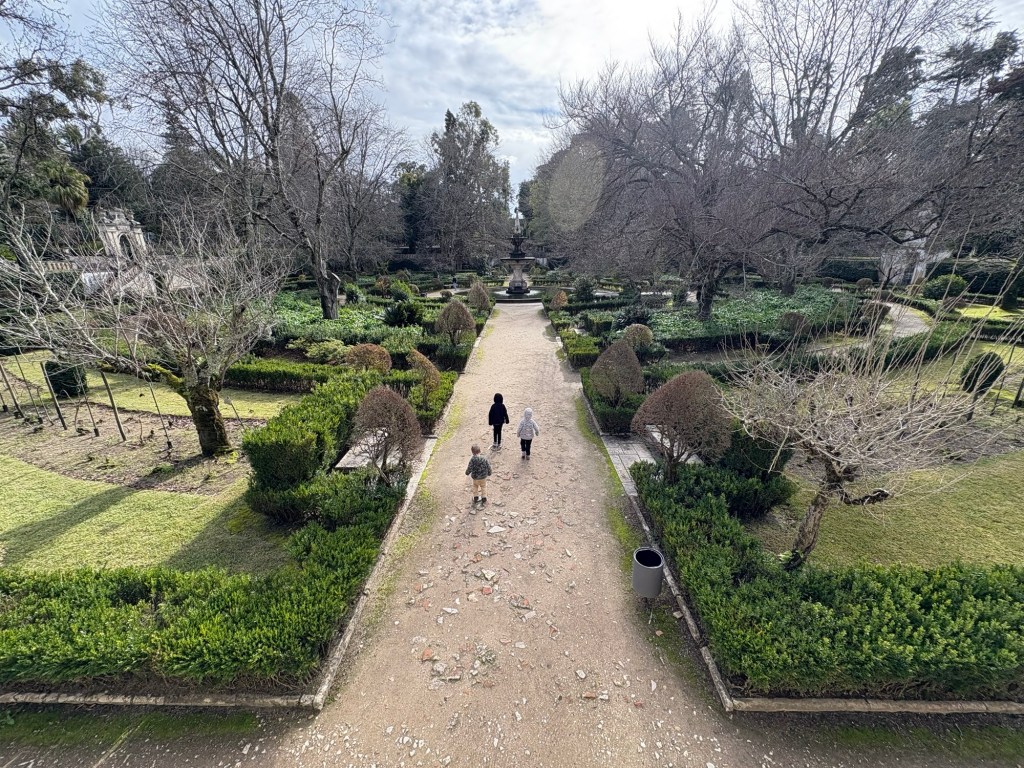
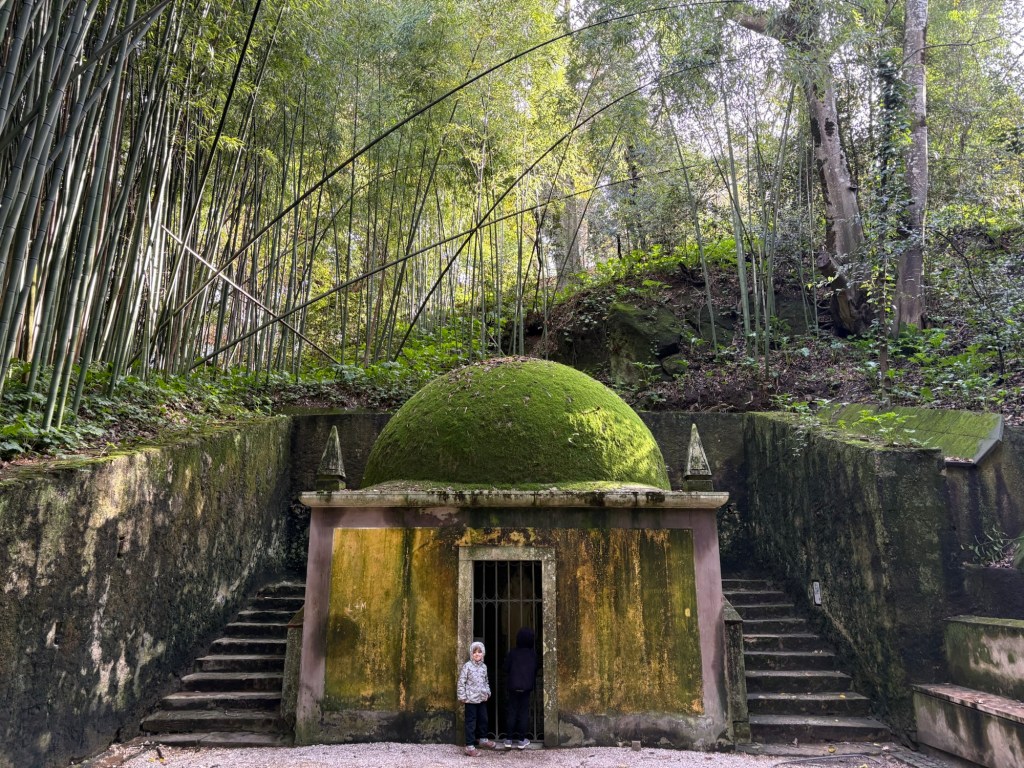
As usual, the whole family also enjoyed a stroll in Coimbra’s botanical garden. All we really need is a free restroom, fish ponds, and a bamboo thicket. Sunshine helps too.
Quinta da Regaleira

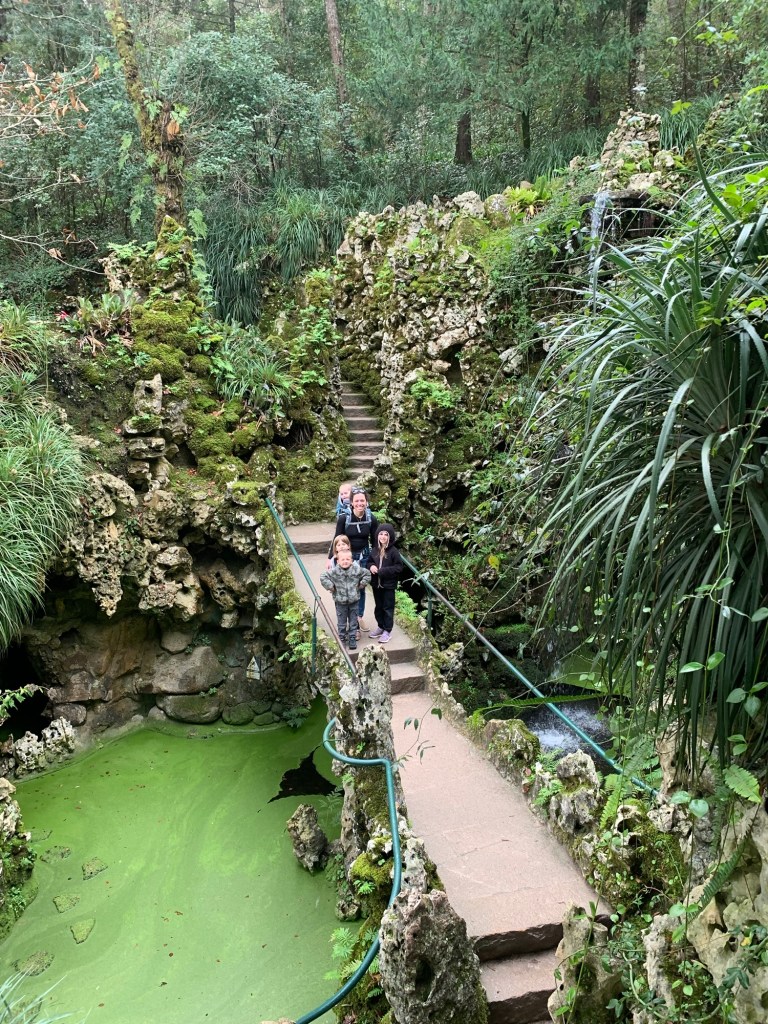
Our last hurrah in Sintra was the perfect cherry on top of our magical visit: a trip to the Quinta da Regaleira, one big piece of art in the form of an estate.

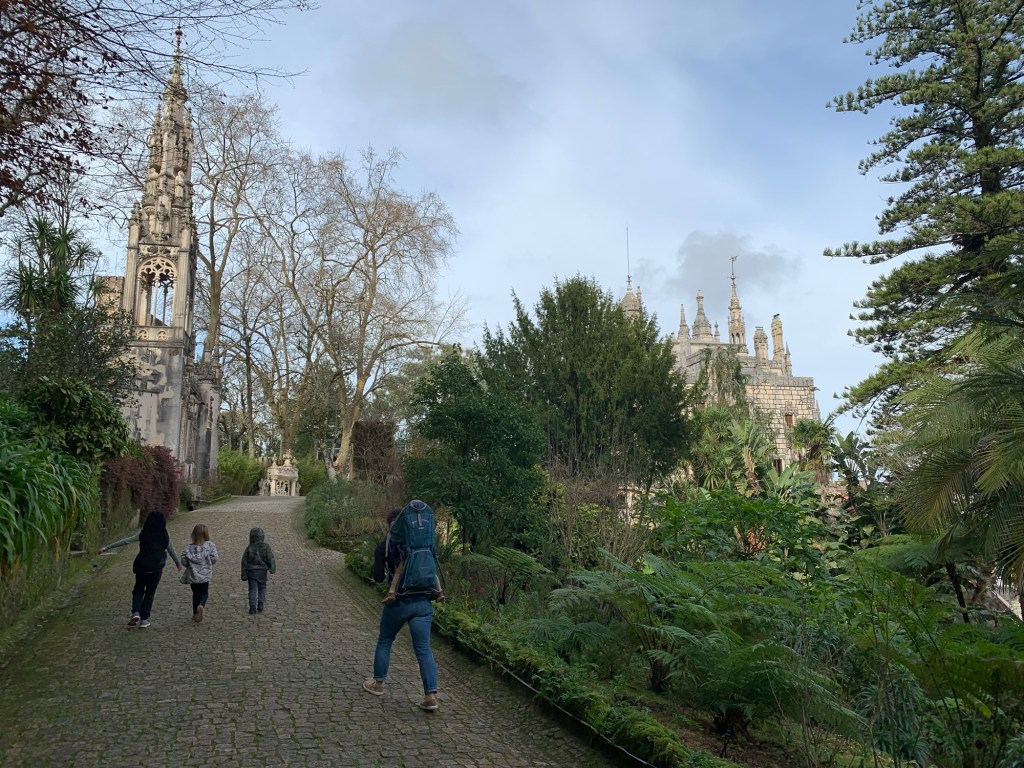
The palace

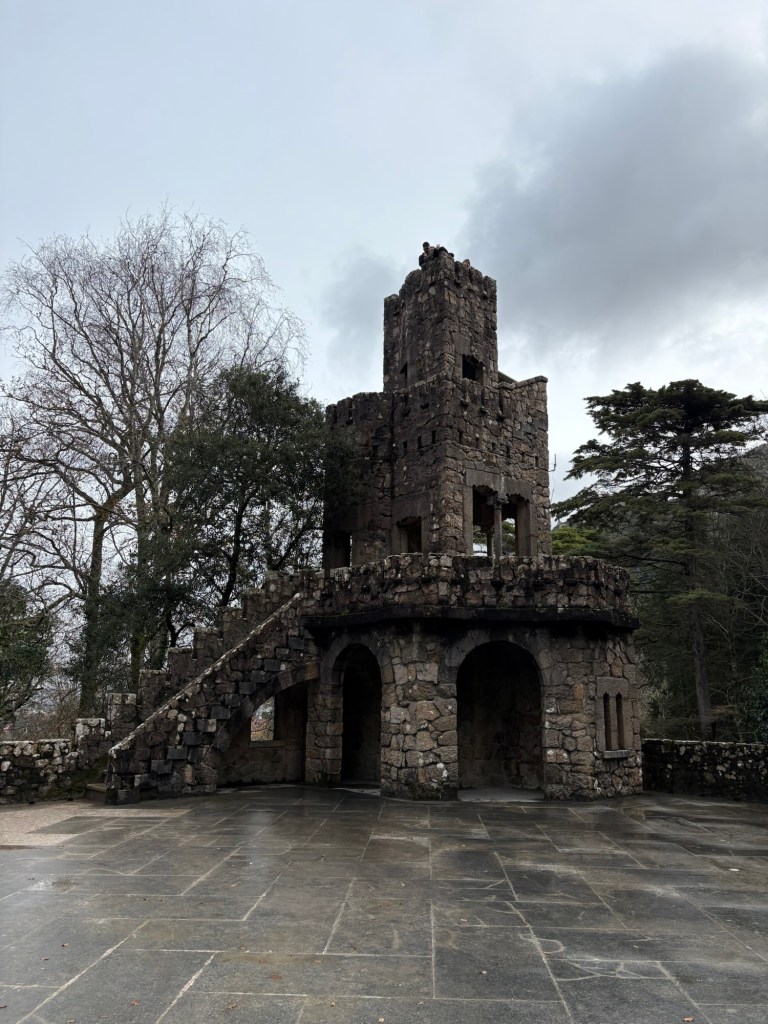
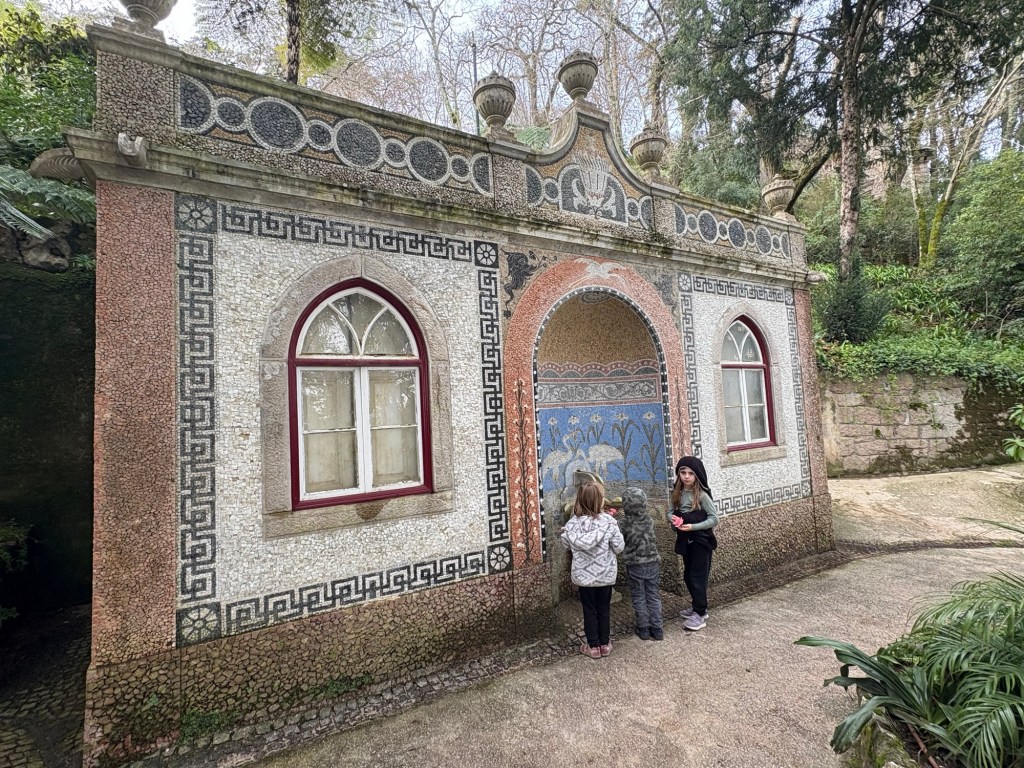
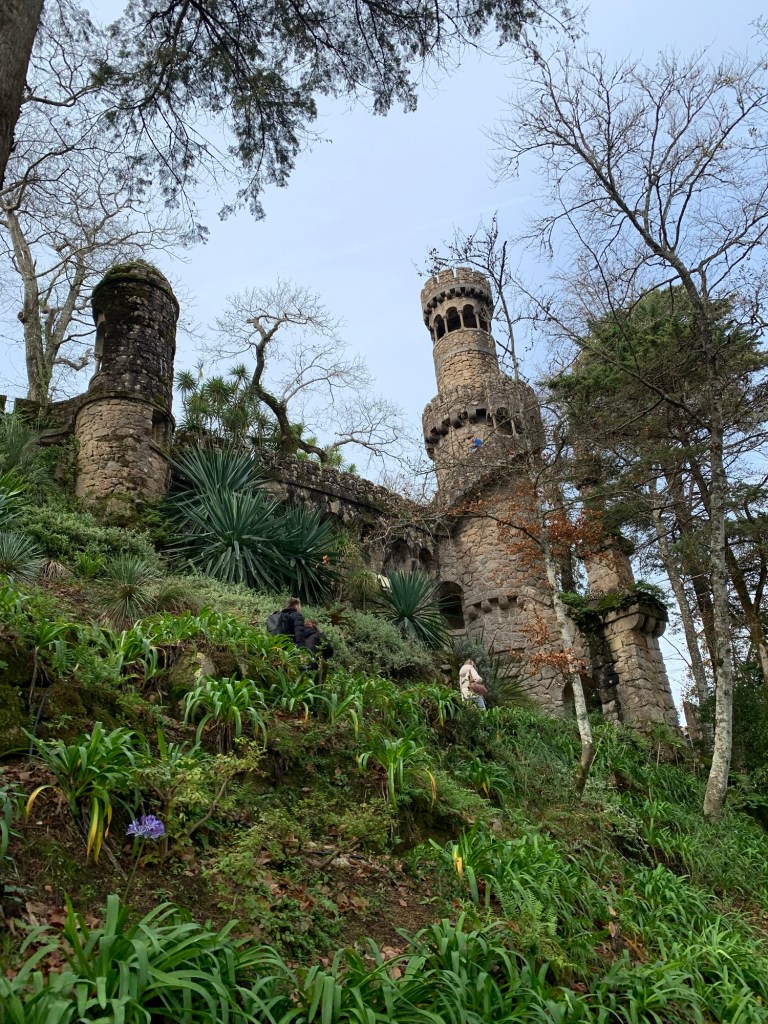
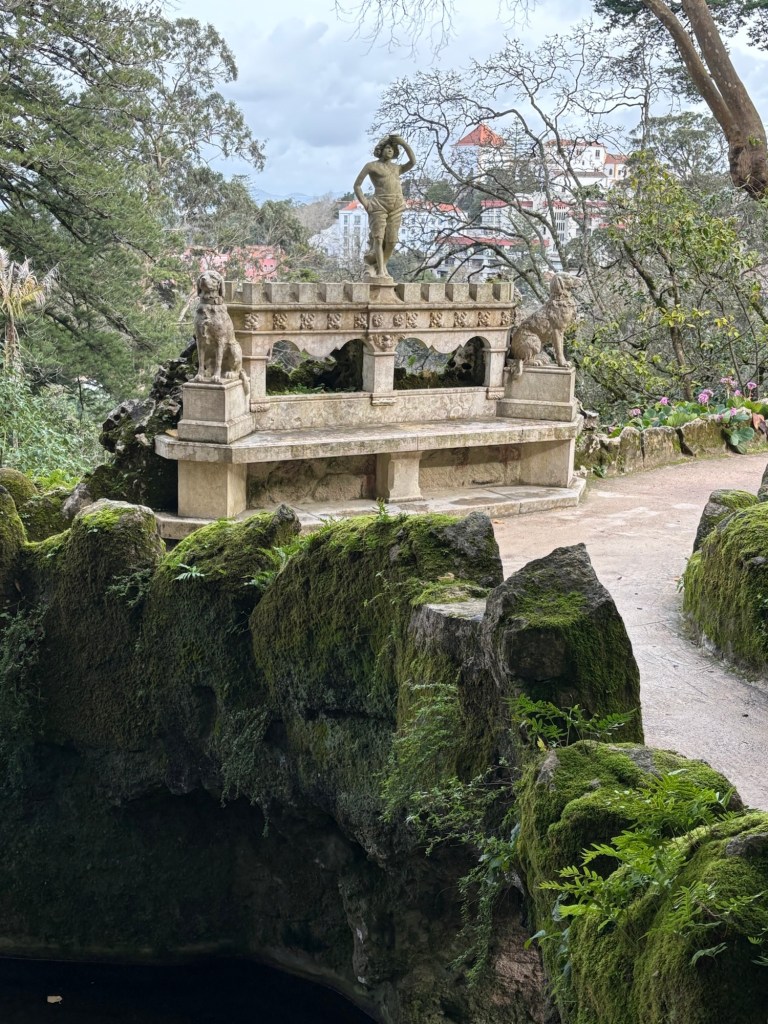
Situated on the side of a hill, the estate’s grounds feature a set of winding paths and staircases through the landscape. The plant life somehow appears simultaneously wild and perfectly manicured. Around each corner you discover a new and amazing tower or fountain, grotto or waterfall, chapel or palace. Every view seems more beautiful than the last. It’s enchanting and beguiling, the kind of place you could play hide and seek and literally never be found.

One of many cave pathways

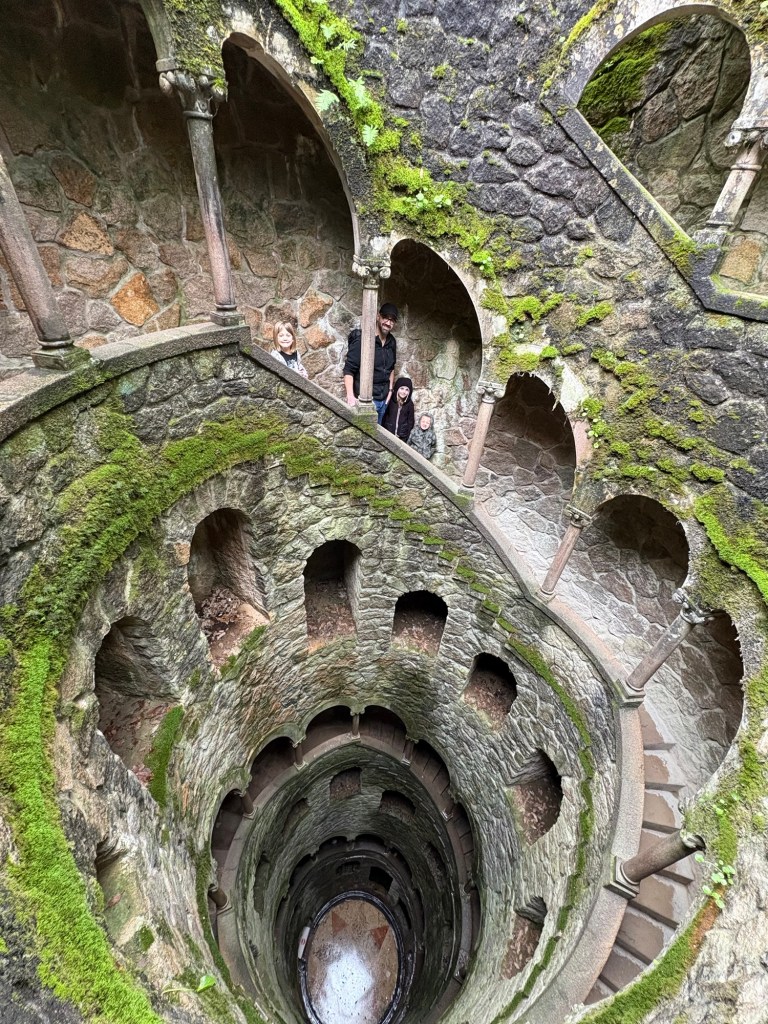
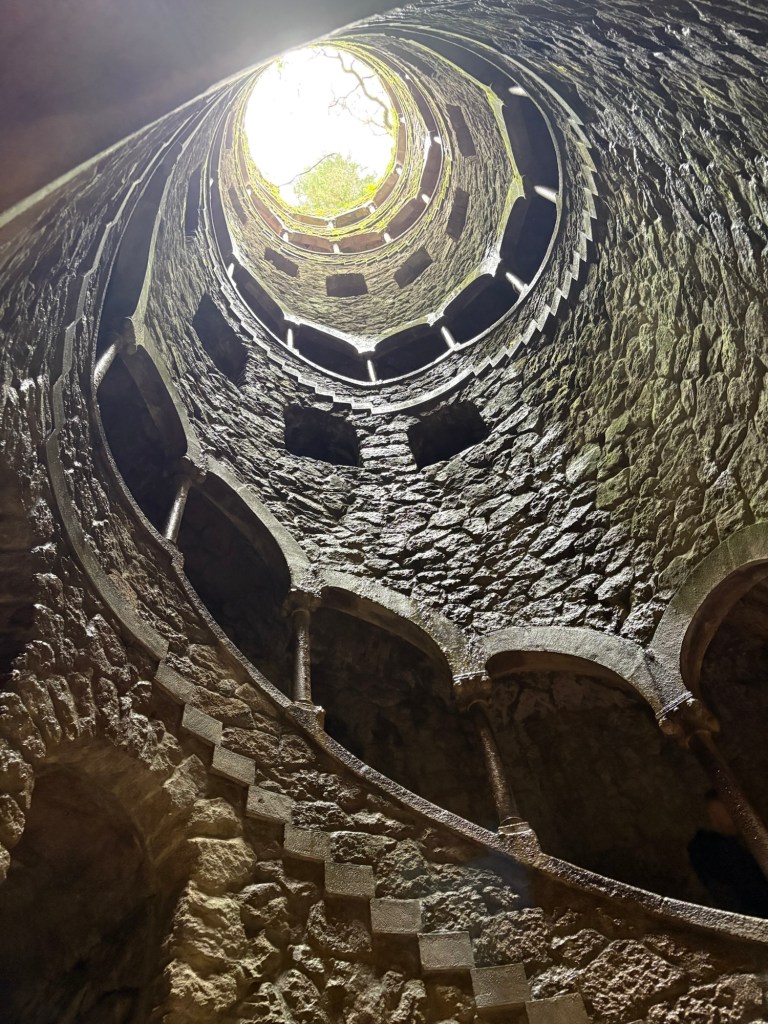
Although we didn’t see many other kids and had to keep reminding ours to stay close to us and keep the noise down, it was the ideal tourist attraction for our crew. The kids explored secret passages through dark caves and grottoes, climbed narrow steps to the tops of towers, and descended the spiral staircase to the bottom of the 88-foot deep Initiation Well. I can only imagine the fun they’d have on this property with unbridled freedom.

Looking down into the Initiation Well
And looking back up!
See who is up high?
A magical little bridge
So many towers!
Always climbing up!

By the time we entered the palace building and had a chance to read some information, everyone was tired and ready for lunch. (Do you see the common theme in our travels? We see so much and never have time to read more than the bare minimum – oh well!) We would love to find a good coffee table book about this estate, as it certainly deserves a book of its own. I’m not sure what we are looking for exists, but it certainly should!
Our Sintra expeditions brought us into contact with only a fraction of the sights. Our guidebook recommends a day or two in Sintra, but we could easily spend a few weeks exploring it all in greater detail. We would love to come back here again and can heartily recommend a visit.